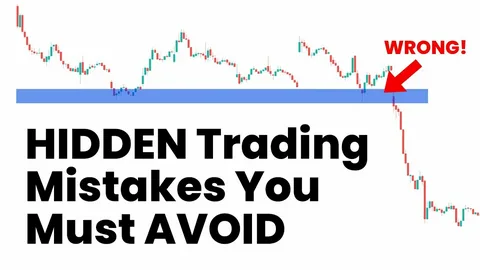
Introduction:
Every day, thousands of new traders open their trading platforms with hope, confidence, and big expectations. They have watched videos, followed influencers, downloaded indicators, and sometimes even copied signals from friends or online groups. Yet, after days or weeks of trading, the same question keeps coming back. Why is my account shrinking instead of growing. This frustration is not unique, and it is not bad luck. In most cases, it is the direct result of repeated trading mistakes.
The painful truth is that most beginners do not fail because trading is impossible. They fail because they unknowingly repeat the same beginner trading errors daily. These mistakes are subtle, emotional, and deeply ingrained in how humans respond to money, risk, and uncertainty. Over time, they quietly destroy confidence, discipline, and capital.
One trading mistake beginners repeat daily is believing that the market owes them profit. This belief leads to impatience, overtrading, and poor decision making. Another common trading mistake is focusing too much on winning trades instead of managing losses. Beginners often celebrate wins and ignore losses, not realizing that losses, when controlled, are what keep traders in the game long enough to become profitable.
Forex trading mistakes are especially brutal because of leverage. With a small account, beginners can control large positions. This creates the illusion of fast money, but it also magnifies every error. A small mistake becomes a big loss. A bad habit becomes an account wipeout. This is why beginners keep losing money in trading even when their strategy seems correct on paper.
The market itself is not designed to hurt beginners, but it does not forgive ignorance or emotional decisions. Trading rewards patience, discipline, and consistency. Beginners often bring the opposite. They chase price, jump into trades late, move stop losses out of fear, and revenge trade after losses. These are not random actions. They are predictable behaviors caused by lack of structure and unrealistic expectations.

Most common trading mistakes are not technical. They are psychological. They come from fear of missing out, fear of being wrong, and fear of losing money. Ironically, these fears cause the very losses traders are trying to avoid. Without a clear plan and strong risk management, emotions take control, and logic disappears.
This article exists to shine a light on the most damaging habits new traders repeat daily. Not to shame or discourage, but to educate and protect. If you can identify these mistakes early, you can avoid months or even years of unnecessary losses. Trading success does not come from secret indicators or perfect predictions. It comes from eliminating obvious errors and doing simple things consistently well.
As you read on, you will recognize patterns, possibly uncomfortable ones. That is a good sign. Awareness is the first step toward change. The goal is not perfection, but progress. By understanding these trading mistakes, you give yourself a real chance to survive, grow, and eventually thrive in the markets.
Trading Mistakes Explained: Why Beginners Struggle to Stay Profitable
Before diving into the list, it is important to understand one thing. Trading is a probability game, not a certainty business. Beginners often treat it like gambling or prediction. Professionals treat it like risk management.
Most common trading mistakes come from three root causes:
- Lack of structure
- Emotional decision making
- Unrealistic expectations
When these three combine, beginner trading errors multiply quickly.
Trading Mistakes Table: Quick Overview of the 7 Deadly Errors
| Trading Mistake | Why It Happens | Long Term Impact |
|---|---|---|
| No risk management | Greed and ignorance | Account wipeout |
| Overtrading | Fear of missing out | Emotional burnout |
| Trading without a plan | Impatience | Inconsistent results |
| Ignoring market structure | Chasing indicators | Poor entries |
| Revenge trading | Emotional loss response | Rapid losses |
| Moving stop loss | Fear of being wrong | Large drawdowns |
| Unrealistic expectations | Social media illusion | Giving up too early |
This table highlights how simple behaviors can destroy profitability when repeated daily.
Trading Mistakes 1: No Risk Management Is the Fastest Way to Lose Money
Why this is the most common trading mistake beginners make

If there is one trading mistake beginners repeat daily, it is trading without proper risk management. Many beginners focus only on how much they can make, not how much they can lose.
Risk management answers one critical question.
How much am I willing to lose if this trade fails?
Without this answer, trading becomes emotional gambling.
How this forex trading mistake destroys accounts
- Using oversized lot sizes
- Risking 20 to 50 percent of account on one trade
- No stop loss or unrealistic stop loss
- Chasing recovery after losses
Professional traders rarely risk more than 1 to 2 percent per trade. Beginners often risk 10 times that amount without realizing the mathematical damage.
According to data published by Babypips, proper risk control is the foundation of long term survival in forex trading. Their educational guide explains why position sizing matters more than entry timing. You can explore their risk management breakdown here:
https://www.babypips.com/learn/forex/risk-management
How to fix this trading mistake
- Risk a fixed percentage per trade
- Use stop loss on every trade
- Focus on risk to reward ratio, minimum 1 to 2
- Protect capital before chasing profits
Trading Mistakes 2: Overtrading Fueled by Fear of Missing Out
Why beginners overtrade
Overtrading is one of the most destructive beginner trading errors. It happens when traders feel they must always be in the market.
This fear comes from:
- Watching others post profits online
- Believing every move is an opportunity
- Wanting to recover losses quickly
Why overtrading leads to losses
More trades do not equal more profit. They increase:
- Spread and commission costs
- Emotional fatigue
- Poor quality setups
The market rewards patience, not activity.
How to avoid overtrading
- Limit number of trades per day
- Trade only high probability setups
- Accept that missing trades is normal
- Remember capital preservation is a position
Trading Mistakes 3: Trading Without a Written Plan
Why trading without a plan is a silent account killer
Many beginners say they have a strategy, but few can explain it clearly. A trading plan is not a feeling. It is a documented system.
A plan defines:
- Entry conditions
- Stop loss placement
- Take profit logic
- Risk percentage
- Trading sessions
Without this, decisions become emotional.
Why this is one trading mistake beginners repeat daily
Every impulsive trade outside a plan increases inconsistency. This is why results fluctuate wildly for beginners.
How to build a simple trading plan
- Define one strategy only
- Trade one or two sessions
- Use fixed risk rules
- Journal every trade
Consistency beats complexity every time.
Trading Mistakes 4: Ignoring Market Structure and Context
Why indicators alone fail beginners
Indicators lag price. Beginners often stack indicators hoping for confirmation. This creates confusion and late entries.
Market structure shows:
- Trend direction
- Support and resistance
- Liquidity zones
Ignoring structure is one of the most common forex trading mistakes.
Why beginners keep losing money in trading without structure
They buy into resistance and sell into support. The market does the opposite.
A detailed explanation of market structure and price behavior can be found through Investopedia, which provides educational insights into how price action works in financial markets.
https://www.investopedia.com/terms/m/market-structure.asp

How to fix this trading mistake
- Identify trend first
- Mark key support and resistance
- Trade with structure, not against it
- Use indicators as confirmation, not signals
Trading Mistakes 5: Revenge Trading After Losses
Why revenge trading feels justified
After a loss, the brain seeks recovery. Beginners feel they must win it back immediately.
This leads to:
- Larger lot sizes
- Lower quality trades
- Emotional decisions
Why revenge trading destroys accounts
Losses are part of trading. Turning one loss into five losses is optional.
Revenge trading compounds mistakes and drains confidence.
How to stop revenge trading
- Take breaks after losses
- Set daily loss limits
- Accept losses as business expenses
- Focus on process, not outcome
Trading Mistakes 6: Moving Stop Loss Out of Fear
Why beginners move stop loss
Nobody likes being wrong. When price approaches stop loss, beginners move it hoping the market will reverse.
This transforms a small planned loss into a massive drawdown.
Why this is a deadly forex trading mistake
Stop loss exists to protect capital. Moving it breaks discipline and math.
How to avoid this error
- Place stop loss based on structure
- Accept the loss before entering
- Never widen stop loss emotionally
- Review losses objectively
Trading Mistakes 7: Unrealistic Expectations About Trading
Why social media misleads beginners
Social media promotes fast profits, luxury lifestyles, and instant success. This creates unrealistic expectations.
Trading is a skill, not a shortcut.
Why this is the most dangerous beginner trading error
Unrealistic expectations cause:
- Overleveraging
- Emotional trading
- Quitting too early
How to build realistic expectations
- Focus on consistency, not speed
- Measure growth in percentages
- Treat trading like a business
- Commit to long term learning
How to Avoid Trading Mistakes Long Term
To truly eliminate common trading mistakes, you must shift mindset.
- Protect capital first
- Follow rules strictly
- Trade less, not more
- Let probability work over time
Automation and rule based systems can also help remove emotional decision making for traders who struggle with discipline.
Frequently Asked Questions About Trading Mistakes
1. What are trading mistakes
Trading mistakes are repeated actions or decisions that negatively affect a trader’s performance, such as poor risk management, emotional trading, or lack of a plan.
2. What is the most common trading mistake beginners make
The most common trading mistake is risking too much money on a single trade without proper risk management.
3. Why do beginners keep losing money in trading
Beginners lose money due to emotional decisions, overtrading, lack of discipline, and unrealistic expectations about profits.
4. What is one trading mistake beginners repeat daily
One trading mistake beginners repeat daily is entering trades without a clear plan or defined stop loss.
5. Are trading mistakes normal for beginners
Yes, trading mistakes are normal, but repeating them without correction leads to long term losses.
6. What are common trading mistakes in forex
Common forex trading mistakes include overleveraging, ignoring market structure, revenge trading, and moving stop losses.
7. Can trading mistakes be completely avoided
Trading mistakes cannot be eliminated completely, but they can be reduced significantly with structure and discipline.
8. How does poor risk management affect trading
Poor risk management can wipe out an account quickly, even with a good strategy.
9. What percentage should beginners risk per trade
Most professional traders recommend risking one to two percent of the account per trade.
10. Why is overtrading dangerous
Overtrading increases emotional stress, transaction costs, and poor decision making.
11. Is overtrading a beginner trading error
Yes, overtrading is one of the most common beginner trading errors.
12. Why do beginners trade without a plan
Beginners often trade without a plan due to impatience and lack of education.
13. What should a trading plan include
A trading plan should include entry rules, exit rules, risk limits, and trading sessions.
14. How does emotion affect trading
Emotion leads to impulsive decisions like revenge trading and moving stop losses.
15. What is revenge trading
Revenge trading is entering new trades aggressively after a loss to recover money quickly.
16. Why is revenge trading harmful
Revenge trading compounds losses and removes discipline from trading decisions.
17. What are forex trading mistakes related to leverage
Using high leverage without control magnifies losses and increases account risk.
18. Why do beginners move stop losses
Beginners move stop losses due to fear of being wrong or hope the market will reverse.
19. Should stop losses ever be moved
Stop losses should only be adjusted based on strategy rules, not emotions.
20. What role does market structure play in trading
Market structure helps traders understand trend direction and key price levels.
21. Is relying only on indicators a trading mistake
Yes, relying only on indicators without price context is a common trading mistake.
22. Why do beginners chase trades
Beginners chase trades due to fear of missing out and lack of patience.
23. How can beginners avoid chasing price
They can wait for confirmations and trade only predefined setups.
24. What causes unrealistic expectations in trading
Social media and marketing create false impressions of fast and easy profits.
25. How long does it take to become consistent in trading
Consistency usually takes months or years of disciplined practice.
26. Are losses normal in trading
Yes, losses are a normal and unavoidable part of trading.
27. Why is accepting losses important
Accepting losses prevents emotional decisions and preserves capital.
28. What is the biggest psychological trading mistake
The biggest psychological mistake is letting emotions override rules.
29. How can journaling help reduce trading mistakes
Journaling helps identify patterns, mistakes, and areas for improvement.
30. Do profitable traders still make mistakes
Yes, but they manage mistakes properly and limit their impact.
31. Can automation reduce trading mistakes
Yes, automated systems can reduce emotional trading when properly designed.
32. What is capital preservation in trading
Capital preservation means protecting your account before seeking profits.
33. Why is discipline more important than strategy
A simple strategy with discipline outperforms a complex strategy without discipline.
34. Are beginner forex trading mistakes different from stock trading mistakes
The mindset errors are the same, only the market mechanics differ.
35. What is risk to reward ratio
It is the comparison between potential loss and potential profit in a trade.
36. What is a healthy risk to reward ratio
Many traders aim for at least one to two risk to reward ratio.
37. Why do beginners ignore risk to reward
They focus on win rate instead of long term profitability.
38. Is winning every trade realistic
No, even professional traders lose regularly.
39. Why do beginners change strategies too often
They look for quick fixes instead of mastering one approach.
40. What is strategy hopping
Strategy hopping is constantly changing strategies after small losses.
41. Why is patience important in trading
Patience allows traders to wait for high probability setups.
42. How does confidence affect trading
Healthy confidence supports discipline, while overconfidence leads to risk taking.
43. Can education reduce trading mistakes
Yes, quality education builds understanding and realistic expectations.
44. What is the role of consistency in trading
Consistency turns probability into long term results.
45. Why do beginners ignore trading rules
They underestimate the importance of discipline.
46. How can beginners build discipline
By following a written plan and tracking performance.
47. Is trading suitable for everyone
No, trading requires patience, discipline, and emotional control.
48. What mindset should beginners adopt
A long term, process focused mindset works best.
49. Can trading mistakes be corrected
Yes, with awareness, practice, and commitment to improvement.
50. What is the first step to avoiding trading mistakes
The first step is recognizing and admitting the mistakes honestly.
Summary:
Trading success is rarely determined by intelligence, luck, or access to secret strategies. More often, it is shaped by how well a trader avoids repeated trading mistakes. This article has explored the most damaging habits beginners repeat daily, and the reason so many accounts fail before traders ever experience consistency. The key takeaway is simple but uncomfortable. Most losses come from preventable errors, not from the market itself.
One trading mistake beginners repeat daily is ignoring risk management. Without clearly defined risk per trade, even a few losses can erase weeks of progress. Many beginners focus on profits while neglecting protection. In reality, long term survival in trading depends on how well losses are controlled. Proper position sizing and consistent stop loss usage separate traders who last from those who disappear quickly.
Another major cause of failure is overtrading, often driven by fear of missing out. Beginners feel pressured to always be in the market, believing every price movement is an opportunity. This behavior leads to emotional exhaustion, poor trade quality, and unnecessary costs. Trading less, but with more intention, often produces better results than constant activity.
Trading without a written plan is another common trading mistake. Without clear rules for entry, exit, and risk, decisions become emotional and inconsistent. A plan provides structure and removes guesswork. It allows traders to measure performance objectively rather than reacting impulsively to wins and losses.
Many beginner trading errors also come from ignoring market structure. Relying solely on indicators without understanding trend direction, support, and resistance causes traders to enter at poor locations. The market moves with structure and liquidity, and those who fail to respect it often find themselves trading against momentum.
Revenge trading and moving stop losses are emotional reactions that turn small losses into large ones. These behaviors stem from fear and the desire to be right. Accepting losses as part of the process is essential. Losses are not a sign of failure, but refusing to respect them is.
Unrealistic expectations complete the cycle of failure. Social media creates the illusion that trading is fast and easy. When beginners expect instant success, they take excessive risks and abandon discipline. Trading is a skill that develops over time through patience, practice, and consistency.
Ultimately, the difference between struggling traders and profitable ones lies in behavior. Eliminating common trading mistakes, managing risk carefully, following a structured plan, and controlling emotions give traders a real chance to succeed. The market does not reward excitement or predictions. It rewards discipline and consistency.
If beginners focus less on chasing profits and more on avoiding costly errors, their results will improve naturally. Trading is not about doing extraordinary things. It is about doing ordinary things correctly, day after day.