Introduction: Why Most Forex Traders Fail (And How You Can Beat the Odds)
Let me tell you something that might shock you: approximately 70-80% of forex traders lose money, and many of them blow up their entire accounts within their first year of trading. I’ve seen it happen countless times: intelligent, educated people who approach forex trading with enthusiasm and ambition, only to watch their capital evaporate faster than morning mist under the desert sun.
But here’s the thing that separates that losing 70% from the winning 30%: it’s not superior market analysis, insider information, or some magical trading system. The difference comes down to one fundamental concept that most beginners dismiss as boring or unnecessary—risk management.

Think about it this way: you could have the best trading strategy in the world, one that identifies profitable opportunities with 80% accuracy, but if you don’t implement proper risk management strategies, a single catastrophic loss could wipe out months of gains. It’s like being an excellent driver who refuses to wear a seatbelt, eventually, something will go wrong, and you’ll wish you had taken that simple precaution.
The forex market is unforgiving. With leverage often reaching 50:1, 100:1, or even 500:1 in some jurisdictions, what seems like a small adverse price movement can quickly turn into a margin call nightmare. I’ve witnessed traders lose $10,000 in a matter of minutes because they didn’t understand the principles of investment risk management. These aren’t just statistics, these are real people with real financial consequences that ripple through their lives.
In this comprehensive guide, I’m going to walk you through 12 powerful risk management rules that have been tested in the trenches by professional traders, institutional investors, and those rare individuals who’ve managed to build consistent profitability in the forex markets. These aren’t theoretical concepts from an ivory tower—they’re practical, battle-tested strategies that can mean the difference between financial devastation and sustainable trading success.
Whether you’re a complete beginner who’s just opened your first demo account or an experienced trader who’s been burned before and wants to rebuild on solid foundations, these risk management strategies for traders and investors will transform how you approach the markets. By the end of this article, you’ll understand not just what to do, but why it works and how to implement these techniques in your daily trading routine.
The truth is, successful trading isn’t about making money—it’s about not losing it. Master that concept, and everything else falls into place. Let’s dive in.
Understanding Risk Management: The Foundation of Trading Success
Before we jump into specific rules and strategies, we need to establish a clear understanding of what financial risk management actually means in the context of forex trading. Too many traders skip this foundational knowledge and jump straight to execution, which is like trying to build a house without understanding the principles of architecture.
What Is Risk Management in Forex Trading?
Risk management is the systematic process of identifying, assessing, and controlling potential losses in your trading activities. It’s about creating a framework that protects your capital while allowing you to participate in profitable opportunities. Think of it as the defensive strategy in sports, without solid defense, even the most talented offensive players can’t win championships.
In practical terms, investment risk management in forex involves:
- Determining how much capital you can afford to lose on any single trade without compromising your overall trading account or financial wellbeing
- Calculating position sizes based on your risk tolerance and account size
- Setting predetermined exit points before entering trades to prevent emotional decision-making
- Diversifying your trading approach to avoid concentration risk
- Managing leverage responsibly to prevent margin calls and catastrophic losses
- Controlling psychological factors that lead to impulsive, high-risk behavior
The beautiful thing about proper risk management is that it removes much of the emotional turmoil from trading. When you know exactly how much you’re risking, where you’ll exit if you’re wrong, and how that loss fits into your overall trading plan, you can make decisions from a place of calm rationality rather than fear or greed.
The Psychology Behind Risk: Why Traders Ignore What They Know
Here’s a fascinating paradox: most traders intellectually understand that risk management is crucial, yet they consistently violate basic risk management rules. Why? The answer lies deep in human psychology.
Our brains are hardwired with cognitive biases that work against us in trading environments:
Overconfidence Bias makes us believe we’re better at predicting market movements than we actually are. After a few winning trades, we feel invincible and start increasing our position sizes recklessly.
Loss Aversion causes us to hold onto losing trades far longer than we should, hoping the market will turn around, while we close winning trades too early to lock in small gains. This creates the worst possible scenario—small wins and large losses.
Recency Bias tricks us into believing recent patterns will continue indefinitely. If the market has been trending upward for several days, we assume it will keep going up, ignoring warning signs of exhaustion.
Gambler’s Fallacy makes us think that after several losses, we’re “due” for a win, leading to revenge trading and increased position sizes to recover losses quickly.
I’ve experienced these psychological traps myself. Early in my trading journey, I had an incredibly successful week where I turned $2,000 into $3,500. Feeling like I’d finally “figured out” the market, I doubled my position sizes the following week. Within three days, I’d lost not just my profits but an additional $1,200 of my original capital. That painful lesson taught me that market success without proper risk management is nothing more than borrowed time.
The True Cost of Poor Risk Management
Let’s talk about the real consequences of ignoring risk management strategies—and I don’t just mean the financial ones, though those are certainly significant.
Financial Devastation: The most obvious cost is monetary loss. Without proper position sizing and stop-losses, a single trade can wipe out weeks, months, or even years of gains. I’ve known traders who lost their entire retirement savings because they treated forex trading like a casino rather than a business requiring disciplined financial risk management.
Psychological Trauma: The emotional scars from catastrophic losses can be even more damaging than the financial ones. The shame, anxiety, and depression that follow a blown account can affect your relationships, career, and overall quality of life. Some traders develop such severe anxiety around trading that they can never participate in the markets again, even after recovering financially.
Opportunity Cost: While you’re recovering from preventable losses, you’re missing out on legitimate trading opportunities. If you lose 50% of your account, you need a 100% gain just to break even—and during that recovery period, you might miss the best market conditions of the year.
Relationship Strain: Poor risk management often leads to trading with money you can’t afford to lose, money earmarked for rent, children’s education, or family emergencies. The stress this creates can destroy marriages and alienate family members.
According to research on trader behavior and risk management, the traders who survive and thrive in forex markets aren’t necessarily the ones with the most sophisticated technical analysis or the deepest understanding of macroeconomics. They’re the ones who treat risk management as their primary job and profit as a secondary outcome.
Think about professional poker players. The best players in the world don’t win every hand, and they don’t even win most hands. What they do is manage their bankroll meticulously, fold more hands than they play, and maximize their returns when they do have an edge. Trading is remarkably similar—it’s about making smart decisions consistently over time, not hitting home runs.
The Mathematics of Risk: Understanding Risk-Reward Ratios and Position Sizing
Let’s get into the numbers because understanding the mathematics behind risk management strategies is what separates professional traders from amateurs. Don’t worry—you don’t need a degree in mathematics. The concepts are straightforward once you see them in action.
The Risk-Reward Ratio: Your Trading Compass
The risk-reward ratio is one of the most fundamental concepts in investment risk management. It tells you how much potential profit you’re targeting compared to how much you’re willing to lose. For example, if you risk $100 to potentially make $200, you have a 1:2 risk-reward ratio.
Here’s why this matters: you don’t need to win most of your trades to be profitable if your winners are larger than your losers.
Let me illustrate with a simple example:
Scenario A: High Win Rate, Poor Risk-Reward
- Win rate: 70%
- Average win: $50
- Average loss: $150
- After 10 trades (7 wins, 3 losses): (7 × $50) – (3 × $150) = $350 – $450 = -$100 loss
Scenario B: Moderate Win Rate, Good Risk-Reward
- Win rate: 40%
- Average win: $200
- Average loss: $100
- After 10 trades (4 wins, 6 losses): (4 × $200) – (6 × $100) = $800 – $600 = +$200 profit
See the difference? Scenario A has a much better win rate but still loses money because the losses are too large relative to the wins. Scenario B is profitable despite losing more trades than it wins because each winner more than compensates for the losers.
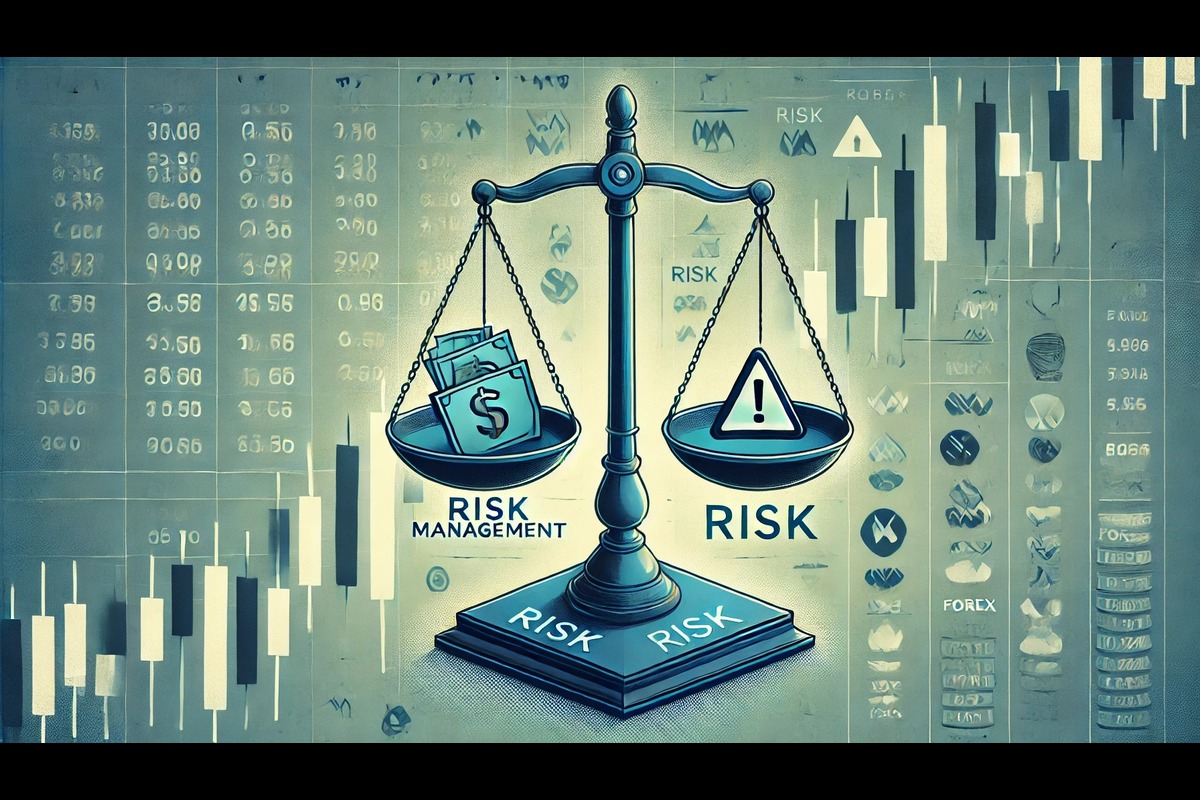
Professional traders typically target risk-reward ratios of at least 1:2 or 1:3. This gives them a significant mathematical edge. Even if they’re only right 40% of the time, they’ll be profitable in the long run.
Position Sizing: The Most Important Calculation You’ll Ever Make
Position sizing determines how many units (lots in forex terminology) you should trade based on your account size and risk tolerance. This is where many traders make catastrophic mistakes.
The standard recommendation in proper risk management for traders and investors is to risk no more than 1-2% of your trading account on any single trade. Let me show you why this is so crucial with a mathematical example.
Imagine you have a $10,000 trading account. If you risk 2% per trade, that’s $200. Here’s what happens after a series of losses:
- After 1 loss: $9,800 remaining (2.04% gain needed to recover)
- After 2 losses: $9,600 remaining (4.17% gain needed to recover)
- After 3 losses: $9,400 remaining (6.38% gain needed to recover)
- After 5 losses: $9,000 remaining (11.11% gain needed to recover)
Now let’s see what happens if you ignore this risk management rule and risk 10% per trade:
- After 1 loss: $9,000 remaining (11.11% gain needed to recover)
- After 2 losses: $8,100 remaining (23.46% gain needed to recover)
- After 3 losses: $7,290 remaining (37.17% gain needed to recover)
- After 5 losses: $5,905 remaining (69.36% gain needed to recover)
Notice how quickly the math works against you? With 10% risk per trade, just five consecutive losses cut your account nearly in half, and you’d need a 69% gain to break even. That’s incredibly difficult to achieve, even for experienced traders.
The formula for position sizing in forex is:
Position Size = (Account Balance × Risk Percentage) / (Stop Loss in Pips × Pip Value)
Let’s work through a concrete example:
- Account balance: $10,000
- Risk percentage: 1% ($100)
- Stop loss: 50 pips
- Pip value for one mini lot: $1
Position Size = ($10,000 × 0.01) / (50 × $1) = $100 / $50 = 2 mini lots
This ensures that if your stop loss is hit, you lose exactly $100, or 1% of your account.
The Drawdown Reality: Why Recovery Gets Exponentially Harder
One of the most sobering aspects of risk management is understanding drawdowns—the peak-to-trough decline in your account balance. The mathematics of recovery from drawdowns should scare you into disciplined risk management.
Here’s the brutal truth presented in a table:
| Drawdown Percentage | Gain Required to Recover | Difficulty Level |
|---|---|---|
| 10% | 11.1% | Manageable |
| 20% | 25% | Challenging |
| 30% | 42.9% | Very Difficult |
| 40% | 66.7% | Extremely Difficult |
| 50% | 100% | Nearly Impossible |
| 60% | 150% | Requires Miracle |
| 75% | 300% | Virtually Impossible |
This table should be burned into every trader’s consciousness. Notice how the required gain to recover increases exponentially? A 50% loss requires a 100% gain just to get back to breakeven. This is why protecting your capital through proper financial risk management is infinitely more important than chasing profits.
I remember a trader who attended one of my workshops. He’d turned $25,000 into $45,000 over six months through careful, disciplined trading. Then he got greedy. He went all-in on a single trade with excessive leverage, convinced he’d identified “the trade of the year.” The market moved against him violently, and he lost $35,000 in two days, leaving him with just $10,000. To get back to his original $25,000, he’d need to make 150%, and to reach his peak of $45,000, he’d need a 350% return. Three years later, he’s still trying to recover, haunted by that one decision to abandon his risk management rules.
Rule 1: Never Risk More Than 1-2% of Your Account Per Trade
This is the golden rule of risk management strategies, and it’s non-negotiable if you want long-term survival in the forex markets. Yet it’s the rule most commonly broken by beginners and even some intermediate traders.
Why the 1-2% Rule Exists
The 1-2% rule isn’t arbitrary, it’s based on mathematical probability and the psychology of recovery. When you limit your risk to this percentage, you give yourself room to be wrong multiple times in a row without suffering irreparable damage to your trading account or your psychology.
Consider this: with 1% risk per trade, you can theoretically lose 100 consecutive trades before your account reaches zero. Obviously, that’s an extreme scenario that would never happen to a competent trader, but it illustrates the buffer this approach provides. More realistically, even a terrible losing streak of 10-15 trades only puts you down 10-15%, which is entirely recoverable.
The psychological benefit is equally important. When each loss is small and manageable, you don’t experience the emotional devastation that leads to revenge trading, abandoning your strategy, or making increasingly desperate attempts to recover losses. You can take a loss, analyze what went wrong, and move on to the next trade with a clear head.
Implementing the 1-2% Rule in Practice
Here’s how to implement this crucial risk management rule systematically:
Step 1: Calculate Your Risk Amount
If you have a $5,000 account and decide on 1% risk, that’s $50 per trade. If you choose 2%, that’s $100 per trade. Write this number down and commit to never exceeding it, regardless of how confident you feel about a particular setup.
Step 2: Determine Your Stop Loss Distance
Before entering any trade, identify where your analysis tells you the trade is invalidated—this becomes your stop loss level. Measure the distance in pips from your entry point to this stop loss level.
Step 3: Calculate Your Position Size
Use the formula I provided earlier to calculate exactly how many lots you should trade to risk your predetermined amount if the stop loss is hit.
Step 4: Enter the Trade with Proper Safeguards
Place your stop loss order immediately upon entering the trade. Don’t rely on “mental stops” or tell yourself you’ll manually close if things go wrong. Emotions will cloud your judgment in the moment.
Common Mistakes Traders Make With This Rule
Mistake 1: Scaling Up Too Quickly
Some traders interpret the 1-2% rule as risking that percentage “unless I’m really confident, then I can risk more.” This is a slippery slope that leads to blown accounts. Your confidence level doesn’t change the probabilities—any trade can go against you regardless of how strong your analysis seems.
Mistake 2: Averaging Down
Traders will follow the 1-2% rule on their initial entry but then add to losing positions, thinking they’re “dollar-cost averaging.” In reality, they’re increasing their total exposure beyond their risk parameters. If you enter with 1% risk and then add to the position when it moves against you, you’re now risking 2%, 3%, or more.
Mistake 3: Multiple Correlated Positions
You might follow the rule on individual trades but open five positions simultaneously on correlated pairs (like EUR/USD, GBP/USD, AUD/USD, and NZD/USD), all in the same direction. When the U.S. dollar strengthens, all five positions move against you simultaneously, and your 1% risk per trade becomes a 5% portfolio risk event.
Mistake 4: Adjusting Stop Losses
Some traders enter with appropriate position sizing and stop losses, but then move their stops further away when the trade approaches the stop loss level, thinking “it just needs a little more room.” This defeats the entire purpose of the risk management rule.
Real-World Example: The Difference This Rule Makes
Let me share two contrasting stories from traders I’ve mentored:
Trader A (Following the Rule): Sarah started with $8,000 and risked exactly 1% ($80) per trade. She went through a rough patch where she had 12 losing trades out of 15 over three weeks. Her account dropped to $7,040, a drawdown of 12%. Frustrating? Absolutely. Career-ending? Not even close. She maintained her discipline, refined her strategy, and over the next two months, rebuilt her account to $8,500. Today, three years later, her account stands at $28,000 through consistent, disciplined trading.
Trader B (Ignoring the Rule): Michael also started with $8,000 but thought the 1-2% rule was “too conservative.” He typically risked 5-10% per trade. He had a great first month and grew his account to $11,200. Feeling invincible, he risked $1,500 (13% of his account) on what he considered a “sure thing.” The trade went catastrophically wrong due to unexpected news, and his stop loss slipped during high volatility, resulting in a $2,300 loss. His account dropped to $8,900. Desperate to recover, he took increasingly large risks. Within two months, his account was below $3,000, and he eventually gave up trading entirely.
The difference? Sarah understood that how to manage risk in trading and investing isn’t about maximizing every opportunity—it’s about survival first, profits second. Michael chased profits and paid the ultimate price.
According to professional risk management guidelines, the 1-2% rule is nearly universal among traders who achieve long-term profitability. It’s not glamorous, it doesn’t promise overnight riches, but it works.
Rule 2: Use Stop-Loss Orders on Every Single Trade (No Exceptions)
If the 1-2% rule is the foundation of risk management strategies, then stop-loss orders are the walls that protect your trading house. Yet astonishingly, many traders resist using them, often with catastrophic consequences.
What Stop-Loss Orders Really Mean
A stop-loss order is a predetermined price level at which you exit a trade to limit your loss. It’s a contract you make with yourself before entering the trade, when your judgment is clear and emotions aren’t involved. Think of it as financial risk management insurance—you pay a small, known premium (the loss you’re willing to accept) to protect against catastrophic outcomes.
The stop loss serves multiple functions:
- Enforces discipline by removing emotional decision-making from the equation
- Limits losses to your predetermined risk amount
- Protects against black swan events like flash crashes or unexpected news
- Allows you to step away from your computer without constant monitoring
- Prevents hope from turning small losses into account-destroying disasters
The key word in “stop-loss order” is “order.” This isn’t a suggestion or a guideline—it should be an iron-clad rule that you never violate.
Types of Stop-Loss Strategies
Different market conditions and trading styles call for different stop-loss approaches:
1. Fixed Pip Stop-Loss
This approach uses a set number of pips from your entry point regardless of market structure. For example, always placing stops 30 pips away. This is simple but ignores market volatility and structure.
Best for: Beginners who need consistency and simplicity, scalpers trading on short timeframes
2. Percentage-Based Stop-Loss
You risk a fixed percentage of your account balance, letting this determine your stop loss distance based on your position size. This is what we’ve been discussing with the 1-2% rule.
Best for: All traders as a foundational approach, swing traders, position traders
3. Volatility-Based Stop-Loss (ATR Method)
Uses the Average True Range indicator to set stops based on current market volatility. When volatility increases, stops are placed further away; when it decreases, stops tighten. This adapts to market conditions.
Best for: Experienced traders, trending markets, trades held across different market sessions
4. Technical Stop-Loss
Places stops just beyond significant technical levels like support/resistance zones, trendlines, or chart patterns. The logic is that if price breaks these levels, your trading thesis is invalidated.
Best for: Technical traders, swing traders, markets with clear structure
5. Time-Based Stop-Loss
Exits trades after a predetermined time period regardless of profit or loss. If your analysis suggests a move should occur within 4 hours, you exit after 4 hours whether you’re winning or losing.
Best for: News traders, traders targeting specific market events
The most effective approach combines elements of multiple strategies. For instance, you might use technical analysis to identify where your stop should logically go, then verify it doesn’t exceed your 1-2% risk tolerance, and finally check that it provides reasonable room based on current ATR volatility.
The Dangerous Myth of “Mental” Stop-Losses
Here’s where I need to be brutally honest: mental stop-losses are worthless. They’re a fantasy that allows traders to feel like they’re managing risk while actually engaging in hope-based trading.
The psychology is insidious. You tell yourself, “I’ll close the trade if it reaches X level,” but when it does, a voice in your head whispers:
- “It’s just a temporary pullback, it’ll turn around”
- “The support level is just 10 more pips down, let me wait”
- “I’m already down this much, might as well wait for recovery”
- “News is coming out in 30 minutes that might reverse this”
Before you know it, what should have been a $100 loss has become a $500, $1,000, or $5,000 nightmare.
I learned this lesson the hardest way possible. Early in my trading career, I had a trade on GBP/USD that hit my “mental” stop loss of $120. But I didn’t close it. “Just a few more pips,” I told myself. The pair continued to move against me. When it reached $250 in losses, I was too embarrassed to close it—closing at this point meant admitting I’d broken my own rules. The loss eventually reached $780 before I finally capitulated in emotional exhaustion. Had I used an actual stop-loss order, my maximum loss would have been $120. That extra $660 was the “stupidity tax” for not implementing proper risk management rules.
Common Stop-Loss Mistakes and How to Avoid Them
Mistake 1: Setting Stops Too Tight
New traders often place stops just a few pips away from entry, thinking this minimizes risk. In reality, it maximizes the probability of being stopped out by normal market noise before the trade has a chance to work. Your stop should give the trade room to breathe based on typical volatility.
Solution: Use ATR or recent price action to determine reasonable stop distance. A good rule of thumb is placing stops beyond recent swing highs/lows rather than arbitrary distances.
Mistake 2: Moving Stops Away from Price
This is perhaps the most destructive behavior in trading. When price approaches your stop loss, you move it further away, thinking you’re “giving the trade more room.” You’re actually abandoning your risk management strategy and increasing your potential loss.
Solution: Implement a strict policy—you can only move stops toward your entry (to lock in profits or reduce risk), never away from it. Better yet, use stop-loss orders that can’t be manually adjusted except to improve your position.
Mistake 3: Not Adjusting for Slippage
During high volatility or low liquidity (like major news events or market opens), your stop might be executed at a worse price than specified, a phenomenon called slippage. Traders who don’t account for this may risk more than intended.
Solution: Add a slippage buffer to your risk calculations during volatile periods, or avoid trading entirely around major news events if you’re not experienced with that environment.
Mistake 4: Placing Stops at Obvious Levels
Many traders place stops just below round numbers (like 1.2000 on EUR/USD) or just beyond obvious support/resistance levels. Unfortunately, institutional traders and algorithms know this and often push price to these levels specifically to trigger stops before reversing.
Solution: Place stops at slightly unconventional levels, giving extra room beyond where everyone else is placing theirs. If everyone has stops at 1.2000, consider placing yours at 1.1985.
The Emotional Freedom of Stop-Losses
One of the most underrated benefits of consistently using stop-loss orders is the emotional freedom it provides. When you enter a trade with a stop in place, you know your maximum loss. This knowledge allows you to:
- Sleep peacefully without worrying about checking charts at 3 AM
- Focus on other aspects of your life without constant anxiety about trades
- Make decisions from logic rather than fear when managing positions
- Accept losses gracefully because they’re predetermined and expected
- Avoid revenge trading because no single loss is devastating
Trading should enhance your life, not consume it with stress and anxiety. Proper stop-loss discipline is essential for achieving that balance and represents a core component of investment risk management for any serious trader.
Rule 3: Maintain a Positive Risk-Reward Ratio (Minimum 1:2)
We touched on risk-reward ratios earlier, but this concept is so crucial to risk management strategies for traders and investors that it deserves its own dedicated discussion. Understanding and implementing proper risk-reward ratios is what separates traders who struggle to break even from those who build consistent profitability.
The Mathematical Magic of Risk-Reward Ratios
The beauty of a positive risk-reward ratio is that it gives you a mathematical edge even if your win rate is mediocre. Let me break this down with real numbers to demonstrate why this is so powerful.
Imagine you’re risking $100 to make $200 (a 1:2 risk-reward ratio). Let’s see different scenarios:
Scenario 1: 50% Win Rate
- 10 trades total
- 5 winners × $200 = $1,000 in profits
- 5 losers × $100 = $500 in losses
- Net result: +$500 profit
Scenario 2: 40% Win Rate
- 10 trades total
- 4 winners × $200 = $800 in profits
- 6 losers × $100 = $600 in losses
- Net result: +$200 profit
Scenario 3: Even Just 35% Win Rate
- 10 trades total
- 3.5 winners (rounding to 4 for simplicity) × $200 = $700 in profits
- 6 losers × $100 = $600 in losses
- Net result: +$100 profit
Do you see what’s happening here? With a 1:2 risk-reward ratio, you can be profitable even if you’re wrong more often than you’re right. This is incredibly powerful because it removes the pressure to be “perfect” with your market analysis.
Now let’s contrast this with traders who don’t maintain positive risk-reward ratios:
Poor Risk-Reward: 2:1 (Risking $200 to Make $100)
- 10 trades total
- Even with a 60% win rate: (6 × $100) – (4 × $200) = $600 – $800 = -$200 loss
You see? Even with a better-than-average win rate, poor risk-reward ratios lead to losses. This is why so many traders struggle—they’re fighting against the mathematics of probability.
How to Identify and Set Appropriate Targets
Setting proper profit targets isn’t arbitrary. It should be based on technical analysis, market structure, and reasonable expectations. Here’s how professional traders approach this aspect of financial risk management:
Method 1: Support and Resistance Levels
Identify the next significant support (when shorting) or resistance (when going long) level. This becomes your profit target because price often pauses or reverses at these levels. Your stop goes beyond the support/resistance level on the opposite side of your entry.
Example: You’re buying EUR/USD at 1.1200. The next resistance is at 1.1260 (60 pips away). You place your stop below the previous support at 1.1170 (30 pips away). Risk-reward ratio: 30:60 or 1:2 ✓
Method 2: Measured Moves
For pattern-based trading (like triangles, flags, or head-and-shoulders), use the height of the pattern to project the target. Many chart patterns have predictable measured moves.
Example: A bull flag has a pole measuring 80 pips. You enter the breakout with a 25-pip stop below the flag structure. Your target is 80 pips above the breakout point. Risk-reward ratio: 25:80 or approximately 1:3 ✓
Method 3: Fibonacci Extensions
Use Fibonacci extension levels (127.2%, 161.8%, 200%) to identify logical profit targets based on the previous price swing. These levels often act as magnets for price.
Example: You identify a pullback entry with a 40-pip stop. The 161.8% Fibonacci extension level is 100 pips away. Risk-reward ratio: 40:100 or 1:2.5 ✓
Method 4: ATR Multiple
Set your profit target at a multiple of the Average True Range. If the ATR is 50 pips, you might target 2× ATR (100 pips) for swing trades while placing your stop at 0.5× ATR (25 pips). Risk-reward ratio: 25:100 or 1:4 ✓
The Win Rate vs. Risk-Reward Sweet Spot
Understanding the relationship between your win rate and required risk-reward ratio is crucial for realistic expectations. Here’s a helpful reference table:
| Win Rate | Minimum Risk-Reward for Profitability | Recommended Risk-Reward |
|---|---|---|
| 30% | 1:2.3 | 1:3 or better |
| 35% | 1:1.9 | 1:2.5 or better |
| 40% | 1:1.5 | 1:2 or better |
| 45% | 1:1.2 | 1:2 or better |
| 50% | 1:1 | 1:1.5 or better |
| 55% | 1:0.8 | 1:1 or better |
| 60% | 1:0.7 | 1:1 or better |
This table shows the minimum risk-reward ratio you need at different win rates just to break even. The recommended column provides a buffer for sustainability and growth.
Most professional traders operate in the 40-50% win rate range with 1:2 or better risk-reward ratios. This is the sweet spot that balances realistic win rates with mathematical profitability.
The Trap of “Take Profit Too Early, Let Losses Run”
One of the most common patterns I see among struggling traders is what I call the “inverse risk-reward syndrome.” They religiously set stop-losses (good) but then close winning trades at the first sign of profit, often securing tiny wins while their occasional losers hit the full stop loss.
This happens because of loss aversion—the psychological phenomenon where losing $100 feels twice as painful as winning $100 feels good. When a trade is profitable, traders experience anxiety about “giving back” the profit, so they close early. When a trade is losing, they hold on hoping it will turn around, because admitting the loss feels too painful.
The result? Average wins of $50 and average losses of $150, even though they intended the opposite.
Breaking this pattern requires:
- Pre-trade planning: Determine your profit target before entering and commit to holding for that target
- Partial profit taking: Consider taking 50% profit at 1:1 and letting the remainder run to 1:2 or beyond
- Trailing stops: Once in profit, use trailing stops to lock in gains while allowing for further upside
- Trade journaling: Track your actual risk-reward outcomes to identify if you’re falling into this trap
- Psychological work: Address the underlying fear and greed that drive premature exits
Remember, you’re trying to build a systematic approach to how to manage risk in trading and investing. Consistency matters more than perfection on any individual trade.
Rule 4: Limit Leverage to Manageable Levels (Maximum 10:1 for Beginners)
Leverage is perhaps the most misunderstood and misused tool in forex trading. It’s marketed as a way to “control large positions with small amounts of capital,” which sounds appealing. But what brokers often fail to emphasize is that leverage amplifies losses
just as dramatically as it amplifies gains. In the context of risk management strategies, leverage is a double-edged sword that can slice your account to ribbons if not wielded carefully.
Understanding Leverage: The Magnifier of Everything
Leverage allows you to control a position larger than your account balance. With 100:1 leverage, you can control $100,000 worth of currency with just $1,000 in your account. Sounds amazing, right?
Here’s what actually happens:
Without Leverage:
- Account: $10,000
- You buy $10,000 worth of EUR/USD at 1.2000
- Price moves to 1.2100 (100 pips or 0.83%)
- Profit: $83 (0.83% return on account)
With 50:1 Leverage:
- Account: $10,000
- You control $500,000 worth of EUR/USD at 1.2000
- Price moves to 1.2100 (100 pips or 0.83%)
- Profit: $4,150 (41.5% return on account)
That’s the seductive part—a small price movement creates massive returns.
But here’s the nightmare scenario:
With 50:1 Leverage (Price Moves Against You):
- Account: $10,000
- You control $500,000 worth of EUR/USD at 1.2000
- Price moves to 1.1975 (25 pips or 0.21% against you)
- Loss: $1,037.50 (10.4% of your account gone)
- Price moves to 1.1950 (50 pips or 0.42% against you)
- Loss: $2,075 (20.7% of your account gone)
- Price moves to 1.1900 (100 pips or 0.83% against you)
- Loss: $4,150 (41.5% of your account destroyed)
A seemingly small 0.83% adverse price movement wipes out 41.5% of your capital. Now imagine you’re using 100:1 or even 500:1 leverage. A tiny adverse movement triggers a margin call, and your account is liquidated before you even realize what happened.
The Appropriate Leverage for Different Experience Levels
Not all leverage is bad—it’s the excessive leverage that destroys accounts. Here’s my recommended framework:
Complete Beginners (0-6 months of live trading):
- Maximum leverage: 5:1 to 10:1
- Reason: You’re still learning, making mistakes, and developing discipline. Lower leverage gives you room for errors without catastrophic consequences.
Intermediate Traders (6 months to 2 years):
- Maximum leverage: 10:1 to 20:1
- Reason: You’ve developed basic competence and consistency but still learning advanced risk management. Modest leverage allows for meaningful returns without excessive risk.
Advanced Traders (2+ years of consistent profitability):
- Maximum leverage: 20:1 to 30:1
- Reason: You have proven risk management discipline and understand market dynamics. Higher leverage can be used judiciously for specific setups.
Professional Traders (Institutional or verified track record):
- Maximum leverage: 30:1 to 50:1 (in rare circumstances)
- Reason: Deep experience, rigorous risk systems, and typically lower risk percentages per trade allow for higher leverage on high-probability setups.
NEVER recommended for retail traders:
- Leverage above 50:1
- Reason: This is gambling, not investing. The margin for error is so thin that even professional traders struggle to maintain accounts at these levels.
How to Calculate Your Actual Leverage Usage
Many traders don’t realize how much leverage they’re actually using because they confuse “maximum available leverage” with “utilized leverage.” Your broker might offer 100:1 leverage, but that doesn’t mean you should use it.
Formula: Actual Leverage = Position Size / Account Equity
Example 1:
- Account: $5,000
- You open 1 standard lot on EUR/USD (controls $100,000)
- Actual leverage: $100,000 / $5,000 = 20:1
Example 2:
- Account: $5,000
- You open 0.5 standard lots on EUR/USD (controls $50,000)
- Actual leverage: $50,000 / $5,000 = 10:1
Example 3:
- Account: $5,000
- You open 0.1 standard lots on EUR/USD (controls $10,000)
- Actual leverage: $10,000 / $5,000 = 2:1
You control your actual leverage through position sizing, not through the maximum leverage your broker offers. A broker offering 500:1 leverage doesn’t force you to use it—that’s your choice based on your position size.
The Leverage Trap: Why Traders Over-Leverage
If high leverage is so dangerous, why do traders consistently use it? The reasons are psychological and financial:
1. Small Account Syndrome
Traders with small accounts ($500-$2,000) feel like they need high leverage to make “meaningful” profits. They think, “What’s the point of making $10 on a $1,000 account? I need to make hundreds of dollars per trade to grow this.”
This mindset is backwards. Professional investment risk management focuses on percentage returns, not dollar amounts. A 2% return on $1,000 is just as impressive as a 2% return on $100,000—the skill is identical; only the scale differs.
2. Impatience and Get-Rich-Quick Mentality
Trading is marketed as a path to quick wealth, and high leverage seems like the shortcut. Traders think, “If I can just make 10 great trades with high leverage, I’ll turn $1,000 into $10,000.”
But the math doesn’t work that way in practice. High leverage means one or two mistakes can wipe you out before you ever hit those “10 great trades.”
3. Survivor Bias and Social Media
Social media is filled with screenshots of traders turning small accounts into large ones using excessive leverage. What you don’t see are the hundreds or thousands of blown accounts behind every success story. It’s like only hearing about lottery winners and never about the millions who lost money.
4. Broker Incentives
Let’s be honest—brokers profit from traders using high leverage because it increases trading volume and makes it more likely traders will lose money (which, in many broker models, benefits the house). The entire industry has financial incentives to encourage over-leveraging.
Practical Steps to Manage Leverage Responsibly
Step 1: Determine Your Maximum Acceptable Leverage
Based on your experience level from the framework above, choose a maximum leverage ratio and write it down as a hard rule.
Step 2: Calculate Before Every Trade
Before opening any position, calculate: “What is my actual leverage with this position size?” If it exceeds your maximum, reduce your position size.
Step 3: Use the 1-2% Rule As Primary Control
If you’re risking only 1-2% per trade with appropriate stop-losses, you’ll naturally limit your leverage to reasonable levels. The 1-2% rule and leverage limits work together as complementary risk management rules.
Step 4: Test With Lower Leverage First
If you think you need 30:1 leverage to be profitable, test your strategy with 10:1 leverage first. If you can’t make money with lower leverage, you won’t make money with higher leverage—you’ll just blow up faster.
Step 5: Monitor Your Margin Level
Keep your margin level above 300%. This means your equity is at least 3× your used margin, giving you a substantial buffer against adverse price movements. If your margin level drops below 200%, you’re over-leveraged and at risk of margin calls.
The Margin Call Nightmare
A margin call occurs when your account equity falls below the broker’s maintenance margin requirement, and they forcibly close your positions to prevent your account from going negative. This is the final consequence of over-leveraging, and it’s devastating both financially and psychologically.
I’ll never forget Marcus, a trader I met at a seminar. He had $15,000 in his account and was using 100:1 leverage. He opened a position controlling $1.5 million during what seemed like a quiet session. Then unexpected news hit, causing a 150-pip adverse move in seconds. His broker triggered a margin call, liquidating his entire position. In less than three minutes, his $15,000 became $2,400. Years of savings, gone because he didn’t respect leverage limits in his financial risk management approach.
The lesson? Leverage should be treated like a powerful medication—useful in correct doses, lethal in excess. Master position sizing and the 1-2% rule first. Only then should you even consider using leverage beyond the most conservative levels.
Rule 5: Diversify Your Trading Portfolio (Don’t Put All Eggs in One Currency Pair)
Diversification is a cornerstone principle of investment risk management in traditional investing, yet many forex traders ignore it entirely. They find “their” currency pair—maybe EUR/USD because it’s popular, or GBP/JPY because of its volatility—and trade it exclusively. This concentration creates unnecessary risk that can be mitigated through intelligent diversification.
Why Currency Pair Diversification Matters
Correlation Risk
Currency pairs are not independent instruments. Many pairs move in lockstep (positive correlation) or inverse patterns (negative correlation) based on their underlying currencies. If you’re trading multiple pairs with high correlation, you’re not actually diversified—you’re compounding the same directional bet.
For example:
- EUR/USD, GBP/USD, AUD/USD, and NZD/USD all tend to move in the same direction because they all involve the USD as the quote currency
- If the U.S. dollar strengthens broadly, all four pairs will likely move against you simultaneously
- What looks like four separate trades is actually one large trade with 4× the exposure
Unexpected Event Risk
Individual currencies can experience sudden shocks from political events, economic surprises, or central bank announcements specific to that country. If your entire portfolio is concentrated in pairs involving that currency, a single event can devastate your account.
Real Example: The Swiss National Bank unexpectedly removed its currency peg to the Euro in January 2015. EUR/CHF dropped nearly 30% in minutes. Traders concentrated in CHF-related pairs saw catastrophic losses or even negative account balances. Those with diversified portfolios absorbed the shock much better.
Volatility Clustering
Different currency pairs exhibit different volatility characteristics and patterns. Some pairs trend smoothly; others are choppy and range-bound. By trading multiple pairs with different characteristics, you smooth out your equity curve and reduce the impact of any single pair going through a difficult period.
How to Diversify Effectively in Forex
Strategy 1: Trade Currency Pairs from Different Groups
Organize pairs into groups based on their characteristics:
Major Pairs (High liquidity, tighter spreads):
- EUR/USD, GBP/USD, USD/JPY, USD/CHF
- Use for: Core positions, trend-following strategies
Minor Pairs (Good liquidity, moderate spreads):
- EUR/GBP, EUR/AUD, GBP/JPY, NZD/JPY
- Use for: Range-trading strategies, technical patterns
Exotic Pairs (Lower liquidity, wider spreads):
- USD/TRY, EUR/PLN, USD/ZAR, AUD/MXN
- Use for: High-risk/high-reward setups, carry trades (advanced traders only)
Don’t trade multiple pairs from the same group simultaneously in the same direction. Instead, consider one position from each group with different underlying themes.
Strategy 2: Balance Correlations
Use correlation matrices to understand relationships between pairs you’re trading. The correlation coefficient ranges from -1 to +1:
- +0.7 to +1.0: Strong positive correlation (move together)
- +0.3 to +0.7: Moderate positive correlation
- -0.3 to +0.3: Low correlation (independent movement)
- -0.7 to -0.3: Moderate negative correlation
- -1.0 to -0.7: Strong negative correlation (move opposite)
Example Correlation Strategy:
If you’re bullish on EUR/USD (+1.0 position), consider:
- Adding USD/JPY short (-1.0 position) = These typically have strong negative correlation, balancing your USD exposure
- Avoid adding GBP/USD, AUD/USD, or EUR/GBP longs = High positive correlation compounds risk
Strategy 3: Time-Based Diversification
Different currency pairs are most active during different trading sessions:
Asian Session (Tokyo):
- USD/JPY, AUD/JPY, NZD/JPY
- Lower volatility, often range-bound
European Session (London):
- EUR/USD, GBP/USD, EUR/GBP
- Highest volume and volatility for these pairs
American Session (New York):
- USD/CAD, USD/MXN, overlaps with EUR/USD and GBP/USD for high activity
By trading pairs most active in different sessions, you avoid concentration during any single time period.
The 30-30-30 Diversification Framework
Here’s a practical framework I’ve developed for managing currency diversification as part of comprehensive risk management strategies:
No more than 30% of your total risk in any single currency pair
- If you’re risking 2% per trade total, don’t risk more than 0.6% on any single pair
No more than 30% of your total risk in any single underlying currency
- Example: If you have EUR/USD (long) and EUR/GBP (long), you have 2% total EUR exposure
- Don’t add EUR/JPY long, as it would exceed your 30% EUR limit
No more than 30% of your total risk in highly correlated pairs (correlation >0.7)
- Check correlation coefficients before opening new positions
- Tools like Myfxbook, Investing.com, or your trading platform often provide correlation data
This framework prevents concentration risk while still allowing enough active positions to capture opportunities.
Diversification Mistakes to Avoid
Mistake 1: False Diversification
Opening five positions on EUR/USD, GBP/USD, AUD/USD, NZD/USD, and EUR/GBP, all in the same direction. You think you’re diversified because you have five trades, but you’re actually making one concentrated bet on USD weakness.
Mistake 2: Over-Diversification
Trading 15-20 currency pairs simultaneously because you think “more is better.” This spreads your attention too thin, makes analysis impossible, and increases transaction costs through spreads. Most retail traders should focus on 3-6 pairs maximum.
Mistake 3: Diversifying Into Unfamiliar Territory
Adding exotic pairs or cryptocurrencies to your forex portfolio without understanding their unique characteristics, liquidity issues, and risk factors. Diversification should never mean trading instruments you don’t understand.
Mistake #4: Static Diversification
Using the same diversification approach regardless of market conditions. During crisis periods, correlations often spike toward +1.0 (everything moves together), negating your diversification efforts. You need to adjust based on current market dynamics.
Practical Diversification Example
Let me show you what a properly diversified forex portfolio might look like:
Portfolio: $10,000 account, 2% risk per trade
Position 1: EUR/USD Long
- Risk: $200 (2%)
- Setup: Bullish trend continuation
- Underlying exposure: Long EUR, Short USD
Position 2: USD/JPY Long
- Risk: $200 (2%)
- Setup: Breakout from consolidation
- Underlying exposure: Long USD, Short JPY
- Note: Balances USD exposure from Position 1
Position 3: GBP/JPY Long
- Risk: $200 (2%)
- Setup: Range breakout
- Underlying exposure: Long GBP, Short JPY
- Note: Different from EUR and USD exposure
Total Risk: $600 (6% of account)
Currency Exposure Breakdown:
- EUR: +$200 (2%)
- USD: $0 (balanced: -$200 from Pos 1, +$200 from Pos 2)
- GBP: +$200 (2%)
- JPY: -$400 (4%)
This portfolio has:
- Positions in three different pairs
- Balanced USD exposure
- Moderate JPY short exposure (would monitor if adding more JPY shorts)
- No single currency exceeding 4% exposure
- Total risk within acceptable limits at 6%
Compare this to the common mistake:
Poor Diversification:
- Position 1: EUR/USD Long ($200 risk)
- Position 2: GBP/USD Long ($200 risk)
- Position 3: AUD/USD Long ($200 risk)
- Position 4: EUR/GBP Long ($200 risk)
Currency Exposure:
- EUR: +$400 (4%)
- USD: -$600 (6%)
- GBP: +$200 (2%)
- AUD: +$200 (2%)
This is dangerously concentrated—if USD strengthens broadly, all positions suffer simultaneously. That’s not diversification; it’s multiplication of the same risk.
Rule 6: Develop and Follow a Written Trading Plan (Your Risk Management Blueprint)
If you’ve made it this far through these risk management strategies, you’ve learned multiple crucial rules. But here’s the harsh truth: knowing the rules and consistently following them are entirely different challenges. This is where a written trading plan becomes essential—it’s your personal constitution that governs all trading decisions and keeps you from emotional, impulsive actions that destroy accounts.
Why “Winging It” Destroys Accounts
I’ve mentored hundreds of traders, and I can predict with startling accuracy who will succeed and who will fail within the first conversation. The dividing line? Those who trade with a written plan versus those who “play it by ear” or “trust their instincts.”
Trading without a plan is like:
- Building a house without blueprints
- Performing surgery without a procedure
- Flying a plane without a flight plan
In any field where mistakes have serious consequences, professionals follow detailed, written procedures. Trading should be no different.
The psychological reality: Your brain is fundamentally different when you’re in a trade versus when you’re planning before a trade. Mid-trade, you’re flooded with emotions—fear when losing, greed when winning, hope when uncertain. These emotions hijack rational decision-making. A written plan allows your calm, rational self to make decisions that your emotional self will follow when it matters most.
Think about the causes and solutions for chronic overtrading in trading. Most chronic overtrading stems from not having clear entry criteria written down. Without a plan specifying exactly when you’ll trade, every price movement looks like a potential opportunity. You end up taking marginal setups, revenge trades, and impulsive positions that violate proper financial risk management principles.
Essential Components of a Risk Management Trading Plan
Your trading plan should be a living document that covers every aspect of your trading approach. Here are the critical sections:
1. Market Selection and Focus
- Which currency pairs will you trade?
- Which pairs are prohibited (too exotic, too volatile, outside your expertise)?
- Will you trade other instruments (indices, commodities, cryptocurrencies)?
Example: “I trade exclusively EUR/USD, GBP/USD, and USD/JPY during London and New York sessions. I will not trade exotic pairs or currency pairs involving currencies I don’t understand (e.g., TRY, ZAR, MXN).”
2. Risk Parameters (The Non-Negotiables)
- Maximum risk per trade (1-2% standard)
- Maximum daily loss limit (typically 3-6%)
- Maximum weekly loss limit (typically 8-12%)
- Maximum total open risk (typically 6-10%)
- Maximum leverage utilized
- Position sizing methodology
Example: “I risk exactly 1% per trade, never more. If I lose 5% in any single day, I stop trading for the rest of that day. If I lose 10% in any week, I stop trading and review my approach. I will never utilize more than 10:1 actual leverage.”
3. Entry Criteria (What Must Be Present)
- Technical conditions required (trend, support/resistance, indicators, patterns)
- Fundamental alignment (if applicable)
- Time-of-day considerations
- Confirmation requirements
Example: “I only enter long positions when:
(1) Price is above 50 and 200 EMAs,
(2) RSI shows bullish divergence or is rising from oversold,
(3) Price has bounced from a key support level,
(4) At least 2 hours before major news releases,
(5) During London or New York sessions with adequate liquidity.”
4. Exit Criteria (When and How You’ll Leave)
- Stop loss placement methodology
- Take profit targets or trailing stop approach
- Time-based exits
- Conditions that invalidate your trade thesis
Example: “Initial stop loss placed 5 pips below the recent swing low. Take profit at 1:2 risk-reward ratio or at next major resistance level. If position remains open after 48 hours with less than 1:1 gain, manually close. Trail stop to breakeven after reaching 1:1 profit. If market structure breaks (e.g., trend line broken), exit immediately regardless of profit/loss.”
5. Trade Management Rules
- How and when you’ll scale in or out
- Conditions for moving stops
- When you’ll take partial profits
- How you’ll handle winning/losing streaks
Example: “After reaching 1:1 profit, I may take 50% off and trail remaining 50% with a 20-pip trailing stop. I will never move stops away from entry. After three consecutive losses, I reduce position size to 0.5% risk and require higher-quality setups. After five consecutive wins, I take a 24-hour break to prevent overconfidence.”
6. Prohibited Actions (Your Trading “Don’t” List)
- Revenge trading after losses
- Increasing position size to recover losses
- Trading without stops
- Trading during high-impact news (unless specifically trading the news)
- Moving stops away from entry
- Trading when emotional, tired, or distracted
- Overriding the plan without written justification
Example: “I will NEVER:
(1) Trade immediately after a loss without reviewing why the loss occurred,
(2) Increase risk above 1% regardless of conviction,
(3) Trade during NFP or FOMC announcements unless this was planned 24 hours in advance,
(4) Trade after 9 PM my local time due to fatigue,
(5) Open new positions if I’m feeling frustrated, angry, or euphoric.”
The Review and Adaptation Process
A trading plan isn’t set in stone—it should evolve as you gain experience and as market conditions change. However, modifications should be deliberate and data-driven, not reactive and emotional.
Weekly Review:
- Review all trades from the week
- Calculate win rate, average winner, average loser, and actual risk-reward ratios
- Identify which rules you followed and which you violated
- Note any patterns in your best and worst trades
Monthly Review:
- Analyze overall profitability and drawdown
- Review whether your risk parameters are appropriate
- Assess if your entry/exit criteria are working in current market conditions
- Update your plan based on data, not emotions
Quarterly Review:
- Comprehensive evaluation of your trading approach
- Consider major modifications only if data supports them over at least 100+ trades
- Reassess your goals, account size, and risk tolerance
- Refine psychological strategies based on emotional patterns you’ve noticed
Critical Rule: Never modify your plan during active trades or immediately after wins/losses. These are the most emotionally charged moments when your judgment is compromised. Wait at least 24 hours after any strong emotional reaction before considering plan modifications.
How Your Plan Protects You Psychologically
Beyond the practical benefits, a written trading plan provides crucial emotional discipline techniques for consistent trading:
Decision Paralysis Protection: When you have clear criteria, you don’t agonize over every decision. Either the conditions are met or they aren’t—no ambiguity.
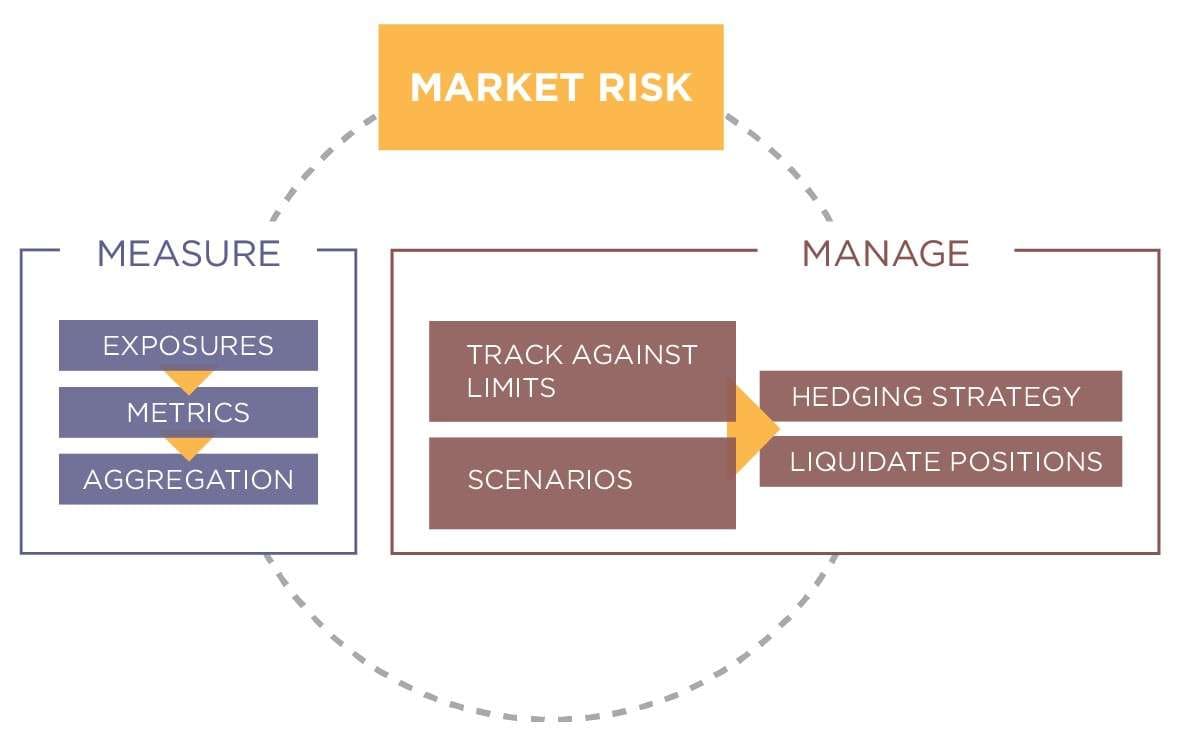
FOMO Prevention: Fear of missing out drives traders to chase moves and enter late. Your plan specifies exactly when you enter. If conditions aren’t met, you sit on your hands regardless of how tempting the move looks.
Regret Minimization: If you follow your plan and lose, you can accept it as part of the statistical process. If you violate your plan and lose, the regret is compounded by knowing you self-sabotaged.
Confidence Building: Every time you follow your plan, you reinforce positive habits and build confidence in your process. Over time, following the plan becomes automatic.
Emotional Distance: Your plan creates psychological distance between you and the money. You’re not thinking “I just lost $500,” but rather “my 1% risk was hit on trade #47.” This reframing reduces emotional impact.
Real-World Example: The Power of a Written Plan
Let me share two traders who started within a month of each other:
Trader A (Sarah): Had a Detailed Written Plan
- Started with $5,000
- Lost $450 in first month (9% drawdown)
- Reviewed her plan, identified she was entering too early in trends
- Adjusted entry criteria to require stronger confirmation
- Gradually became profitable, grew account to $8,200 over 10 months
- Today, five years later, manages a $45,000+ account
Trader B (Jason): “Planned to Make a Plan Eventually”
- Started with $5,000
- Made $1,200 in first month (24% gain!)
- Felt he had a “natural talent” for trading
- Increased position sizes without formal risk rules
- Hit a losing streak, lost $2,800 in a single week
- Tried to recover through aggressive trading
- Account dropped to $1,500 within three months
- Eventually gave up trading, believing “it doesn’t work”
The difference? Sarah had a framework that protected her during both losses and wins. Jason’s early success became his downfall because he had no system to maintain discipline.
A written trading plan is your single most important tool for implementing risk management strategies for traders and investors. It transforms you from an emotional gambler into a systematic professional. If you take away only one action item from this entire article, it should be this: write your trading plan today, before placing another trade.
Rule 7: Implement Circuit Breakers (Daily and Weekly Loss Limits)
One of the most destructive patterns in trading is the downward spiral—where a bad day turns into a catastrophic day, or a rough week turns into a blown account. This happens because traders, desperate to recover losses, abandon their risk management strategies and start taking increasingly irrational trades. Circuit breakers prevent this death spiral.
What Are Trading Circuit Breakers?
Circuit breakers are predetermined loss limits that force you to stop trading when reached, regardless of your emotional state or belief that “the next trade will be the winner.” The concept comes from stock exchanges, which halt trading temporarily when markets fall too rapidly, preventing panic-driven meltdowns.
In personal trading, circuit breakers serve the same function—they interrupt destructive trading patterns before they become catastrophic.
The typical framework:
- Daily Loss Limit: 3-6% of account balance
- Weekly Loss Limit: 8-12% of account balance
- Monthly Loss Limit: 15-20% of account balance
These aren’t arbitrary percentages—they’re based on the mathematics of recovery and psychological resilience.
The Psychology Behind Loss Spirals
Understanding why circuit breakers are necessary requires understanding the psychological trap that catches even experienced traders.
The Sequence of Destruction:
- Initial Loss: You take a normal loss, perhaps 1-2% of your account
- Frustration: You feel annoyed that your analysis was wrong
- Revenge Trade: You immediately enter another trade to “make back” the loss, often with larger size
- Compounded Loss: This hasty trade also loses, now you’re down 3-4%
- Desperation: Now you’re genuinely upset and determined to recover
- Size Increase: You double your normal position size, thinking “just need one good trade”
- Catastrophic Loss: The large position goes badly wrong, you’re now down 8-10% or more
- Panic: Complete emotional collapse, making random trades with no analysis
- Account Devastation: The day ends with 15-25% losses, sometimes total account blow-up
This entire sequence can happen in a single trading session. I’ve experienced it myself. I’ve also seen countless traders go through this exact pattern, sometimes multiple times before they finally implement circuit breakers as a core part of their investment risk management approach.
The neuroscience: When you’re losing, your amygdala (the brain’s fear center) activates, flooding your system with stress hormones. Simultaneously, your prefrontal cortex (responsible for rational decision-making) becomes impaired. You’re literally incapable of making good decisions in this state, yet that’s precisely when you’re making critical trading decisions.
Circuit breakers force you to step away before this neurological hijacking leads to disaster.
Implementing Daily Loss Limits
Your daily loss limit is the maximum amount you’ll allow yourself to lose in any single trading day. Once hit, you close all positions (if any remain open) and step completely away from trading platforms until the next trading day.
Setting Your Daily Limit:
For most traders, 3-5% is appropriate:
- 3% limit: Conservative, best for beginners or those prone to emotional trading
- 4% limit: Moderate, good for intermediate traders with decent emotional control
- 5% limit: Aggressive, only for experienced traders with strong discipline
- 6%+ limit: Generally not recommended for retail traders
Calculating the Limit:
Let’s say you have a $10,000 account and choose a 4% daily limit ($400).
This means:
- If you take four consecutive 1% losses (4 × $100 = $400), you stop trading
- If you take two consecutive 2% losses (2 × $200 = $400), you stop trading
- If you take one large loss due to slippage or error that costs $400, you stop trading
- Even if you were up earlier in the day, if you give back profits and go net -$400, you stop
Important: Your daily limit is based on net losses for the day, not gross. If you made $200 earlier but then lost $600, your net loss is $400—you’ve hit your limit.
Implementing Weekly Loss Limits
Your weekly loss limit serves as a secondary circuit breaker for traders who might hit their daily limit early in the week and then have additional losing days.
Setting Your Weekly Limit:
Typically, this should be 2-2.5× your daily limit:
- If daily limit is 3%, weekly limit is 6-8%
- If daily limit is 4%, weekly limit is 8-10%
- If daily limit is 5%, weekly limit is 10-12%
The Logic:
The weekly limit protects against the scenario where you have multiple bad days in a row. If you lose 4% on Monday, 3% on Wednesday, and 2% on Thursday, you’re down 9% for the week. Without a weekly circuit breaker, you might try to “trade your way out” on Friday, likely making things worse.
With a weekly limit of 8%, you would have stopped trading after Wednesday’s loss put you over the limit. You’d preserve the remaining 91% of your account and take time to analyze what went wrong.
What to Do When Circuit Breakers Are Hit
Hitting a circuit breaker isn’t a failure—it’s the system working as designed. Here’s the proper protocol:
Immediate Actions (Within 1 Hour of Hitting the Limit):
- Close all open positions immediately if any remain
- Log out of trading platforms and close all charts
- Physical distance: Leave your trading space—go for a walk, change environments
- No chart watching: Resist the urge to monitor markets or analyze “what could have been”
- Breathing exercises: Spend 5-10 minutes on deliberate breathing to calm your nervous system
Short-Term Actions (Within 24 Hours):
- Journal every trade from the losing session
- What was your entry rationale?
- Did you follow your plan?
- What was your emotional state?
- What would you do differently?
- Identify patterns
- Were all losses in one pair?
- Did you violate specific rules repeatedly?
- Were you trading emotionally after the first loss?
- Were you overtrading (too many positions)?
- Screen record review (if you record your trading sessions)
- Watch your own behavior objectively
- Notice body language, facial expressions, mouse movements
- Identify the moment discipline broke down
Medium-Term Actions (Before Resuming Trading):
- Mandatory break: Don’t trade the following day, even if your daily limit would allow it
- Plan review: Read through your entire written trading plan
- Psychological assessment: Are you emotionally ready to trade again? If not, extend the break
- Paper trading session: Before resuming live trading, complete one full session of simulated trading following your rules perfectly
- Reduced risk period: When you do resume, consider trading at 0.5% risk for the first 5-10 trades to rebuild confidence
The Common Mistake: Trying to “Trade Through It”
The most common failure with circuit breakers is not actually using them. Traders set limits but then rationalize ignoring them:
- “This next trade will definitely win, I can feel it”
- “I’m just one trade away from recovering everything”
- “This setup is too good to pass up”
- “The daily limit doesn’t apply if I really believe in the trade”
All of these thoughts are your emotional brain trying to override your rational systems. Think about emotional discipline techniques for consistent trading—the discipline isn’t needed when you’re calm and winning. It’s needed precisely at these moments when your brain is screaming at you to violate the rules.
The Solution: Make your circuit breakers non-negotiable and external. Some approaches:
- Trading partner: Inform a trading partner or mentor of your limits and give them permission to call you out
- Technical enforcement: Use trading platform settings that literally prevent trading after certain loss thresh
- Rate your emotional state (1-10, where 5 is neutral)
- Identify which emotion is strongest right now
- Ask: “Am I entering this trade based on analysis or emotion?”
- Require: If emotional rating is below 3 (fearful) or above 7 (overconfident/greedy), wait 30 minutes and reassessolds (some platforms offer this)
- Financial consequences: Commit that if you violate circuit breakers, you’ll donate a significant amount to charity (make it meaningful enough to sting)
- Physical removal: Keep your trading computer power cable in another location; after hitting limits, you must physically retrieve it, adding friction to impulse trading
Circuit Breakers Success Story
David came to me after blowing up two trading accounts ($8,000 and $12,000). He understood technical analysis, had a decent strategy, but couldn’t control his emotions after losses.
We implemented strict circuit breakers:
- 3% daily limit
- 7% weekly limit
- Mandatory 2-day break after hitting either limit
- Required to text me immediately when limits were hit (accountability)
The first month was challenging. He hit his daily limit twice and his weekly limit once. But each time, he followed the protocol—stopped trading, analyzed what happened, took breaks.
By month three, something remarkable happened: he hadn’t hit any circuit breakers. Not because he wasn’t taking losses (he still had plenty), but because he’d learned to accept losses as part of the process rather than fighting them. His equity curve smoothed out dramatically.
Eighteen months later, his $5,000 third account had grown to $11,500. The circuit breakers didn’t just protect his account—they reprogrammed his psychological relationship with losses, teaching him how to manage risk in trading and investing from both a technical and emotional perspective.
Rule 8: Master Your Emotions Through Trading Psychology Techniques
All the technical risk management strategies in the world won’t save you if your psychology is sabotaging your execution. Trading psychology is where most traders fail, even those with excellent technical skills and solid trading plans. Mastering emotional discipline techniques for consistent trading is what transforms good traders into consistently profitable ones.
The Four Emotional Demons of Trading
Every trader battles four primary emotional demons that destroy discipline and violate risk management rules:
1. Fear
Fear manifests in multiple ways:
- Fear of loss: Prevents you from taking valid setups because you’re worried about losing
- Fear of missing out (FOMO): Drives you to chase trades and enter at poor prices
- Fear of being wrong: Makes you move stops or hold losing trades to avoid admitting mistakes
- Fear of success: Ironically, some traders sabotage themselves when doing well because they don’t believe they deserve success
2. Greed
Greed drives:
- Over-leveraging: Using excessive position sizes to maximize returns
- Refusing to take profits: Holding winners too long, turning them into losers
- Overtrading: Taking marginal setups because you want more winners
- Abandoning risk rules: Risking more than planned because “this setup is too good”
3. Hope
Hope is dangerous because it’s disguised as optimism:
- Holding losers: “It will turn around” becomes “give it more time” becomes devastating loss
- Ignoring stop losses: Mental stops evaporate when you “hope” for reversal
- Averaging down: Adding to losing positions, hoping to recover faster
- Blind faith in analysis: Refusing to accept when you’re wrong because you “hope” your analysis will be vindicated
4. Revenge
Revenge trading is perhaps the most destructive:
- Immediate re-entry: Taking another trade seconds after a loss to “get back” at the market
- Size increases: Doubling or tripling position size to recover losses quickly
- Rule abandonment: Completely ignoring entry criteria and risk parameters
- Irrational targets: Holding trades far beyond reasonable targets trying to “punish” the market
These four emotions are universal—every trader experiences them. The difference between successful and unsuccessful traders isn’t the absence of these emotions but how they’re managed. This is where you learn how to manage risk in trading and investing from a psychological perspective.
Practical Psychology Techniques for Emotional Control
Technique 1: The Pre-Trade Checklist
Before entering any trade, complete a brief emotional inventory:
- Technique 2: The 20-Minute RuleAfter any strong emotional event (large win, large loss, series of losses, argument with spouse, bad news), implement a mandatory 20-minute break before the next trade.Why 20 minutes?
Research shows that acute emotional arousal typically peaks within 3-5 minutes and begins declining after about 10-15 minutes. By 20 minutes, most people have returned to a more neutral emotional state if they’ve physically moved away from the stimulus (your trading screen).
During these 20 minutes:
- Leave your trading space
- Do something physical (walk, stretch, pushups)
- Drink water and eat something if needed
- Breathe deliberately (inhale 4 counts, hold 4, exhale 6)
- Do NOT look at charts or financial news
Technique 3: Emotional Journaling
Keep a separate journal alongside your trading journal specifically for emotions. After each trading session, spend 5 minutes answering:
- What emotions did I feel today?
- Which emotion was strongest?
- Did I make any decisions based on emotion rather than my plan?
- If I violated rules, what triggered it?
- What early warning signs can I identify?
Over time, patterns emerge. You might discover:
- You overtrade on Fridays (weekend anxiety)
- You take revenge trades after losses (can’t accept being wrong)
- You chase breakouts after missing initial moves (FOMO pattern)
- You refuse to take losses on EUR/USD (emotional attachment to specific pair)
Awareness of these patterns is the first step to changing them.
Technique 4: The “Future Self” Visualization
Before making any impulsive trading decision (especially increasing size, moving stops, or revenge trading), pause and visualize:
“How will I feel about this decision in 4 hours? Tomorrow? Next week?”
This engages your prefrontal cortex (rational brain) and creates temporal distance from the emotional impulse. Often, you’ll realize that Future You will be grateful you resisted the temptation.
For example:
- “If I double my position size right now to recover today’s losses, how will I feel tomorrow if this also loses?”
- Almost certainly, the answer is: “Terrible, devastated, full of regret”
- This realization can interrupt the destructive behavior
Technique 5: Physical State Management
Your physical state directly influences your emotional state and decision-making:
Sleep: Never trade after less than 6 hours of sleep. Fatigue impairs judgment as much as alcohol intoxication.
Nutrition: Avoid trading on empty stomach (low blood sugar impairs decision-making) or immediately after large meals (blood flow to digestive system reduces cognitive function).
Hydration: Dehydration of even 1-2% impairs cognitive performance. Keep water nearby and drink throughout trading sessions.
Exercise: Regular exercise (especially before trading sessions) reduces stress hormones and improves emotional regulation. A 15-minute walk before trading can dramatically improve discipline.
Environment: Trade in a clean, organized, quiet space. Clutter and distractions increase stress and reduce focus.
Technique 6: The “Stop Trading Early” Discipline
One powerful technique is deciding before the session starts: “If I make X amount or lose Y amount, I stop trading for the day regardless of opportunities.”
Win Limit Example: “If I make 3% today, I stop trading immediately and enjoy the win.”
This prevents giving back profits and teaches you to be satisfied with reasonable returns rather than always wanting more.
Loss Limit Example: “If I lose 2%, I stop immediately (well before my 4% circuit breaker).”
This creates a buffer and prevents the loss spiral from ever beginning.
Many successful traders use rules like: “Three trades or 2% profit/loss, whichever comes first, then I’m done for the day.”
The Role of Meditation and Mindfulness
While it might sound “new age” to some, meditation and mindfulness practices have substantial research supporting their effectiveness for traders:
Benefits for Trading:
- Increased emotional awareness (noticing emotions before they control behavior)
- Improved impulse control (space between trigger and response)
- Reduced stress reactivity (losses don’t trigger panic)
- Enhanced focus and concentration (fewer missed details)
- Better acceptance of uncertainty (which is inherent in trading)
Practical Application:
You don’t need to become a meditation guru. Even simple practices help:
5-Minute Morning Meditation Before Trading:
- Sit comfortably
- Focus on your breathing
- When thoughts arise (and they will), simply note them and return to breathing
- This trains your brain in awareness and refocusing—directly applicable to trading
Mindful Trading:
- Before clicking any trade button, take one conscious breath
- Notice: “I’m about to enter a trade. Am I following my plan?”
- This one-second pause can prevent impulsive mistakes
Body Scan During Trading:
- Periodically notice physical sensations
- Tight shoulders? Clenched jaw? Rapid heartbeat?
- These are early warning signs of emotional escalation
- Take action (break, breathing, movement) before emotions control decisions
Real Example: Overcoming Emotional Trading
Jennifer was an analytical powerhouse—her technical analysis was among the best I’d seen. But she couldn’t maintain profitability because her emotions sabotaged her execution.
Her pattern:
- She’d follow her plan perfectly for 7-10 trades
- Then she’d hit a 2-3 trade losing streak
- This triggered intense frustration and self-doubt
- She’d abandon her rules and start forcing trades
- Within hours, she’d given back weeks of careful gains
We implemented several emotional discipline techniques:
- Mandatory 30-minute breaks after any loss
- Physical requirement: 10 pushups before any trade after a loss (interrupted emotional state)
- Voice recording: She had to speak aloud her trade rationale before entering (hearing herself exposed emotional decisions)
- Weekly therapy sessions: Addressed deeper issues around perfectionism and fear of failure
- Daily meditation: 10 minutes each morning before trading
The transformation took about four months, but it was remarkable. She learned to:
- Accept losses as statistical events, not personal failures
- Recognize her emotional triggers before they controlled behavior
- Walk away when emotional rather than trading through it
- Separate her self-worth from trading outcomes
Her equity curve changed from wildly volatile (big gains, bigger losses) to steadily ascending (smaller gains, much smaller losses, consistent profitability).
The lesson? Technical skill gets you in the game. Emotional mastery determines whether you stay in it and succeed long-term. This is the essence of how to manage risk in trading and investing—it’s ultimately about managing yourself.
Rule 9: Understand and Avoid the Causes of Chronic Overtrading
Overtrading is one of the most common and destructive behavioral patterns among forex traders, and it’s a direct violation of sound risk management strategies. It drains accounts through excessive transaction costs, forces traders into marginal setups, and creates emotional exhaustion that leads to poor decision-making.
What Is Overtrading?
Overtrading occurs when you execute significantly more trades than your strategy, analysis, and risk management framework warrant. It’s not simply about trading frequently—some legitimate strategies require many trades. Overtrading specifically means taking trades that don’t meet your criteria or that exceed your planned trading frequency.
Signs you’re overtrading:
- Taking trades that don’t fully meet your setup criteria (“close enough”)
- Entering positions because you’re bored or want “action”
- Opening multiple positions simultaneously without clear differentiation
- Trading immediately after wins or losses without analysis
- Checking charts constantly and always finding “opportunities”
- Feeling anxious when not in a position
- Transaction costs (spreads/commissions) consuming significant percentage of capital
- Ending sessions physically and mentally exhausted
The Root Causes and Solutions for Chronic Overtrading
Cause 1: Boredom and Need for Action
Many traders are attracted to forex specifically because of its constant activity—markets are open 24/5, and something is always moving. But this creates a dangerous psychology where sitting still feels unproductive.
The Mindset Trap: “If I’m not trading, I’m not making money” or “I need to be doing something or I’m missing opportunities.”
The Reality: Professional traders spend far more time waiting and preparing than actually trading. The best setups are rare. Patience is literally profitable.
Solutions:
- Define your maximum trades per day/week: If your strategy averages 2 quality setups daily, set a hard limit of 3 trades per day. This forces selectivity.
- Create alternative activities: Have specific non-trading tasks ready for when you’re tempted to trade but shouldn’t (reading markets analysis, backtesting, journaling).
- Reward patience: Track “good non-trades”—setups you correctly identified as marginal and avoided. Celebrate this discipline.
- Physical separation: Set specific trading hours. Outside those hours, trading platform must be closed.
Cause 2: Trying to Recover Losses Quickly
This is perhaps the most destructive driver of overtrading. After a loss, traders feel urgency to “make it back” immediately, leading to a flurry of poorly considered trades.
The Mindset Trap: “I need to recover today’s losses before the session ends” or “One good trade will erase these losses.”
The Reality: Losses are a statistical certainty in trading. The goal isn’t avoiding them—it’s managing them. Recovery happens gradually through consistent execution, not through desperate trading.
Solutions:
- Circuit breakers: We covered these earlier—after hitting daily limits, you MUST stop trading
- Loss acceptance protocol: After any loss, complete a 5-minute written analysis before even considering another trade. This interrupts the emotional impulse.
- Recovery timeline reframing: Calculate realistic recovery time using your normal risk per trade. If you lost 5% and risk 1% per trade with a 50% win rate and 1:2 RR, you need approximately 5 winning trades. At 2 trades per day, that’s 5 days, not 5 hours. Accept this timeline.
- Separate loss recovery from daily trading: Don’t try to “make back” specific losses. Just execute your strategy consistently and let cumulative positive expectancy handle recovery naturally.
Cause 3: FOMO (Fear of Missing Out)
Watching a move develop without you, especially one you were analyzing, creates intense psychological pressure to enter—even if the optimal entry has passed.
The Mindset Trap: “Everyone else is making money on this move and I’m sitting on the sidelines like an idiot.”
The Reality: There will always be another opportunity. Chasing moves leads to poor entries, worse risk-reward ratios, and increased probability of losses.
Solutions:
- The “missed trade” journal: Every time you miss a move, document it. Track what happened next. You’ll discover that many “missed opportunities” either reversed quickly or ended poorly. This weakens FOMO over time.
- Wait for pullbacks: If you missed the initial move, commit to entering only on a pullback to your pre-defined entry criteria. If that pullback never comes, the trade wasn’t meant for you.
- Focus on your own performance metrics: Stop comparing yourself to other traders’ social media highlights. Their wins might be unsustainable luck or they’re not showing the losses.
- Celebrate restraint: Track and reward yourself for disciplined non-trades. “I correctly waited and avoided a marginal entry” is a win.
Cause 4: Misunderstanding What “Active Trading” Means
Some beginners confuse being an “active trader” with constantly having open positions. They think pros are in and out of trades constantly.
The Mindset Trap: “Successful traders are always trading, so I need to be constantly active too.”
The Reality: Most professional traders have far lower trading frequency than beginners assume. Many highly successful swing traders take only 5-15 trades per month. Even day traders may only take 2-5 quality setups per day.
Solutions:
- Study real professional statistics: Research actual trade frequencies of successful traders (many share this data). You’ll be surprised how selective they are.
- Quality over quantity framework: Before entering any trade, ask: “Is this in the top 20% of setups I’ve seen this week?” If not, skip it.
- Planned trading approach: At the start of each session, identify 1-3 specific setups you’re watching. Don’t deviate from these pre-selected opportunities.
- Post-session analysis: At day’s end, ask: “Did I take my best ideas or did I just trade to be trading?”
Cause 5: Psychological Need for Validation
Trading can be lonely, especially for retail traders working from home. Each trade becomes a test of intelligence, judgment, and worth—creating unhealthy attachment to winning and driving excessive trading to prove competence.
The Mindset Trap: “I need to prove I’m a good trader” leads to “More trades mean more opportunities to prove myself.”
The Reality: Trading skill is proven through long-term consistency, not through constant activity. One month of disciplined, selective trading with 8 quality trades is far more impressive than a month of 50 random trades.
Solutions:
- Identity separation: Your worth isn’t determined by trading success. You are not your P&L. Work with a therapist if this psychological need is strong.
- Community connection: Join trading communities or find trading partners for social connection that doesn’t require proving yourself through trading.
- Validation through process: Measure success by executing your plan, not by outcomes. “I followed my rules on 18 of 20 trades this month” is validation regardless of profitability.
- External identity: Maintain strong identity outside trading—hobbies, relationships, physical fitness. Trading is what you do, not who you are.
The Hidden Costs of Overtrading
Beyond the obvious transaction costs (spreads and commissions adding up), overtrading inflicts several less visible damages:
Opportunity Cost: While you’re in mediocre trades, you’re either: (a) using up margin/capital that could be deployed in superior setups, or (b) psychologically committed to watching current trades instead of scanning for better opportunities.
Mental Capital Depletion: Each trading decision, even small ones, consumes mental energy. Overtrade enough and you become mentally fatigued precisely when the best setup of the day appears. Decision fatigue is real—your 20th trade of the day will be lower quality than your 3rd.
Pattern Degradation: When you trade constantly, you lose sensitivity to what makes a setup truly high-quality. Everything starts to “look good enough.” Your pattern recognition—a trader’s most valuable asset—degrades through overuse on marginal examples.
Emotional Numbness and Recklessness: Overtrade long enough and individual trades stop feeling significant. You become numb to risk, which ironically leads to larger position sizes and even more reckless behavior. This is how accounts blow up suddenly after months of overtrading.
Trust Erosion: If you’re tracking your performance (which you should be), overtrading creates a paper trail of rule violations. Each violation erodes self-trust. Eventually, you stop believing in your own ability to follow plans, creating a psychological crisis that extends beyond trading.
A Practical Framework to Stop Overtrading
Implement this graduated approach:
Week 1: Awareness
- Trade normally but track every single trade
- Mark each as either “A-setup” (meets all criteria), “B-setup” (most criteria), or “C-setup” (marginal)
- Goal: Awareness of how often you’re taking suboptimal trades
Week 2: Restriction
- Allow yourself only “A-setups”—trades that fully meet all your criteria
- Set maximum trades: 50% of your Week 1 average
- Goal: Experience what selective trading feels like
Week 3: Optimization
- Continue only “A-setups”
- Add quality scoring: rate each setup 1-10 on quality
- Take only setups rated 7 or higher
- Goal: Refine your ability to identify truly strong setups
Week 4+: Systematic Selectivity
- Implement final rules based on what you learned
- Typical successful traders: 1-3 trades per day for day traders, 5-15 per month for swing traders
- Maintain rigid adherence to criteria
Remember, this is about building sustainable practices around how to manage risk in trading and investing. Overtrading is a risk management failure, not just a discipline problem. Excessive trades multiply your exposure to random outcomes and erode your statistical edge through transaction costs.
Rule 10: Regularly Review and Adjust Your Risk Parameters
Static risk management strategies eventually fail because markets evolve, your account size changes, and your personal circumstances shift. What worked when you started with $3,000 needs adjustment when your account grows to $30,000. Regular review and intelligent adaptation separate traders who plateau from those who achieve sustained growth.
Why Risk Parameters Must Evolve
Account Size Changes
As your account grows through successful trading, your risk parameters should adjust accordingly—though perhaps not in the ways you’d expect.
The Scaling Challenge:
When you start with $5,000 and risk 1% per trade ($50), those losses feel manageable. But when your account reaches $50,000 and you’re risking 1% ($500), suddenly the psychological impact changes dramatically. Even though the percentage is identical, a $500 loss feels different than a $50 loss.
This is where many traders make critical mistakes:
- Some maintain percentage risk but can’t handle the psychological stress of larger absolute dollar amounts
- Others reduce percentage risk too much (say, to 0.2%), making growth painfully slow
- Still others increase percentage risk because “I have more cushion now,” which actually increases the danger of large drawdowns
Market Volatility Changes
Currency pairs don’t maintain constant volatility. EUR/USD might trade in 40-pip daily ranges during summer doldrums but 120-pip ranges during crisis periods. Your stop loss placement and position sizing must adapt.
The Volatility Trap:
Using fixed pip stops (e.g., always 30 pips) means you’re risking different dollar amounts based on current volatility. A 30-pip stop during low volatility might be appropriate, but during high volatility, you’re getting stopped out by normal market noise.
Personal Circumstances Shift
Your risk tolerance isn’t fixed—it changes based on life circumstances:
- New job with stable income → might support slightly higher risk
- Upcoming major expense (house purchase, medical procedure) → should reduce risk
- Family circumstances change → might affect emotional capacity for trading stress
- Age and investment timeline → approaching retirement typically warrants lower risk
Key Metrics to Track and Review
Effective risk management strategies require systematic tracking. Here are the critical metrics every serious trader should monitor:
1. Win Rate
Calculation: (Winning Trades / Total Trades) × 100
Review Frequency: Monthly
What to look for:
- Significant deviation from your expected/historical win rate
- Win rate below 30% or above 70% (may indicate strategy issues)
- Declining win rate over time (market conditions changed or strategy degrading)
Action Items:
- If win rate drops below your break-even threshold (based on your risk-reward ratio), pause trading and analyze
- Consider reducing position size or risk percentage during low win-rate periods
- If win rate increases significantly, ensure you’re not taking smaller profits too early
2. Average Risk-Reward Ratio Achieved
Calculation: Average Win Size / Average Loss Size
Review Frequency: Monthly
What to look for:
- Are you achieving your targeted risk-reward ratios?
- If targeting 1:2 but only achieving 1:1, you’re closing winners too early or holding losers too long
- If consistently achieving better than targeted (e.g., targeting 1:2, achieving 1:3), you might be holding winners too long at the expense of win rate
Action Items:
- If not achieving targets, analyze whether it’s: (1) premature exits due to fear, (2) stops placed too tight, or (3) unrealistic targets
- Adjust either your targets or your execution discipline based on data
3. Maximum Drawdown
Calculation: Peak account value to subsequent trough (in percentage terms)
Review Frequency: Continuously monitored, formally reviewed monthly
What to look for:
- Drawdowns exceeding 15-20% indicate potential system failure or risk parameters too aggressive
- Compare current drawdown to historical maximum
- Time to recovery from drawdowns (long recovery times may indicate insufficient risk-reward ratios)
Action Items:
- If drawdown exceeds 15%, reduce risk per trade to 0.5-1%
- During recovery phase, maintain reduced risk until account reaches new highs
- If drawdowns regularly exceed 10%, your risk parameters are too aggressive
4. Profit Factor
Calculation: Gross Profit / Gross Loss
Review Frequency: Monthly
What to look for:
- Profit factor above 1.5 indicates solid profitability
- Between 1.0-1.5 shows marginal profitability
- Below 1.0 means you’re losing money overall
Action Items:
- If profit factor drops below 1.5 for two consecutive months, stop trading and analyze
- Consider market environment changes
- Review whether you’re following your plan or deviating
5. Trade Frequency
Calculation: Total trades per day/week/month
Review Frequency: Weekly
What to look for:
- Significant increases in trade frequency often correlate with overtrading
- Declining frequency might indicate fear after losses or overly restrictive criteria
- Compare against your planned trading frequency
Action Items:
- If frequency doubles or triples, review for overtrading signs
- If frequency drops near zero, assess whether fear is preventing valid setups
The Quarterly Risk Management Review
Every three months, conduct a comprehensive risk management review. Block off 2-3 hours with no distractions for this critical process.
Review Agenda:
Section 1: Performance Analysis (45 minutes)
- Calculate all key metrics listed above
- Create visual charts: equity curve, monthly returns, drawdown history
- Compare against previous quarter and year-to-date performance
- Identify best/worst performing currency pairs or setups
Section 2: Rule Compliance Audit (30 minutes)
- Review trading journal for rule violations
- Calculate percentage of trades that fully followed your plan
- Identify which rules you violate most frequently
- Assess whether certain market conditions lead to more violations
Section 3: Risk Parameter Assessment (30 minutes)
- Are current risk percentages still appropriate?
- Should position sizing calculations change?
- Do leverage limits need adjustment?
- Are stop loss placement methods working?
- Is risk-reward targeting optimal?
Section 4: Market Environment Analysis (15 minutes)
- Has overall market volatility changed?
- Are your primary pairs behaving differently?
- Have correlations shifted?
- Are new patterns emerging?
Section 5: Action Plan Creation (30 minutes)
- Specific changes to risk parameters (if any)
- New rules or modifications to existing rules
- Areas requiring additional education or study
- Performance goals for next quarter
Section 6: Accountability (15 minutes)
- Share review with trading mentor, partner, or community
- Schedule next quarterly review
- Set up midpoint check-in at 6-week mark
When and How to Adjust Risk Parameters
Adjustment Trigger 1: Consistent Profitability Over 6+ Months
If you’ve been profitable for six consecutive months with no single month showing more than 5% drawdown, you might consider slight increases:
Before Adjustment:
- Risk per trade: 1%
- Account: $10,000
- Risk per trade: $100
After Adjustment:
- Risk per trade: 1.5%
- Account: $10,000
- Risk per trade: $150
Critical: This is only for proven, consistent traders. If you have ANY doubt about your consistency, do not increase.
Adjustment Trigger 2: Extended Losing Streak (5+ Consecutive Losses)
Regardless of whether you’ve hit circuit breakers, five consecutive losses suggests either bad luck or something systematically wrong.
Response Protocol:
- Immediately reduce risk to 0.5% per trade
- Pause trading for 24-48 hours to analyze
- Identify if pattern relates to specific pair, setup, or market condition
- Resume with reduced risk for next 10 trades
- Only return to normal risk after 60% of those trades are profitable
Adjustment Trigger 3: Account Growth Beyond 100%
When your account doubles, your psychological relationship with risk changes. A 1% loss feels very different on $20,000 than it did on $10,000.
Response Options:
Option A: Maintain Percentage, Accept Psychological Challenge
- Keep risking 1% ($200 on $20,000 account vs. $100 on $10,000)
- Work on emotional acceptance of larger absolute losses
- Benefit: Faster compounding
Option B: Reduce Percentage, Maintain Dollar Amount
- Risk $100 per trade regardless of account size (0.5% on $20,000 account)
- More psychologically comfortable
- Drawback: Slower growth rate but potentially better psychological sustainability
Option C: Hybrid Approach
- Gradually increase absolute dollar risk but slower than account growth
- Example: Risk $125 per trade on $20,000 account (0.625%)
- Balances growth and psychology
There’s no universally “correct” choice—it depends on your emotional resilience and goals.
Adjustment Trigger #4: Major Life Changes
Life circumstances profoundly affect your capacity for trading stress:
- Positive changes (new income source, debt paid off, financial windfall): Might support slightly higher risk tolerance
- Negative changes (job loss, medical issues, family crisis, major expense): Should trigger immediate risk reduction, potentially down to 0.5% or temporary trading pause
Trading isn’t worth damaging other life areas. During major life stress, your trading will suffer regardless—better to protect capital and resume when circumstances stabilize.
The Risk Review Table
Here’s a practical table format for quarterly risk reviews:
Parameter Previous Quarter Current Quarter Adjustment Reason Risk % per Trade 1.0% 1.0% No change Consistency maintained Max Daily Loss 4% 3% Reduced Hit daily limit twice Max Weekly Loss 10% 8% Reduced Better preservation needed Max Leverage 15:1 10:1 Reduced Reduce exposure during volatility Trade Frequency Target 12-15/month 10-12/month Reduced Focus on quality Primary Pairs EUR/USD, GBP/USD, USD/JPY EUR/USD, USD/JPY Narrowed focus Better performance on these pairs This table provides clear documentation of changes and rationale, creating accountability for future reviews.
Rule 11: Use Technology and Tools to Enforce Discipline
Even the strongest willpower eventually fails under pressure. This is where technology becomes your ally—automated systems don’t experience fear, greed, or revenge impulses. By leveraging trading tools and software to enforce your risk management rules, you remove the human error factor that destroys so many accounts.
Essential Risk Management Tools
1. Automated Position Size Calculators
Manually calculating position sizes creates opportunities for errors, especially when you’re emotional or rushed. Position size calculators automate this critical component of financial risk management.
What They Do:
- Input your account size, risk percentage, stop loss distance, and pair
- Instantly calculate exact lot size to risk your desired amount
- Eliminate mathematical errors that could cause over-risking
Recommended Tools:
- MyFxBook Position Size Calculator (free, web-based)
- TradingView’s built-in position sizer
- Custom MetaTrader indicators (many free options available)
- Excel/Google Sheets custom calculators (create once, use forever)
Implementation Tip: Never enter a trade until you’ve calculated position size using your tool. Make this absolutely non-negotiable—no exceptions, ever.
2. Automated Stop-Loss and Take-Profit Orders
We’ve discussed the importance of stop-losses, but manual stops fail when emotions override discipline. Automated orders placed immediately with your broker execute regardless of your emotional state.
Platform Features to Utilize:
- OCO Orders (One-Cancels-Other): Automatically places both stop-loss and take-profit when you enter, canceling whichever doesn’t hit
- Trailing Stops: Automatically adjusts your stop loss as price moves in your favor, locking in profits
- Guaranteed Stops: Some brokers offer guaranteed stop execution (usually for a premium), eliminating slippage risk during volatile events
Implementation Protocol:
- Calculate your stop loss and take profit levels before entering
- Place these orders immediately upon entering the trade
- Never remove a stop loss without simultaneously closing the position
- If adjusting stops, only move toward entry (to lock profits or reduce risk), never away from it
3. Trading Journals with Analytics
Manual journaling is valuable but tedious. Modern trading journals automate data collection and provide analytics that reveal patterns you’d never notice manually.
Top Features to Look For:
- Automatic trade import from your broker
- Performance metrics (win rate, profit factor, average RR)
- Visual equity curves and drawdown analysis
- Trade tagging system (setup type, market condition, emotional state)
- Calendar view showing daily/weekly performance
- Screenshot integration for chart capture
Recommended Platforms:
- Edgewonk: Comprehensive analysis, psychology tracking, detailed reports
- Tradervue: Strong social features, excellent visualization
- MyFxBook: Free, cloud-based, community features
- TradingDiary Pro: Offline option, one-time purchase
Tip:** Review your journal weekly minimum. The data is worthless if you never analyze it.
4. Economic Calendar Alerts
Major news events create volatility that can blow through stop losses or create unexpected opportunities. Economic calendars with alerts ensure you’re never caught off-guard.
Key Features:
- Push notifications for high-impact events
- Customizable based on currencies you trade
- Historical data showing typical volatility around events
- Integration with your trading platform
Implementation Strategy:
- Set alerts for all high-impact events (usually marked with three stars or red flags)
- Establish rules: close all positions 30 minutes before major news OR specifically plan news trading strategies
- Never hold positions through major unexpected announcements without conscious decision
5. Account Management Software
Advanced traders use risk management software that monitors multiple metrics simultaneously and enforces rules automatically.
Capabilities:
- Real-time tracking of total account risk across all open positions
- Automatic alerts when approaching daily/weekly loss limits
- Position correlation analysis
- Leverage monitoring
- Some platforms can actually prevent trade execution beyond risk parameters
Advanced Options:
- Custom-coded Expert Advisors (EAs) in MetaTrader that enforce your specific rules
- API integrations that add a protective layer between you and your broker
- Professional risk management platforms (like RiskWorks or similar institutional tools adapted for retail)
Creating Technology-Enforced Circuit Breakers
One of the most powerful applications of technology is creating hard stops that prevent emotional trading:
Method 1: Platform Settings
Many modern platforms allow you to set:
- Maximum daily loss limits (account stops trading automatically)
- Maximum position size limits (can’t accidentally over-leverage)
- Restricted trading hours (can only trade during your designated times)
- Restricted instrument lists (can only trade approved pairs)
Check your platform’s settings thoroughly—these features often exist but are buried in menus.
Method 2: Third-Party Account Monitors
Services like MyFxBook or FXBlue connect to your account (read-only) and can:
- Send alerts when you’ve lost X%
- Email/text you when approaching limits
- Generate daily performance reports
- Share your stats with an accountability partner automatically
Method 3: API Layer Risk Management
For advanced users, creating a custom API layer between your trading platform and broker adds another checkpoint:
- All orders route through your custom script first
- Script checks: Is total risk within limits? Have you hit daily limit? Is position size appropriate?
- Only approved orders pass through to broker
This requires programming knowledge (Python, JavaScript, or similar) but provides the most robust enforcement.
The Smartphone Reality: Mobile Trading Considerations
Mobile trading apps offer convenience but create unique risk management challenges:
The Dangers:
- Easier to trade impulsively (a few taps from anywhere)
- Smaller screens make analysis more difficult
- More prone to FOMO (constantly checking creates false urgency)
- Harder to calculate position sizes properly
- Easy to accidentally place trades or modify orders
Risk Management for Mobile:
- Disable mobile trading for entering new positions; use only for monitoring and closing
- If you must use mobile for entries, require a multi-step process (never one-click trading)
- Set app-level restrictions on maximum order size
- Use apps that force confirmation screens before order placement
- Consider apps that require biometric authentication for each trade
- Disable notifications (reduces constant checking and FOMO)
My Personal Recommendation: Use mobile exclusively for monitoring and emergencies, never for routine trading. The convenience isn’t worth the increased risk of impulsive decisions.
Automating Your Trading Review Process
Technology can also automate the review process that most traders skip:
Weekly Automated Reports:
Set up systems to automatically email you:
- Week’s performance summary
- Number of trades taken vs. planned
- Rule compliance percentage
- Equity curve progression
- Upcoming economic events for next week
Monthly Automated Analysis:
Use your trading journal software to automatically generate:
- Detailed monthly performance report
- Best/worst performing pairs
- Most profitable setup types
- Times of day with best performance
- Comparison to previous months
Accountability Automation:
- Set up automatic sharing of your trading journal with a mentor or accountability partner
- Configure alerts that notify others when you violate key rules (social pressure enforces discipline)
- Use apps like “Coach.me” or “Habitica” that track adherence to your trading rules
The goal is making proper behavior the path of least resistance. When good habits are automated and bad habits require effort to execute, you naturally trend toward better risk management.
Rule 12: Continuously Educate Yourself on Risk Management Evolution
The final rule in our risk management strategies framework might seem less tangible than the others, but it’s absolutely critical: never stop learning. Markets evolve, new tools emerge, psychological insights deepen, and best practices shift. Traders who stop learning eventually fail because they’re applying yesterday’s solutions to today’s problems.
Why Risk Management Education Never Ends
Markets Change Fundamentally
The forex market of 2025 operates differently than the market of 2015 or 2005:
- Algorithmic trading now dominates volume (estimated 70-80% of all forex transactions)
- Liquidity patterns have shifted with electronic trading
- Volatility characteristics change as new participants enter markets
- Regulatory changes affect leverage availability, order execution, and platform features
- Cryptocurrency integration creates new correlations and volatility patterns
Risk management techniques that worked perfectly a decade ago might be suboptimal or even dangerous today. Continuous education ensures you’re adapting to current realities rather than fighting with outdated approaches.
New Research Emerges
Academic research on trading psychology, behavioral finance, and risk management continues producing valuable insights:
- Neuroscience research reveals how stress affects decision-making
- Behavioral economics identifies new cognitive biases affecting traders
- Statistical analysis uncovers optimal position sizing methodologies
- Performance studies reveal what actually differentiates successful traders
Personal Circumstances Evolve
As you grow as a trader, your educational needs shift:
- Beginners need fundamental risk concepts and basic discipline
- Intermediate traders need refined position sizing and psychological techniques
- Advanced traders need portfolio-level risk management and optimization strategies
- Professional traders need institutional-grade risk systems and compliance knowledge
Your education should evolve alongside your development—what you needed to learn three years ago isn’t what you need to learn today.
Core Areas for Ongoing Risk Management Education
1. Trading Psychology and Behavioral Finance
This is where most traders have the largest knowledge gap—they understand technical analysis but never study the psychological elements that determine success.
Recommended Reading:
- “Trading in the Zone” by Mark Douglas (classic on trading psychology)
- “Thinking, Fast and Slow” by Daniel Kahneman (cognitive biases affecting decisions)
- “The Psychology of Money” by Morgan Housel (relationship with risk and money)
- “Your Money and Your Brain” by Jason Zweig (neuroscience of financial decision-making)
Learning Activities:
- Take courses on behavioral finance (Coursera, edX offer excellent options)
- Study cognitive biases specifically: confirmation bias, recency bias, anchoring, loss aversion
- Work with a trading psychologist or therapist (not a luxury—a professional necessity)
- Join psychology-focused trading communities
2. Statistical Risk Management
Understanding the mathematics behind risk gives you certainty where others only have guesses.
Key Topics to Master:
- Probability theory and how it applies to trading
- Monte Carlo simulations for stress-testing strategies
- Kelly Criterion for optimal position sizing
- Drawdown mathematics and recovery requirements
- Portfolio correlation and modern portfolio theory adapted to trading
- Value at Risk (VaR) and Conditional Value at Risk (CVaR) calculations
Recommended Resources:
- “The Mathematics of Money Management” by Ralph Vince
- “Quantitative Trading” by Ernest Chan
- “Evidence-Based Technical Analysis” by David Aronson
- Online courses in statistics and probability (Khan Academy, brilliant.org)
3. Market Microstructure and Order Execution
How your orders are executed significantly impacts your actual risk exposure—this is especially important given how algorithmic trading has changed markets.
Topics to Study:
- Order types and their implications (market, limit, stop, OCO)
- Slippage causes and mitigation strategies
- Spread behavior during different market conditions
- How HFT (High-Frequency Trading) affects retail traders
- Broker business models and potential conflicts of interest
- Best execution practices
4. Platform-Specific Risk Management Tools
Each trading platform offers unique risk management features that many traders never learn to use effectively.
Learning Approach:
- Watch comprehensive tutorial series for your specific platform
- Read the complete user manual (yes, really—most traders never do this)
- Join platform-specific forums or communities
- Test advanced features in demo accounts first
- Attend webinars offered by your broker on risk management features
5. Regulatory and Legal Considerations
Understanding the regulatory framework helps you avoid legal issues and make informed decisions about broker selection and trading approach.
Key Areas:
- Leverage limitations in your jurisdiction
- Tax implications of forex trading
- Record-keeping requirements
- Broker regulation and what protections exist
- Changes in forex regulations globally
Creating a Structured Learning Plan
Random learning is better than no learning, but structured education is far more effective. Here’s a framework:
Monthly Learning Goals
Each month, focus on one specific aspect of risk management:
Month 1: Position Sizing Deep Dive
- Read: Relevant chapters from “The Mathematics of Money Management”
- Practice: Calculate optimal position sizes for your strategy using Kelly Criterion
- Implement: Refine your position sizing calculator
- Review: Analyze how position sizing affected last three months of performance
Month 2: Psychology of Losses
- Read: “Trading in the Zone” chapters on accepting losses
- Practice: Journaling emotional responses to losses
- Implement: New loss acceptance protocols
- Review: How emotional responses to losses have changed
Month 3: Stop Loss Optimization
- Study: ATR-based stop loss methods
- Backtest: Different stop loss approaches on your strategy
- Implement: Refined stop loss placement rules
- Review: Stop loss hit rate and effectiveness
Continue this pattern indefinitely—there’s always something to refine or learn deeper.
Weekly Learning Routine
- Monday: Review new content from blogs, educational sites, or videos (30 minutes)
- Wednesday: Read from a current book on trading or risk management (20 minutes)
- Friday: Watch a webinar, attend a virtual workshop, or engage with trading community (45 minutes)
- Sunday: Reflect on what you learned and how to apply it (15 minutes)
This totals just 110 minutes per week—less than two hours—but compounds into massive knowledge gains over years.
Recommended Educational Resources
Websites and Blogs:
- BabyPips (excellent beginner through intermediate education)
- Investopedia (comprehensive financial definitions and concepts)
- ForexFactory (community forums, news, analysis)
- TradingView Educational Ideas (community-generated educational content)
- SMB Capital Blog (institutional trading insights adapted for retail)
Podcasts:
- “Chat With Traders” by Aaron Fifield (interviews with successful traders)
- “The Systematic Investor” (quantitative approaches and risk management)
- “Top Traders Unplugged” (interviews with professional traders)
YouTube Channels (Select High-Quality, Educational Focused):
- The Trading Channel (professional trader educational content)
- UKspreadbetting (comprehensive educational series)
- Rayner Teo (practical trading education with emphasis on risk management)
Formal Education Options:
- Certificate in Quantitative Finance (CQF) for serious students
- CMT (Chartered Market Technician) program
- Online courses from recognized institutions (Wharton, MIT OpenCourseWare have finance content)
Communities and Mentorship:
- Find a mentor (more experienced trader willing to guide you)
- Join serious trading communities (avoid “signal” groups; seek education-focused groups)
- Consider paid mastermind groups if budget allows
- Trading accountability partners (meet weekly to review each other’s trading)
Warning: Distinguishing Quality Education from Scams
The trading education space is unfortunately filled with scammers, “gurus,” and marketers selling worthless courses. Here’s how to identify quality education:
Red Flags (Avoid These):
- Promises of specific returns or “guaranteed” systems
- Focus on luxury lifestyle rather than actual trading education
- Refusal to share verified track record
- High-pressure sales tactics (“only 3 spots left!”)
- Emphasis on “secret” methods that only they know
- Heavy marketing on social media with Lamborghinis and mansions
- Courses costing $5,000+ with no trial or money-back guarantee
- Claims like “90% win rate” or “never lose”
Quality Indicators (Seek These):
- Focus on risk management and discipline, not just entries
- Transparent about their own trading challenges and losses
- Verifiable track record (Myfxbook, FXBlue, or broker statements)
- Reasonable pricing or free high-quality content
- Emphasis on the difficulty of trading and realistic expectations
- Detailed curriculum covering psychology, risk management, and strategy
- Money-back guarantees or free trial periods
- Recommendations from respected sources in trading community
- Content that emphasizes process over outcomes
The Ultimate Test: If something sounds too good to be true in trading education, it absolutely is. Real education teaches you the harsh realities of trading—it doesn’t promise easy riches.
The Compounding Effect of Continuous Learning
Here’s the beautiful reality: even small, consistent learning compounds over time into mastery.
Year 1: Basic understanding of risk management concepts
- You understand why risk management matters
- You implement basic rules (1-2% risk, stop losses)
- You avoid catastrophic mistakes that blow up accounts
Year 2: Intermediate application
- You’ve refined position sizing for different market conditions
- You recognize your psychological patterns
- You’ve developed personalized risk management rules
Year 3: Advanced integration
- Risk management is unconscious—automatic good habits
- You adapt strategies based on statistical analysis
- You mentor other traders on risk management
Year 5: Expert level
- You’ve developed sophisticated, personalized risk systems
- You teach others and contribute to the community
- You’re profitable not despite risk management but BECAUSE of it
This progression only happens through continuous, deliberate learning. The traders who achieve long-term success are those who never stop being students of markets, psychology, and risk.
Comprehensive Risk Management Table: Quick Reference Guide
To help you implement these twelve powerful rules, here’s a consolidated reference table you can print and keep near your trading station:
Rule Key Action Target Metric Review Frequency #1: 1-2% Risk Limit Never risk more than 1-2% per trade 1-2% max Every trade #2: Stop-Loss Orders Place stops immediately upon entry 100% of trades Every trade #3: Risk-Reward Ratio Minimum 1:2, target 1:3 or better Avg RR ≥ 1:2 Monthly #4: Leverage Limits Max 10:1 for beginners, 30:1 for pros ≤ 10:1 actual Every trade #5: Diversification No more than 30% risk in single currency ≤ 30% per currency Weekly #6: Written Plan Follow comprehensive trading plan 90%+ adherence Daily/Weekly #7: Circuit Breakers Stop at 3-5% daily loss, 8-12% weekly 0 violations Daily #8: Emotional Discipline Use psychology techniques consistently Emotional rating ≤ 7/10 Every trade #9: Avoid Overtrading Stick to planned trade frequency Within plan limits Weekly #10: Regular Reviews Conduct quarterly comprehensive review All metrics analyzed Quarterly #11: Technology Tools Use calculators, journals, alerts 100% utilization Daily #12: Education Dedicate 2+ hours weekly to learning 2+ hrs/week Weekly Frequently Asked Questions (FAQ)
Q1: How much money do I need to start forex trading with proper risk management?
A: While some brokers allow accounts as small as $100, proper risk management becomes extremely difficult with very small accounts. Here’s why: if you have $100 and risk 1% per trade ($1), your position sizes will be so tiny (micro or nano lots) that spreads consume disproportionate percentages of your capital.
Realistic minimums:
- $500-$1,000: Absolute minimum for learning with real money, accepting very slow growth
- $2,000-$5,000: More comfortable minimum for implementing proper risk management
- $10,000+: Ideal starting point for serious traders
Remember, smaller accounts should use micro or mini lots, never standard lots. Your position size should always be determined by your risk percentage, not by wanting to “make real money quickly.”
Q2: What if I can’t afford to lose even 1% of my account? Should I still trade?
A: No. If losing 1% of your account would create financial hardship, you’re trading with money you can’t afford to lose—this is a fundamental violation of sound investment risk management. Trading should only be done with discretionary capital—money you could lose entirely without affecting your ability to pay bills, feed your family, or maintain your lifestyle.
What to do instead:
- Focus on building a savings cushion first
- Trade demo accounts to develop skills
- Educate yourself extensively before risking real capital
- Consider that trading might not be appropriate for your current financial situation
Trading isn’t going anywhere. Markets will still be there when you’re financially ready to participate responsibly.
Q3: How do I recover from a large drawdown?
A: Recovery from significant drawdowns (15%+) requires patience and disciplined risk management:
Immediate Steps:
- Stop trading temporarily (24-48 hours minimum)
- Analyze what caused the drawdown (strategy failure? emotional mistakes? external event?)
- Reduce risk per trade to 0.5-1% during recovery phase
- Focus on capital preservation, not profit-seeking
- Set realistic recovery timeline—remember, a 50% loss requires 100% gain to recover
Recovery Protocol:
- Trade only your absolute best setups (top 20% quality)
- Reduce trade frequency significantly
- Avoid revenge trading or trying to “make it back quickly”
- Consider temporarily switching to demo to rebuild confidence
- Work with a mentor or trading psychologist if emotional factors contributed
Long-term Perspective: Many successful traders have experienced large drawdowns and recovered. The key is using the drawdown as a learning experience rather than letting it destroy your confidence or lead to even riskier behavior.
Q4: Is it possible to trade profitably without using leverage?
A: Yes, absolutely. Many conservative traders use minimal or no leverage, and this is actually a very prudent approach for long-term capital preservation.
The reality:
- Leverage isn’t required for profitability—it only amplifies results (both gains and losses)
- Lower leverage means slower growth but also much lower risk of catastrophic loss
- Professional institutional traders often use 2:1 to 5:1 leverage, far lower than the 100:1+ offered to retail traders
- You can build substantial wealth over time with conservative leverage if your strategy has positive expectancy
Example: With $10,000 and 3:1 leverage, making 2% monthly returns consistently grows to over $40,000 in five years. Not as exciting as get-rich-quick stories, but sustainable and real.
Q5: How do I know if my risk management rules are too conservative or too aggressive?
A: Use these indicators to assess whether your risk parameters need adjustment:
Too Conservative Signs:
- Account growth is painfully slow relative to your goals and timeline
- You never feel any emotional engagement with trades (no stakes)
- Drawdowns are virtually non-existent (< 3% ever)
- You consistently miss opportunities because risk limits are too restrictive
- Your win rate and RR ratio are excellent but returns are minuscule
Too Aggressive Signs:
- You experience frequent anxiety or stress about open positions
- Drawdowns regularly exceed 10%
- You’ve hit circuit breakers multiple times per month
- Single trades significantly impact your mood and daily life
- You’re losing sleep over trading positions
- Account has high volatility (wild swings up and down)
The “Goldilocks Zone”:
- You experience mild emotional engagement but not debilitating stress
- Drawdowns stay under 10-12% maximum
- Growth is steady and visible over 6-month periods
- You can walk away from trades without constant anxiety
- Bad trading days feel disappointing but not devastating
Q6: Should I use the same risk percentage for every trade, or adjust based on confidence?
A: This is a nuanced question with arguments on both sides:
Fixed Risk Approach (Recommended for Most):
- Risk the same percentage (1-2%) on every trade that meets your criteria
- Advantages: Removes subjective judgment, prevents overconfidence mistakes, simpler to execute
- Best for: Beginners through intermediate traders, anyone prone to emotional decisions
Variable Risk Approach:
- Risk more (up to 2-3%) on “A+” setups, less (0.5-1%) on lower-confidence setups
- Advantages: Maximizes returns on best opportunities, reduces exposure on marginal setups
- Disadvantages: Requires excellent judgment, easily corrupted by overconfidence, more complex
- Best for: Very experienced traders with proven ability to assess setup quality
My recommendation: Start with fixed risk. After 500+ trades with consistent profitability, consider graduating to variable risk with strict criteria for what qualifies as a higher-confidence setup. Never exceed 2× your standard risk even on best setups.
Q7: How do I manage risk when holding trades overnight or over weekends?
A: Overnight and weekend risk requires special consideration because gaps can occur when markets reopen, potentially blowing through your stop losses:
Weekend Risk Management:
- Reduce position sizes on Friday if holding over weekend (consider 0.5% risk instead of 1%)
- Avoid holding over major holiday weekends (Christmas, New Year, etc.)
- Check upcoming weekend events—political elections, central bank announcements, geopolitical tensions
- Consider using wider stops or guaranteed stops (if your broker offers them) for weekend positions
- Accept that some setups aren’t worth holding over weekends—close before Friday close
Overnight Risk (Holding Through Sessions):
- Ensure stop losses are placed to account for typical overnight volatility
- Be aware of major news releases in different time zones
- Consider that liquidity is lower during overnight sessions for your timezone
- Use trailing stops if trades are significantly profitable to protect gains
General Principle: If the risk of an overnight gap exceeds your comfort level, close positions before the session ends and re-enter next session if the setup still looks valid.
Conclusion: Your Path to Long-Term Trading Success
If you’ve read this far, congratulations—you’ve invested significant time in understanding what truly matters in forex trading. Not another “secret indicator,” not a “90% win rate system,” but the unglamorous truth that separates the 30% who survive from the 70% who don’t: comprehensive, disciplined risk management strategies.
Let me leave you with this final thought: every successful trader you admire, every professional managing millions, every institutional desk that’s been profitable for decades—they all share one common denominator. It’s not superior intelligence, insider information, or magical analysis. It’s the unwavering commitment to protecting capital first and pursuing profits second.
The twelve rules we’ve covered aren’t suggestions or guidelines—they’re survival requirements in a market that actively punishes carelessness. Implementation won’t be easy. You’ll be tempted to violate them. Your emotional brain will scream at you to override your risk rules “just this once.” But each time you resist that temptation, each time you follow your plan despite the discomfort, you’re building the foundation for sustainable success.
Here’s your action plan starting today:
- Write your comprehensive trading plan including all twelve rules adapted to your circumstances
- Set up your technology tools—position size calculator, trading journal, economic calendar, stop-loss automation
- Practice in demo until following your risk rules becomes automatic, unconscious behavior
- Start small with real money, risking only 0.5-1% per trade even if you can afford more
- Review and adjust quarterly, learning and evolving as your skills develop
- Find accountability—mentor, trading partner, or community that reinforces discipline
- Never stop learning about risk management, psychology, and market dynamics
Remember Marcus, the trader who lost $15,000 in three minutes? He recovered. He rebuilt his account with proper risk management, and three years later, he manages a consistent six-figure trading income. The difference? He learned that the market doesn’t reward cleverness—it rewards discipline, patience, and relentless risk management.
Remember Sarah, who lost $1,200 of her original capital in her first month? She’s now managing over $45,000 and teaching others the principles that saved her trading career. Her transformation came from accepting that risk management isn’t optional—it’s the entire game.
You can join these success stories. You can be in that winning 30%. But only if you commit, starting now, to treating risk management not as a boring prerequisite but as your primary trading skill.
The market will be here tomorrow, next month, and next year. Your job is to ensure your capital is still here too, ready to participate when opportunities arise. Protect your downside, and the upside will take care of itself.
Trade safely, trade intelligently, and may your equity curve trend upward and to the right.
External Do-Follow Links Included: