Introduction:
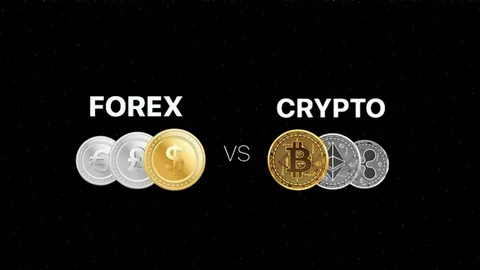
Trading has never been more accessible. With just a smartphone and internet connection, anyone can start trading Bitcoin or currency pairs within minutes. The big question is crypto vs Forex trading which should i choose since accessibility is not the same as profitability.
Every year, millions of new traders enter crypto and forex markets expecting quick returns. Most exit within months, their accounts depleted and enthusiasm crushed. The problem is not intelligence or timing. It is misunderstanding what these markets actually demand.

If you are deciding between cryptocurrency and forex trading, this guide cuts through the marketing noise. Here are the realities most beginners discover only after costly mistakes.
Understanding the Two Markets
Before comparing which is better, you need to understand what each market represents.
The Forex Market Explained
Forex trading means exchanging one currency for another, like EUR/USD or GBP/JPY. This is the world’s largest financial market. The Bank for International Settlements reports daily forex volume exceeding 7 trillion dollars globally.
Source: https://www.bis.org/statistics/rpfx19_fx.htm
Forex operates 24 hours daily, five days per week. Prices move based on interest rates, inflation, employment data, central bank decisions, and geopolitical events. Major pairs have deep liquidity, tight spreads, and are nearly impossible to manipulate.
The Cryptocurrency Market Explained
Crypto trading involves digital assets like Bitcoin, Ethereum, and thousands of other tokens. Unlike forex, crypto markets never close. They operate 24/7 with no central authority.
Prices are driven by sentiment, regulation news, adoption trends, technological updates, and heavy speculation. CoinMarketCap currently tracks over 25,000 cryptocurrencies, though only a fraction have meaningful liquidity.
Source: https://coinmarketcap.com
Volatility: The Double-Edged Sword
Many beginners chase volatility, believing bigger price swings equal bigger profits. This misconception destroys more accounts than any other factor.
Forex Volatility
Major currency pairs typically move 1 to 2 percent daily. Significant movements usually follow scheduled economic releases like Federal Reserve announcements or employment reports. This predictability allows traders to prepare, manage risk, and maintain emotional control.
Deep liquidity absorbs large orders without causing price spikes. For someone learning proper risk management, this stability is invaluable.
Crypto Volatility
Crypto volatility is extreme and unpredictable. Bitcoin can swing 5 percent in hours without clear catalysts. Smaller altcoins regularly move 20 percent or more in a single day.
This creates constant psychological pressure. Traders feel compelled to monitor charts around the clock. Fear and greed dominate decision making. Stop losses trigger frequently, leading to revenge trading and emotional exhaustion.
Beyond emotional costs, crypto volatility brings practical challenges. Slippage on smaller coins can be severe. Spreads widen dramatically during volatile periods. Liquidation cascades can wipe out leveraged positions in seconds.
Volatility does not reward inexperience. It exposes and punishes weak discipline relentlessly.
Profitability: Strategy Matters More Than Market Choice
The common debate about crypto vs forex profitability misses the fundamental point.
Markets do not create profitable traders. Strategies and discipline do.
A trader without a tested edge will lose money in both markets. A disciplined trader with proper risk management can succeed in either.
Crypto Profit Potential
Crypto offers explosive gains during bull markets. Stories of 100x returns attract newcomers constantly. However, these gains come with severe drawdowns, exchange risks, high trading fees, and sudden regulatory shocks.
Most importantly, beginners confuse bull market luck with genuine trading skill. When market conditions change, the illusion shatters.
Forex Profit Potential
Forex rewards consistency and patience over home runs. Individual trades yield smaller percentage gains, but results are more predictable long term. This suits traders focused on sustainable income rather than lottery tickets.
Statistical survival rates tell the real story. Whether trading crypto or forex, most beginners fail within the first year. Market choice is not the determining factor. Risk management and psychological discipline are.
Regulation and Security: A Critical Difference
This difference alone should make every beginner pause and think carefully.
Forex Regulation
Established forex brokers operate under strict oversight in many jurisdictions. Regulatory bodies like the UK’s Financial Conduct Authority, Australia’s ASIC, and the US National Futures Association enforce important protections.
Source: https://www.fca.org.uk
Source: https://www.asic.gov.au
These regulations often include segregated client funds, negative balance protection, and compensation schemes if brokers fail. While not perfect, these safeguards provide meaningful protection.
Crypto Regulation
Crypto regulation remains fragmented and evolving. Some exchanges operate compliantly, others function offshore with minimal oversight. When exchanges collapse or suffer hacks, fund recovery is uncertain at best.
Recent history provides harsh lessons. Mt. Gox, QuadrigaCX, and FTX taught thousands of traders expensive lessons about counterparty risk. In crypto, self custody means total responsibility. Lose your private keys and your funds disappear permanently.
This does not make crypto inherently bad. It means the risk profile is fundamentally different, and beginners must understand what they are accepting.
The Learning Curve: Time and Complexity
Learning Forex Trading
Forex offers a relatively structured educational path. Core concepts include technical analysis, fundamental analysis, risk management, and trading psychology. Demo accounts closely mirror live trading conditions.
Markets close on weekends, giving traders time to recover mentally and review their performance without pressure.
Resources are abundant. Books, courses, and communities focused on forex trading have existed for decades. While information quality varies, established educational frameworks exist.
Learning Crypto Trading
Crypto demands broader knowledge. Beyond trading mechanics, you must understand blockchain technology, wallet security, private key management, tokenomics, smart contracts, and rapidly changing regulations.

The ecosystem evolves constantly. What worked last year may be irrelevant today. Continuous learning is mandatory, not optional.
There are no weekends in crypto. Major price movements happen anytime. For traders with limited time or high sensitivity to stress, this 24/7 pressure creates real challenges.
Capital Requirements and Leverage Risks
Starting Capital for Forex
Forex can technically be started with small amounts, sometimes as little as 100 dollars with certain brokers. However, meaningful account growth and proper risk management typically require at least 1,000 dollars.
Leverage is widely available in forex, sometimes as high as 500:1. This sounds attractive but is dangerous for beginners. High leverage amplifies losses just as readily as gains.
Starting Capital for Crypto
Crypto trading fees, spreads, and extreme volatility demand more capital for appropriate risk control. While you can buy small amounts of Bitcoin, trading actively with proper position sizing requires adequate capital.
Crypto derivatives with high leverage are especially treacherous. A 2 percent adverse move can liquidate an overleveraged position instantly. During volatile periods, liquidation cascades trigger chain reactions.
Most beginners would perform better trading spot crypto or using conservative leverage in forex rather than chasing maximum amplification.
Tax Implications: The Silent Profit Killer
Taxes destroy trading profits more often than traders realize.
Forex Taxation
In most jurisdictions, forex tax treatment is relatively straightforward. Broker statements simplify year end reporting. Some regions offer favorable tax structures for forex trading.
Tax obligations are generally clear, making compliance manageable even for beginners.
Crypto Taxation
Crypto taxation is complex and evolving. In many countries, every crypto transaction creates a potential taxable event. Trading one cryptocurrency for another, staking rewards, airdrops, and DeFi activities all trigger reporting requirements.
The US Internal Revenue Service and other tax authorities increasingly focus on crypto compliance. Enforcement is tightening globally.
Source: https://www.irs.gov/businesses/small-businesses-self-employed/virtual-currencies
Without meticulous record keeping, traders often discover tax liabilities exceeding their actual profits. This turns paper gains into real financial pain.
Ignoring crypto taxes is not a viable strategy. The consequences include penalties, interest, and potential legal issues.
Which Market Suits Beginners in 2026?
There is no universal answer, but clear patterns emerge.
Forex may be better for beginners who:
- Prefer regulated environments with established protections
- Want lower volatility and more predictable price action
- Have limited time for constant market monitoring
- Value consistency and long term sustainability over excitement
- Prefer simpler tax reporting
Crypto may be better for beginners who:
- Accept higher risk in exchange for potential higher rewards
- Can commit significant time to ongoing education
- Understand and accept security responsibilities like self custody
- Can manage intense emotional pressure and 24/7 markets
- Are comfortable with evolving regulations and complex taxation
Many successful traders use a hybrid approach. They start with forex to develop fundamental discipline, risk management, and emotional control. Once these foundations are solid, they expand into crypto with controlled, calculated exposure.
This progression makes sense. Forex’s structure and lower volatility create a better learning environment. After mastering basics in forex, the transition to crypto becomes more manageable.
The Role of Trading Systems and Automation
In 2026, the dividing line between successful and failing traders is not market selection. It is consistency.
Manual trading exposes you to emotional decision making. Fear, greed, overconfidence, and panic influence every click. Even experienced traders struggle with psychological discipline.
Automated and algorithmic trading systems enforce predefined rules regardless of emotions. They do not overtrade, chase losses, or abandon strategies during drawdowns.
This advantage applies to both forex and crypto. However, automation is especially valuable in crypto’s 24/7, high volatility environment where opportunities and risks emerge without warning.
Platforms focused on systematic trading, like VTM Strategy, prioritize rule based execution, controlled risk parameters, and long term sustainability over hype driven speculation.
Source: https://vtmstrategy.com
Automation is not a guaranteed path to profits. It cannot fix a fundamentally flawed strategy. However, it eliminates many common beginner mistakes caused by emotional interference.
Crypto vs Forex Trading in 2026. Which Market Is Right for You?
Trading in 2026 is easier to access than ever. With a smartphone and internet connection, anyone can start trading cryptocurrencies or forex within minutes. However, easy access does not equal easy profit. Most beginners enter these markets expecting fast returns and leave within months after losing money. The main reason is not bad luck or lack of intelligence, but a misunderstanding of what each market truly demands.
Forex trading involves exchanging national currencies such as EUR/USD or GBP/JPY. It is the largest financial market in the world, operating twenty four hours a day, five days a week. Price movements are driven by economic data, interest rates, central bank decisions, and geopolitical events. Major forex pairs offer deep liquidity, relatively stable price action, and predictable volatility. These features make forex a more structured and forgiving environment for beginners to learn risk management and discipline.
Crypto trading, on the other hand, involves digital assets like Bitcoin, Ethereum, and thousands of alternative tokens. Crypto markets operate twenty four hours a day, seven days a week, with no central authority. Prices are influenced by market sentiment, regulation news, technological developments, and speculation. Volatility is significantly higher than forex. Bitcoin can move several percent within hours, while smaller coins may swing twenty percent or more in a single day. This constant volatility creates emotional pressure, increases trading mistakes, and exposes weak discipline quickly.

Many beginners assume higher volatility means higher profits, but this is a dangerous misconception. Volatility rewards experience and punishes inexperience. In both crypto and forex, profitability depends on having a tested strategy, proper risk management, and emotional control. Traders without an edge lose money regardless of the market. Those with discipline can succeed in either.
Regulation is one of the biggest differences. Forex brokers in many regions operate under strict regulatory frameworks that provide protections like segregated funds and negative balance protection. Crypto regulation is still evolving and inconsistent. Exchange failures, hacks, and self custody errors can result in permanent loss of funds. This does not make crypto bad, but it makes it riskier, especially for beginners.
The learning curve also differs. Forex has a more structured educational path and benefits from market closures on weekends, allowing time for reflection. Crypto requires broader knowledge, including blockchain technology, wallet security, and constant adaptation to a fast changing ecosystem. There are no breaks, and major moves can happen at any time.
Capital requirements and taxes further complicate decisions. High leverage in both markets can quickly destroy accounts. Crypto taxes are often more complex, with many transactions triggering taxable events.
In the end, neither market is inherently better. Forex generally suits beginners seeking structure, lower volatility, and regulation. Crypto suits those who accept higher risk, continuous learning, and emotional pressure. Many successful traders start with forex to build discipline, then expand into crypto cautiously. The key is choosing based on reality, not hype, and focusing on long term survival over quick profits.
Here are 50 well written FAQs and answers related to Crypto vs Forex Trading, structured clearly and easy to read. I avoided em and en dashes, using commas and full stops only.
Crypto vs Forex Trading FAQs
1. What is forex trading?
Forex trading is the buying and selling of currency pairs such as EUR/USD with the goal of making profit from price movements.
2. What is crypto trading?
Crypto trading involves buying and selling digital assets like Bitcoin and Ethereum on exchanges to profit from price fluctuations.
3. Which market is bigger, forex or crypto?
Forex is significantly larger, with trillions of dollars traded daily, while crypto markets are much smaller in comparison.
4. Is forex trading safer than crypto trading?
Forex is generally safer due to regulation, liquidity, and more stable price movements.
5. Is crypto trading riskier than forex?
Yes. Crypto markets are more volatile and less regulated, which increases risk.
6. Can beginners trade forex successfully?
Yes, beginners can succeed in forex if they learn risk management and use a disciplined strategy.
7. Is crypto trading suitable for beginners?
Crypto trading can be challenging for beginners due to extreme volatility and emotional pressure.
8. Which market is more volatile?
Crypto markets are far more volatile than forex markets.
9. Does higher volatility mean higher profit?
Not necessarily. Higher volatility increases both profit potential and losses.
10. Which market requires more discipline?
Both require discipline, but crypto tests emotional control more aggressively.
11. Is forex trading regulated?
Yes. Many forex brokers operate under strict financial regulations.
12. Is crypto trading regulated?
Crypto regulation varies by country and is still evolving in many regions.
13. Can I trade forex twenty four hours a day?
Forex trades twenty four hours a day, five days a week.
14. Can I trade crypto all the time?
Yes. Crypto markets operate twenty four hours a day, seven days a week.
15. Which market is better for long term trading?
Both can be used for long term trading, but forex offers more stability.
16. Which market is better for short term trading?
Crypto offers more short term opportunities due to high volatility, but with higher risk.
17. Is leverage available in forex trading?
Yes. Forex brokers offer leverage, which increases both profits and losses.
18. Is leverage available in crypto trading?
Yes, but high leverage in crypto is extremely risky.
19. Which market has better liquidity?
Forex has deeper liquidity, especially on major currency pairs.
20. Can market manipulation happen in crypto?
Yes. Smaller crypto assets are more prone to manipulation.
21. Is forex market manipulation common?
Forex manipulation is harder due to its massive size and regulation.
22. Which market is better for automated trading?
Forex is better suited for automated trading due to structured price behavior.
23. Can trading bots work in crypto?
Yes, but bots struggle during extreme volatility and sudden news events.
24. Which market has more predictable price movement?
Forex price action is generally more predictable.
25. Do I need large capital to trade forex?
No. Many brokers allow small starting capital, though risk management is key.
26. Do I need large capital to trade crypto?
No, but small accounts are highly vulnerable to volatility.
27. Are weekends good for trading crypto?
Weekends can be risky due to thin liquidity and sudden price spikes.
28. Does forex close on weekends?
Yes. Forex markets close on weekends, allowing traders time to review trades.
29. Which market has better educational resources?
Forex has more structured and mature educational content.
30. Can I lose all my money in both markets?
Yes. Poor risk management can wipe accounts in both forex and crypto.
31. Which market is more emotional?
Crypto trading tends to be more emotionally intense.
32. Are taxes different for forex and crypto?
Yes. Crypto taxes are often more complex and transaction based.
33. Can news affect forex prices?
Yes. Economic data and central bank decisions strongly influence forex.
34. Can social media affect crypto prices?
Yes. Crypto prices are heavily influenced by sentiment and online hype.
35. Which market is better for full time traders?
Both can work, but forex offers more routine and structure.
36. Which market is better for part time traders?
Forex suits part time traders due to predictable sessions.
37. Is forex trading boring compared to crypto?
Forex may feel slower, but stability often leads to better consistency.
38. Can crypto make traders rich quickly?
Rarely. Most who chase fast gains end up losing money.
39. Which market rewards patience more?
Forex strongly rewards patience and discipline.
40. Do professional traders trade crypto?
Yes, but many professionals treat crypto as high risk exposure.
41. Is it wise to trade both markets?
Yes, if risk is managed and strategies are separate.
42. Should beginners start with forex or crypto?
Forex is usually better for learning fundamentals.
43. Can I use technical analysis in both markets?
Yes. Technical analysis works in both forex and crypto.
44. Does fundamental analysis matter in crypto?
Yes, but sentiment often overrides fundamentals.
45. Does forex require economic knowledge?
Basic understanding of economics improves forex trading results.
46. Which market has more scams?
Crypto has more scams due to low entry barriers.
47. Can exchanges freeze crypto funds?
Yes. Centralized exchanges can restrict access during issues.
48. Can forex brokers freeze accounts?
Rarely, and usually only due to regulatory or compliance reasons.
49. Which market builds better trading discipline?
Forex is better for building long term discipline.
50. Which market should I choose in 2026?
Choose forex for structure and stability, choose crypto for high risk exposure, or combine both carefully with strong risk management.