Introduction: Forex Leverage Is Not the Shortcut You Think It Is
Forex leverage is one of the most misunderstood concepts in financial markets. For beginners, leverage in forex trading looks like a cheat code. It promises the ability to control large positions with small capital. For experienced traders, it often feels like a necessary tool to amplify returns. But beneath that surface lies a hard truth many traders learn too late.
Most blown trading accounts do not fail because of bad strategies. They fail because of poor leverage decisions.
According to research from various regulatory bodies including the Financial Conduct Authority, between 70 to 80 percent of retail forex traders lose money. The common thread in these failures is not lack of market knowledge. It is improper leverage management combined with inadequate risk control.

This article breaks down how leverage works in forex, why it attracts small account traders, and the hidden dangers nobody talks about. If you trade forex or plan to, understanding these truths can save your capital, your confidence, and your future in trading.
This is not theory. This is based on real trading behavior, broker mechanics, and years of observing how accounts grow or collapse. The insights here come from analyzing thousands of trading accounts, reading regulatory reports, and witnessing firsthand how leverage decisions separate surviving traders from failed ones.
What Is Forex Leverage and Why It Exists
Forex Leverage Explained in Simple Terms
Forex leverage allows traders to control a larger position in the market using a relatively small amount of money. It works like a loan provided by your broker, but unlike traditional loans, you do not pay interest on the borrowed amount for intraday positions.
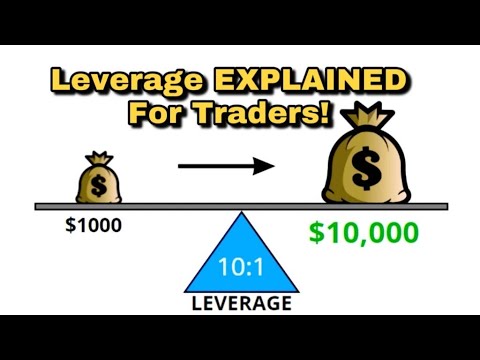
For example, with leverage of 1:100, you can control 100,000 dollars in the market using just 1,000 dollars of your own money. The broker effectively lends you the remaining 99,000 dollars to open the position.
This is why forex margin trading exists. Margin is the actual capital you commit from your account, while leverage multiplies your market exposure. Think of margin as the deposit and leverage as the multiplier that determines how large a position you can open with that deposit.
To understand this deeply, you must separate position size from account size. Most beginners confuse the two, and that confusion is costly. Your account size is your total capital. Your position size is the volume of currency you control in a specific trade. Leverage determines the relationship between these two numbers.
The Historical Context of Forex Leverage
Forex leverage became widely available to retail traders in the late 1990s and early 2000s when online trading platforms democratized currency markets. Before this period, forex trading was largely restricted to banks, hedge funds, and institutional players with massive capital requirements.
The introduction of leverage made forex accessible to ordinary people. Someone with 500 dollars could now participate in a market that previously required hundreds of thousands. This accessibility sparked a global trading boom, but it also created a generation of undercapitalized, overleveraged retail traders.
Regulatory bodies worldwide have since implemented leverage restrictions. The European Securities and Markets Authority capped leverage at 1:30 for major currency pairs for retail traders. The United States limits leverage to 1:50. These regulations exist because authorities recognized that excessive leverage was the primary cause of retail trader losses.
For a comprehensive overview of how forex markets evolved and why leverage became regulated, Investopedia provides detailed historical context here: https://www.investopedia.com/articles/forex/11/why-trade-forex.asp
How Leverage Works in Forex Trading for Beginners
The Mechanics Behind Forex Margin Trading
When you open a trade, your broker locks a portion of your account as margin. This margin depends on the leverage you use and serves as collateral for the position. The margin is not a fee. It is simply frozen capital that gets released when you close the trade.
Here is the formula simplified:
Margin required equals position size divided by leverage
If you trade a 1 lot position which equals 100,000 units:
- At 1:100 leverage, margin required is 1,000
- At 1:500 leverage, margin required is 200
The critical insight here is that the trade outcome does not change based on leverage. A 50 pip movement on a 1 lot position generates the same profit or loss whether you use 1:50 or 1:500 leverage. Only the margin requirement changes.
This is the part most beginners miss. They think higher leverage means higher profits. It does not. Higher leverage means you can open larger positions with less capital, which increases both potential profit and potential loss proportionally.
Understanding Margin Levels and Margin Calls
Your margin level is calculated as:
Margin Level equals Equity divided by Used Margin multiplied by 100
Most brokers require a minimum margin level, typically 100 percent. When your margin level drops below this threshold, you cannot open new trades. If it drops to around 50 percent or lower, depending on the broker, you receive a margin call.
A margin call means the broker automatically closes your positions to prevent your account from going negative. This happens when losses have consumed so much of your equity that insufficient margin remains to support open positions.
This automated closure often happens at the worst possible time, locking in maximum losses. Traders who overleverage experience margin calls frequently because small adverse movements consume their limited margin quickly.
For a deeper technical explanation of margin mechanics and how brokers calculate margin requirements, Investopedia explains forex margin trading in detail here: https://www.investopedia.com/terms/f/forex-margin.asp
Calculating Position Size Based on Leverage
Understanding how to calculate proper position size relative to your account and leverage is fundamental. Here is a practical breakdown:
Account balance: 1,000 dollars Risk per trade: 2 percent which equals 20 dollars Stop loss: 20 pips Leverage: 1:100
To calculate position size:
- Determine dollar value per pip based on acceptable loss
- If you can lose 20 dollars and stop loss is 20 pips, you can risk 1 dollar per pip
- For EUR/USD, 1 dollar per pip equals approximately 0.1 lots or 10,000 units
- At 1:100 leverage, 0.1 lots requires 100 dollars margin
This position uses only 10 percent of your account as margin, leaving substantial breathing room. This is disciplined leverage use.
Now contrast with an overleveraged approach:
Same 1,000 dollar account Leverage: 1:500 Trader opens 1 lot position which requires only 200 dollars margin
A 20 pip adverse move equals 200 dollars loss, wiping out 20 percent of the account instantly. This is how leverage destroys accounts.
The DailyFX education portal offers excellent position sizing calculators and risk management guides here: https://www.dailyfx.com/education/beginner/forex-risk-management.html
Truth 1: Forex Leverage Magnifies Losses Faster Than Profits
Why High Leverage Destroys Small Accounts
This is the most ignored truth in forex leverage. Leverage is mathematically neutral. It multiplies exposure equally in both directions. A trade with high leverage gains faster but also loses faster at exactly the same rate.
However, psychological asymmetry makes losses feel more devastating than equivalent gains feel rewarding. This is called loss aversion, a cognitive bias documented extensively in behavioral economics research.
Leverage multiplies exposure, not intelligence. A 1 percent market move against an overleveraged position can wipe out weeks of gains or your entire account. This happens because small accounts cannot absorb large drawdowns.
Consider this scenario:
Account A: Conservative leverage
- Balance: 5,000 dollars
- Leverage: 1:50
- Position size: 0.5 lots
- A 1 percent adverse move equals 50 dollars loss, which is 1 percent of account
Account B: Aggressive leverage
- Balance: 5,000 dollars
- Leverage: 1:500
- Position size: 5 lots
- A 1 percent adverse move equals 500 dollars loss, which is 10 percent of account
Both traders faced the same market movement. Only leverage separated survival from disaster.
Small accounts are especially vulnerable because traders tend to overcompensate. They increase lot sizes to chase meaningful profits, forgetting that losses scale the same way.
This creates a psychological trap:
- Bigger wins feel addictive
- Losses feel shocking
- Revenge trading follows
- Account collapses
This cycle repeats endlessly for traders who do not respect leverage. According to trading psychology research documented by Dr. Brett Steenbarger, a trading psychologist who has worked with professional traders for decades, emotional reactions to leverage-induced volatility are among the top reasons traders abandon profitable strategies.
His insights on trading psychology can be explored at his blog: http://traderfeed.blogspot.com
Truth 2: The Best Leverage for Forex Trading With Small Capital Is Lower Than You Think
Why Professional Traders Use Conservative Leverage
Contrary to popular belief, professional traders do not use extreme leverage. Many institutional traders operate at effective leverage below 1:10, and some large hedge funds use even less.
Why do professionals with massive capital use low leverage while beginners with tiny accounts use extreme leverage? The answer reveals a fundamental misunderstanding of how wealth is built in trading.
Professionals understand that consistent compounding over time beats aggressive gambling. They prioritize capital preservation because they know surviving long enough to refine strategies is more valuable than short-term gains.
For small accounts, the best leverage for forex trading with small capital is not about maximizing exposure. It is about survival and consistency.
Lower leverage allows:
- Wider stop losses that accommodate normal market volatility
- Better emotional control because each trade carries less stress
- Longer trading lifespan since you avoid catastrophic losses
- Realistic compounding where you grow slowly but surely
The goal is not fast growth. The goal is staying in the game long enough to actually grow. Think of forex trading like marathon running, not sprinting. You need endurance, not explosive speed.
Real Data on Leverage and Success Rates
A study analyzing millions of trades across retail forex accounts found a clear inverse relationship between leverage used and account longevity. Accounts using leverage above 1:100 had average lifespans under 6 months. Accounts limiting effective leverage to below 1:30 survived on average over 2 years.
The difference is not market conditions or strategy quality. It is purely risk management discipline enabled by conservative leverage.
Several regulated brokers now offer leverage restrictions specifically designed to protect new traders. OANDA, for instance, provides educational resources explaining why lower leverage improves long-term success rates: https://www.oanda.com/us-en/trading/learn/basics/leverage-and-margin/
How to Determine Your Personal Leverage Sweet Spot
Finding the right leverage depends on several personal factors:
Experience level: Beginners should never exceed 1:30. Intermediate traders can consider 1:50 to 1:100. Only experienced, consistently profitable traders should venture beyond that.
Account size: Smaller accounts need more conservative leverage, not less. This sounds counterintuitive but is critical. A 500 dollar account using 1:500 leverage is one bad trade away from destruction.
Trading frequency: Day traders and scalpers might use slightly higher leverage since positions are held briefly. Swing traders holding positions for days or weeks should use minimal leverage to survive overnight volatility.
Risk tolerance: Even if you can mathematically handle higher leverage, can you emotionally handle the equity swings? If watching your account fluctuate causes stress, reduce leverage regardless of mathematical risk calculations.
Forex Leverage Explained With Real Trading Examples
Example 1: High Leverage Disaster Scenario
Let’s walk through a real example that happens thousands of times daily across retail forex accounts.
Account balance: 500 dollars Leverage: 1:500 Currency pair: EUR/USD Position size: 0.5 lot which equals 50,000 units Margin required: 100 dollars which is 20 percent of account
The trader feels confident because 80 percent of the account remains available. The trade moves 20 pips against the position.
Loss calculation:
- 0.5 lot equals 5 dollars per pip
- 20 pips equals 100 dollars loss
- Account drops from 500 to 400 dollars
- That is a 20 percent account loss from a tiny 20 pip move
If the market moves 50 pips against the position, the account loses 250 dollars, cutting the balance in half. This happens in minutes during volatile news releases.
Most traders in this situation panic. They close the trade at a massive loss, then immediately try to recover by opening an even larger position. The revenge trading cycle begins, and the account dies shortly after.
Example 2: Controlled Leverage Survival Scenario
Same market conditions, different leverage discipline.
Account balance: 500 dollars Leverage: 1:50 Currency pair: EUR/USD Position size: 0.05 lot which equals 5,000 units Margin required: 100 dollars which is 20 percent of account
The same 20 pip adverse move results:
- 0.05 lot equals 0.50 dollars per pip
- 20 pips equals 10 dollars loss
- Account drops from 500 to 490 dollars
- That is a 2 percent account loss
Even a 50 pip adverse move results in only 25 dollars loss, which is 5 percent. The trader survives, learns from the trade, and continues developing skills.
The market did not change. Volatility was identical. Only leverage discipline separated survival from disaster.
Example 3: The Compound Effect Over Time
Consider two traders starting with 1,000 dollars, both averaging 5 percent monthly return on capital at risk, but using different leverage approaches:
Trader A: Aggressive leverage
- Risks 10 percent per trade due to high leverage
- Wins 5 out of 10 trades
- Three consecutive losses wipe out 30 percent of account
- After 6 months, despite winning trades, account is at 850 dollars
Trader B: Conservative leverage
- Risks 2 percent per trade due to disciplined leverage
- Wins 5 out of 10 trades (same win rate)
- Three consecutive losses equal 6 percent drawdown
- After 6 months, account grows to 1,150 dollars
Same strategy, same win rate, different leverage. One trader is demoralized and nearly broke. The other is growing and confident.
Truth 3: Forex Margin Trading Encourages Emotional Mistakes
The Psychological Cost of Over Leverage
High leverage increases emotional intensity exponentially. Every small market movement feels personal and significant. A 10 pip move that should be meaningless noise becomes a source of anxiety or excitement.
This emotional amplification has measurable psychological effects:
Fear increases: Traders become afraid of normal market volatility. They close winning trades too early to avoid seeing profits evaporate. They widen stop losses or remove them entirely to avoid getting stopped out, which leads to catastrophic losses.
Greed escalates: Small wins feel insufficient because the potential for larger wins is visible. Traders increase position sizes mid-trade or add to losing positions hoping for recovery.
Discipline collapses: Even the most carefully planned strategies fall apart under emotional pressure. Traders who spent hours developing rules abandon them within minutes when real money and high leverage are involved.
This is why many traders abandon proven strategies once leverage increases. They start closing trades early, moving stop losses, or doubling positions irrationally. Trading becomes emotional gambling rather than systematic execution.
This is not a strategy issue. It is a leverage issue. The same trader with the same strategy but different leverage exhibits completely different behavior.
The Neuroscience of Leverage and Decision Making
Research in neuroeconomics, the study of how the brain makes financial decisions, reveals that high stakes trading literally changes brain function. When potential losses are large relative to available capital, the amygdala, the brain’s fear center, becomes hyperactive.
This hyperactivity impairs the prefrontal cortex, the region responsible for rational decision making and impulse control. In practical terms, overleveraged traders are neurologically impaired. Their brains are flooded with stress hormones that make rational trading nearly impossible.
This is why even intelligent, educated people make irrational trading decisions under high leverage. It is not a character flaw. It is biology.
The solution is not trying harder to control emotions under extreme stress. The solution is reducing leverage to levels where stress remains manageable and rational brain function is preserved.
Truth 4: Brokers Love High Leverage for a Reason
Understanding Broker Incentives in Forex Trading
High leverage is attractive marketing. It lowers entry barriers and increases trading volume. Brokers advertise leverage as a feature because it attracts customers who otherwise could not afford to trade meaningful positions.

More volume equals more spreads, commissions, and swaps for brokers. Every trade you make generates revenue for the broker regardless of whether you win or lose. Therefore, brokers benefit from traders opening larger, more frequent positions.
This does not mean brokers are evil or want you to fail. Legitimate brokers profit from long-term client relationships, which require clients to survive and continue trading. However, the business model naturally creates incentives that may not align perfectly with trader success.
Understanding this dynamic helps you evaluate broker offerings critically. When a broker advertises 1:1000 leverage as a premium feature, ask yourself who benefits most from that leverage.
Regulatory Responses to Leverage Abuse
Recognizing the dangers of excessive leverage, financial regulators worldwide have implemented restrictions:
European Union: ESMA limits retail forex leverage to 1:30 for major pairs, 1:20 for minor pairs, and 1:10 for exotic pairs.
United States: The CFTC restricts leverage to 1:50 for all forex pairs.
Australia: ASIC reduced maximum leverage to 1:30 for retail clients.
United Kingdom: The FCA adopted ESMA leverage limits post-Brexit.
These regulations exist because statistical analysis proved that higher leverage directly correlates with higher retail trader losses. Regulators determined that protecting traders from themselves required limiting leverage access.
Some traders view these restrictions as paternalistic overreach. Others recognize them as necessary safeguards based on overwhelming evidence of harm.
For comprehensive information on regulatory approaches to leverage, the FCA provides detailed guidance here: https://www.fca.org.uk/markets/contracts-difference-cfds
Educational platforms like BabyPips consistently emphasize risk control over leverage here: https://www.babypips.com/learn/forex/leverage-margin
Truth 5: Risks and Benefits of Leverage in Forex Trading Must Be Balanced
Benefits of Forex Leverage
Despite the risks, leverage provides legitimate benefits when used responsibly:
Capital efficiency: Leverage allows you to deploy capital across multiple positions rather than tying up everything in a single trade. This enables portfolio diversification even with limited funds.
Market accessibility: Without leverage, forex trading would require hundreds of thousands in capital. Leverage democratizes access for ordinary people.
Opportunity for compounding: Properly managed leverage allows faster account growth than would be possible with unleveraged trading, though this requires exceptional discipline.
Flexibility in strategy: Some trading strategies, particularly short-term scalping, rely on being able to open multiple small positions. Leverage makes this practical even for retail traders.
Risks of Forex Leverage
The risks, however, are severe when leverage is misused:
Rapid account drawdown: High leverage can turn a small losing streak into account destruction before you have time to react or adjust.
Margin calls: Automated position closure at the worst possible moment locks in maximum losses and eliminates any chance of recovery.
Emotional instability: The psychological pressure of overleveraged positions destroys sound decision making.
Overtrading: Easy access to large positions encourages excessive trading, which increases transaction costs and error rates.
False confidence: Early wins with high leverage create an illusion of skill, leading to progressively riskier decisions until catastrophic failure.
Finding the Balance
Leverage itself is neutral. It is a tool. The trader decides whether it becomes an asset or a weapon. The key is matching leverage to your experience, capital, and psychological capacity.
A useful framework is asking: “If I lose this trade, will I still be able to trade tomorrow?” If the answer is no, you are overleveraged.
Another useful test: “Can I sleep comfortably tonight with this position open?” If the answer is no, reduce your position size and effective leverage.
Truth 6: Automated Systems Handle Forex Leverage Better Than Humans
Why Automation Improves Leverage Discipline
One of the biggest advantages of automated trading systems is emotional neutrality. Algorithms do not feel fear or greed. They do not revenge trade. They execute rules consistently regardless of recent wins or losses.
This emotional neutrality is particularly valuable when managing leverage. Human traders tend to increase risk after wins due to overconfidence and after losses due to desperation. Both patterns are destructive. Automated systems maintain consistent risk parameters.
Well-designed systems like the VTM Automated System are built with fixed risk rules that enforce discipline:
- Maximum position size relative to account balance
- Consistent stop loss placement
- No emotional position sizing decisions
- Rule-based entry and exit regardless of recent performance
Instead of guessing or reacting emotionally, automation enforces discipline. This is especially valuable for traders working with small capital who cannot afford costly emotional mistakes.
The Limitations of Automation
However, automation is not a magic solution. A poorly designed system can destroy an account just as effectively as emotional human trading. The algorithm is only as good as the rules programmed into it.
Moreover, automated systems require proper monitoring and occasional intervention. Market conditions change. Strategies that worked in low volatility may fail in high volatility. Complete hands-off automation without oversight is dangerous.
The ideal approach combines the consistency of automation with human oversight and adaptation. Use systems to eliminate emotional decisions while retaining the ability to adjust parameters as conditions evolve.
You can explore how structured automation helps manage forex leverage responsibly at https://vtmstrategy.com
This is not a promise of riches. It is a framework for consistency, which is the foundation of long-term trading success.
Truth 7: Longevity Beats Aggression in Forex Trading
Why Traders Who Survive Win Eventually
Most traders fail not because they lack skill, intelligence, or market knowledge. They fail because they run out of capital before developing the experience necessary to succeed.
Trading is one of the few professions where you must pay tuition through losses while learning. The question is whether your tuition payments destroy your account before you graduate.
Forex leverage should support longevity, not excitement. Think of your trading account as a business with limited startup capital. Every trade is an investment decision. Every loss is a business expense. The goal is keeping expenses low enough that the business survives long enough to become profitable.
Traders who respect leverage:
- Trade longer because they avoid catastrophic losses
- Learn deeper because they have time to accumulate experience
- Adapt better because they retain capital to test new approaches
- Compound sustainably where growth is slow but steady
Survival is the real edge in forex trading. Every month you survive is a month your failed competitors do not. Over time, simply outlasting others provides compounding advantages in experience and capital.
The Compound Effect of Consistent Survival
Consider the power of simply staying in the game:
Year 1: You survive while 80 percent of new traders fail. You are now in the top 20 percent simply by not blowing up.
Year 2: You survive while another 50 percent of remaining traders fail. You are now in the top 10 percent.
Year 3: Continuous learning and experience accumulation while maintaining capital discipline puts you in the top 5 percent.
You did not need to be brilliant. You needed to avoid being reckless. Conservative leverage is the primary tool for achieving this survival.
Redefining Success in Forex Trading
Most beginners define success as making large profits quickly. This definition guarantees failure because it encourages the exact behaviors that destroy accounts.
Redefine success as:
- Surviving another month
- Following your trading plan consistently
- Reducing emotional reactions to market movements
- Growing your account slowly but surely
- Avoiding the mistakes that killed your past trading attempts
These metrics may seem unexciting, but they are the actual markers of traders who eventually achieve financial success through forex.
Forex Leverage Comparison Table
| Leverage Ratio | Margin Required per 1 Lot | Risk Level | Best For | Regulatory Status |
|---|---|---|---|---|
| 1:30 | 3,333 dollars | Low | Beginners, EU regulated | Maximum in EU |
| 1:50 | 2,000 dollars | Controlled | Conservative traders | Maximum in US |
| 1:100 | 1,000 dollars | Balanced | Intermediate traders | Common global standard |
| 1:200 | 500 dollars | High | Advanced traders only | Restricted in major markets |
| 1:500 | 200 dollars | Extreme | Not recommended for retail | Banned in regulated markets |
| 1:1000 | 100 dollars | Catastrophic | Avoid entirely | Unregulated offshore only |
How to Choose the Right Forex Leverage for Your Account
Key Factors to Consider
Account size: Paradoxically, smaller accounts need lower leverage, not higher. A 500 dollar account should use 1:30 or less. A 10,000 dollar account can consider 1:100. Large accounts of 50,000 plus often use effective leverage below 1:10.
Trading frequency: Day traders holding positions for hours might tolerate slightly higher leverage than swing traders holding positions for days or weeks. Overnight holding increases exposure to gap risk, which demands lower leverage.
Strategy type: Scalping strategies targeting small, frequent gains might use moderate leverage. Trend following strategies targeting large moves should use minimal leverage since stop losses are wider.
Emotional discipline: This is the most important factor. Can you watch a trade move 100 pips against you without panic? If not, reduce leverage until volatility becomes psychologically manageable.
Stop loss usage: Traders using tight, consistent stop losses can tolerate moderately higher leverage. Traders using wide stops or no stops should use minimal leverage.
Experience level: Beginners should never exceed regulatory minimums (1:30 to 1:50). After at least two years of consistent profitability, consider whether higher leverage adds value. Most will find it does not.
A Practical Leverage Selection Process
- Start with regulatory minimums: Use 1:30 or 1:50 regardless of what your broker offers.
- Calculate position sizes based on risk, not leverage: Determine how much you can lose per trade (usually 1 to 2 percent of account), then calculate position size. Use only enough leverage to support that position size.
- Monitor your emotional responses: If trades cause stress, anxiety, or excitement beyond mild interest, reduce position size and effective leverage.
- Review quarterly: Every three months, assess whether your current leverage supports or hinders your trading performance. Adjust accordingly.
- Resist increasing leverage after wins: Winning streaks create false confidence. Maintain consistent leverage regardless of recent performance.
There is no universal leverage setting. The right leverage is the one that allows you to stay consistent, unemotional, and solvent.
Advanced Leverage Management Techniques
Using Effective Leverage vs Maximum Leverage
Your broker may offer 1:500 leverage, but that does not mean you should use it. Effective leverage is what matters.
Effective leverage equals total position size divided by account equity.
If you have a 10,000 dollar account and open positions totaling 50,000 dollars in exposure, your effective leverage is 1:5, regardless of what maximum leverage your broker offers.
Sophisticated traders set their own effective leverage limits far below broker maximums. They might have access to 1:400 but never exceed effective leverage of 1:10.
Scaling Leverage With Account Growth
As your account grows, you face a choice: maintain the same effective leverage, which means opening proportionally larger positions, or reduce effective leverage while maintaining similar absolute position sizes.
Many successful traders reduce effective leverage as accounts grow. A 1,000 dollar account might use effective leverage of 1:20. A 100,000 dollar account might use effective leverage of 1:3.
This approach provides asymmetric risk-reward over time. Early career risk is necessary to grow from small capital. Later career capital preservation becomes more important than aggressive growth.
Leverage and Correlation Risk
Opening multiple positions on correlated pairs multiplies effective leverage beyond what is immediately apparent. If you open long EUR/USD, long GBP/USD, and short USD/JPY simultaneously, you have tripled your dollar exposure even though you only opened three separate trades.
Correlation analysis should inform leverage decisions. Highly correlated positions should be counted as a single leveraged exposure for risk calculation purposes.
Common Leverage Mistakes and How to Avoid Them
Mistake 1: Confusing Leverage With Profit Potential
Many beginners think 1:500 leverage means they can make 500 times more profit. This is completely false. Profit potential depends on position size and market movement, not leverage ratio.
Solution: Understand that leverage only affects margin requirements, not profit calculations.
Mistake 2: Using All Available Leverage
Just because your broker offers 1:500 does not mean you should use it. Maximum available leverage is not a recommendation.
Solution: Set personal leverage limits far below broker maximums and never violate them.
Mistake 3: Increasing Leverage to Recover Losses
After losses, traders often increase position sizes hoping to recover quickly. This dramatically increases risk exactly when the account is most vulnerable.
Solution: Maintain fixed risk percentages regardless of recent performance. Never increase leverage after losses.
Mistake 4: Ignoring Overnight and Weekend Risk
Holding leveraged positions overnight or over weekends exposes you to gap risk. Markets can gap past your stop loss, causing losses far exceeding your planned risk.
Solution: Reduce leverage on positions held overnight. Consider closing all positions before major news events or weekends if highly leveraged.
Mistake 5: Overleveraging During High Volatility
Major news events create extreme volatility. High leverage during these periods can cause instant margin calls as prices whipsaw violently.
Solution: Reduce position sizes and effective leverage before scheduled high-impact news releases.
Conclusion: Forex Leverage Is a Test of Discipline, Not Bravery
Forex leverage is powerful, but power without control is destructive. The markets do not reward bravery or aggression. They reward consistency, discipline, and survival.
The traders who succeed are not the boldest. They are the most disciplined. They understand how leverage works in forex trading at a mechanical level and respect its consequences at a psychological level.
If you are serious about long-term success, treat leverage as a precision tool, not a shortcut. Use the minimum leverage necessary to implement your strategy. Resist the temptation to increase leverage after wins or losses. Focus on surviving long enough to develop genuine skill.
Those who ignore this truth pay with their accounts. Those who embrace it join the small minority of traders who survive, grow, and eventually profit consistently.
The choice is yours. Every trade is a vote for the kind of trader you want to become. Make sure your leverage decisions reflect long-term survival, not short-term excitement.
Frequently Asked Questions About Forex Leverage
What is forex leverage in simple terms?
Forex leverage allows traders to control large market positions using small capital through margin trading. It works like a temporary loan from your broker that multiplies your market exposure without requiring you to deposit the full position value.
Is high leverage good for beginners?
No. High leverage increases risk and emotional pressure, which beginners struggle to manage. Beginners should use minimum leverage ratios like 1:30 or 1:50 and focus on developing skills with small, manageable positions.
What is the safest leverage in forex trading?
Lower leverage such as 1:30 or 1:50 is generally safer for beginners and small accounts. The safest leverage is the lowest ratio that still allows you to implement your strategy with proper position sizing.
Can forex leverage make you rich?
Leverage amplifies results, not skill. Without discipline, proper strategy, and risk management, it destroys accounts faster than it builds wealth. Leverage is a tool for efficient capital deployment, not a path to instant riches.
How much leverage should I use with a 100 dollar account?
With a 100 dollar account, use 1:30 leverage maximum. However, understand that a 100 dollar account faces severe limitations regardless of leverage. Focus on practicing with such small accounts rather than expecting meaningful profits.
What is the difference between leverage and margin?
Leverage is the ratio that determines how much market exposure you can control relative to your capital. Margin is the actual amount of capital locked up to support a position. They are related but distinct concepts.
Why do brokers offer high leverage if it is dangerous?
Brokers offer high leverage because it attracts customers and increases trading volume, which generates revenue through spreads and commissions. While not necessarily malicious, broker incentives do not always align perfectly with trader success.
Is automated trading safer with leverage?
Automated systems reduce emotional mistakes and enforce consistent risk rules, making leverage easier to manage responsibly. However, automation is not a guarantee of success. The system must be well-designed and properly monitored.
Can I change my leverage after opening an account?
Most brokers allow you to adjust leverage settings in your account dashboard. However, changing leverage does not affect existing open positions, only new positions opened afterward.
What happens if I lose more money than is in my account?
Most retail forex brokers offer negative balance protection, meaning your losses are capped at your account balance. However, during extreme volatility or with certain broker types, negative balances are possible. Always verify your broker provides negative balance protection.