VTM Trading Strategy 2026: 7 Shocking Mistakes That Could Destroy Your Forex Profits in 2026 and beyond
In the fast-paced world of forex trading, the difference between consistent profits and repeated losses often comes down to having a structured, reliable trading system. Among the many strategies circulating in the market, the VTM trading strategy, or Volatility Traders Minds system, has emerged as a popular choice for traders seeking a disciplined, evidence-based approach. Unlike random indicators or guesswork, the VTM Trading strategy 2026 combines multiple technical tools to identify trades with high probability, filtering out low-quality market noise and focusing only on setups that align with trend, momentum, and volatility.

The essence of the VTM system lies in its ability to merge trend analysis with volatility confirmation and momentum alignment. By using indicators like the 48-period Moving Average, Bollinger Bands, MACD, and ADX, the strategy creates a multi-layered framework where each trade is validated by several conditions. This approach helps traders avoid impulsive entries and ensures that each trade has a solid foundation. In other words, it’s not just about spotting price movements — it’s about understanding the market context, reading the underlying momentum, and taking trades that statistically increase the chances of success.
However, even the most well-designed strategy can fail if misapplied. Traders often make avoidable mistakes, from ignoring trend filters to overtrading or skipping critical momentum confirmation. These errors, while seemingly small, can quickly erode profits and turn a potentially winning system into a source of frustration. This is why mastering the VTM strategy step by step for beginners requires more than simply setting up indicators on a chart, it requires discipline, emotional control, and a willingness to follow rules consistently.
In this comprehensive guide, we will not only break down the VTM system but also highlight the 7 shocking mistakes that can destroy forex profits in 2027. Each mistake is explained in detail, with practical solutions to prevent costly errors. Additionally, we will provide an exhaustive explanation of all indicators used in the strategy. You will understand how the 48 MA identifies trend direction, how Bollinger Bands confirm volatility and momentum, why MACD’s zero line validation matters, and how ADX measures trend strength. By mastering these components, traders can approach the markets with clarity and confidence, making informed decisions rather than emotional guesses.
The goal of this article is to equip traders, whether beginners or experienced, with actionable knowledge that can improve their trading consistency and profitability. We will provide a step-by-step guide to executing the VTM strategy, discuss risk management techniques, explore emotional discipline methods, and present clear examples to illustrate real-world applications. By the end, you will have a solid understanding of how to use the VTM trading strategy to your advantage and avoid the common pitfalls that undermine success.
Whether your goal is to fine-tune your trading approach, understand market structure more effectively, or simply learn how professional traders apply discipline to high-probability setups, this guide will serve as a valuable resource. In a world where impulsive decisions and FOMO-driven trades can quickly decimate an account, following a structured and proven strategy like VTM can be the difference between consistent profitability and constant struggle.
Section 1 — What is the VTM Trading Strategy?
The VTM trading strategy is a rules‑based approach used in forex markets to identify high‑probability trend continuation moves. At its core, the strategy is designed to detect structural momentum — not random price noise — by combining multiple indicators:
- 48 Moving Average (MA)
- Bollinger Bands
- MACD
- ADX
Each indicator has a specific role. When all conditions align, the probability of a valid follow‑through move increases significantly.
Why the Strategy Is Effective
The VTM system is effective because it treats the market like a conversation between volatility, momentum, and trend — not random ticks. Instead of reacting to every tick or news headline, it forces discipline.
Think of it like fishing: instead of casting the net everywhere, you only cast where the fish are biting.
This strategy scales well across major currency pairs like EURUSD, GBPUSD, and USDJPY, and can even be adapted for indices and commodities.
Section 2 — Detailed Breakdown of Each Indicator
To master the VTM trading strategy, you must understand each indicator’s purpose and how it contributes to the system.
48 Moving Average (Trend Filter)

What It Is
A moving average smooths price data over time to show the underlying trend direction. The 48‑period moving average balances enough responsiveness to catch trends early with enough smoothing to filter noise.
How It Works in the VTM System
- For buy trades: price must be above the 48 MA
- For sell trades: price must be below the 48 MA
This eliminates counter‑trend signals, which are one of the biggest causes of losing trades.
Why It Matters
A trend is not merely price going up or down — it’s a condition where bias, confirmation, and strength align.
This moving average helps define that bias.
Example:
If EURUSD is trading above the 48 MA and price continuously respects it as support, then each retracement becomes a potential entry zone once other indicators align.
Bollinger Bands (Volatility Confirmation)
What It Is
Bollinger Bands consist of:
- A middle band (simple moving average)
- An upper band
- A lower band
The bands expand when volatility increases and contract during low‑volatility periods.
How It Works in the Strategy
The VTM strategy only considers entries after price *breaks and closes beyond the middle band. This signals that the market is expanding volatility and primed for continuation.
| Condition | Interpretation |
|---|---|
| Price inside bands | Low volatility, no signal |
| Price breaks middle band | Volatility increasing |
| Price touches outer bands | Strong continuing move |
This prevents entering during congestion.
For a technical reference on Bollinger Bands, see this article on Investopedia.
https://www.investopedia.com/terms/b/bollingerbands.asp
MACD (Momentum Confirmation)
What It Is
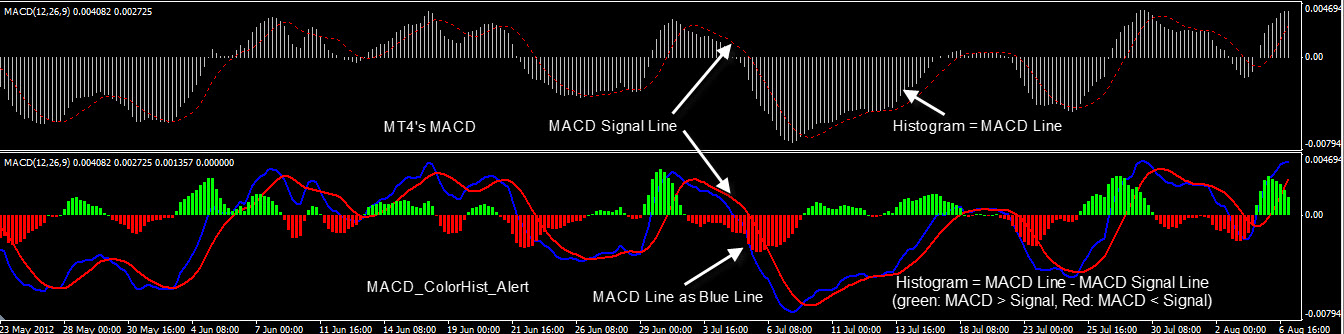
MACD stands for Moving Average Convergence Divergence — a momentum indicator showing the relationship between two moving averages.
Watch VTM strategy on youtube https://youtu.be/XPQMwC93cj4
It consists of:
- MACD line
- Signal line
- Histogram
- Zero line
How It Works in the Strategy
Unlike systems that use crossovers, the VTM strategy focuses on the zero level:
- Buy signal — MACD above zero
- Sell signal — MACD below zero
This ensures that momentum is aligned with the direction identified by the trend filter.
ADX (Trend Strength Filter)
What It Is
ADX stands for Average Directional Index. It measures the strength of a trend:
- Above 25 — strong trend
- Below 25 — weak or ranging market
How It Works in the Strategy
The VTM system does not allow trades unless ADX is above 25. This avoids low‑probability trades in choppy markets.
For more details on ADX, check this Investopedia resource:
https://www.investopedia.com/terms/a/adx.asp
Section 3 — How the VTM System Works Together
Here’s how the indicators interact:
- Trend direction — established by the 48 MA
- Volatility expansion — confirmed once price breaks the middle Bollinger Band
- Momentum alignment — verified when MACD agrees with the trend
- Trend strength — ensured with ADX above 25
If any one of these conditions is missing, the strategy does not take the trade.
This is what separates a systematic trading approach from random guessing.
Section 4 — 7 Shocking Mistakes That Could Destroy Your Forex Profits in 2027
Now let’s address the mistakes traders make — even when using a powerful system like the VTM strategy. These errors are so common that they are quietly eating traders’ profits.
1. Ignoring the Trend Filter (48 MA)
The biggest mistake is trading against the trend.
Example: Entering long trades below the 48 MA because “price looks like it might bounce.”
This almost always fails.
Fix: Never trade counter‑trend unless you have a confirmed reversal pattern plus system alignment.
2. Entering Too Early Before Bollinger Confirmation
Traders often jump in as soon as price reaches the edge of the band — before the middle band is decisively broken.
This is called anticipation, and it leads to whipsaws.
Fix: Wait for a Candle Close Beyond the Middle Band before considering entry.
3. Ignoring MACD Zero Line Confirmation
Some traders use MACD crossovers instead of zero line confirmation.
Big mistake.
A crossover can occur in a range — but zero line confirmation aligns with strong momentum.
Fix: Only consider entries when MACD is above zero for buys and below zero for sells.
4. Trading When ADX Is Below 25
A low ADX means the market lacks strength.
Attempting to trade trend systems in weak markets is like driving a Ferrari out of fuel.
Fix: Use ADX as a gatekeeper. If ADX < 25, skip the setup.
5. Overtrading (FOMO Driven)
This is the silent profit killer.
Traders see valid setups but enter multiple times out of fear of missing out.
Fix: Limit entries per session, use trade checklists, and journal breaks.
6. Neglecting Risk Management
A good system can be blown up by poor risk control.
Ignoring position sizing, stop losses, and critical levels will erode capital quickly.
Fix: Use a maximum of 1–2% risk per trade. Always define stop loss and target BEFORE entry.
7. Emotional Trading and Revenge Trades
Even a solid strategy fails when executed emotionally.
Revenge trades after a loss, chasing exits, and impulsive entries destroy consistency.
Fix: Develop emotional discipline techniques (covered later).
Section 5 — Step‑by‑Step Guide for Beginners
Here’s how to execute the VTM strategy on a live chart:
Step 1 — Chart Setup
Indicators:
- 48 MA
- Bollinger Bands (20,2)
- MACD (12,26,9)
- ADX (14)
Step 2 — Trend Confirmation
Check that price is above or below the 48 MA.
Step 3 — Volatility Breakout
Wait for price to break and close beyond the middle Bollinger Band.
Step 4 — Momentum Confirmation
Confirm MACD is above zero (buy) or below zero (sell).
Step 5 — Strength Check
Ensure ADX > 25. If not, skip.
Step 6 — Entry
Enter at next candle after all confirmations.
Step 7 — Stop Loss Placement
Place below the recent swing low (buy) or above swing high (sell).
Step 8 — Profit Target
Use recent structure, volatility projection, or 1.5–2R.
Watch VTM strategy on youtube https://youtu.be/XPQMwC93cj4
Indicator Roles Table (Copy‑Friendly)
| Indicator | Purpose | Entry Rule | Why It Matters |
|---|---|---|---|
| 48 MA | Trend filter | Above/below | Avoids counter‑trend traps |
| Bollinger Bands | Volatility filter | Break middle band | Confirms expansion |
| MACD | Momentum filter | Above/below zero | Ensures strength |
| ADX | Trend strength | Above 25 | Avoids weak markets |
Section 6 — Emotional Discipline Techniques for Consistent Trading
Trading systems fail when traders lack emotional control.
Here’s how to stay disciplined:
- Pre‑trade checklist
- Trade journal (entry, exit, mood)
- Scheduled break times
- Risk limits
- Mindfulness routines
Section 7 — Causes & Solutions for Chronic Overtrading
Causes
- FOMO
- Lack of planning
- News slip emotional bias
Solutions
- Predefined rules
- Only trade when all confirmations align
- Journal every trade
Summary
The VTM trading strategy, also known as the Volatility Traders Minds system, is a comprehensive forex trading approach that blends trend analysis, momentum confirmation, and volatility measurement into a single structured system. Unlike random trading methods or speculative approaches, the VTM strategy emphasizes rules-based entries, discipline, and consistency, making it suitable for both beginners and experienced traders seeking high-probability trades in volatile markets.
At its core, the strategy relies on four key indicators: the 48-period Moving Average (MA), Bollinger Bands, MACD, and ADX. Each of these indicators plays a specific role. The 48 MA serves as a trend filter, ensuring trades align with the prevailing market direction. Bollinger Bands provide volatility confirmation, signaling when a price movement has enough momentum to be meaningful. MACD confirms trend momentum by validating whether bullish or bearish momentum aligns with the trend direction, and ADX ensures that trades are taken only when trends are strong enough to reduce the likelihood of whipsaws or false signals. By combining these indicators, the strategy filters out weak or low-probability setups, allowing traders to focus only on trades that meet strict criteria.
Despite the system’s reliability, many traders fail to capitalize on its potential due to common mistakes. The seven most critical errors include ignoring the trend filter, entering trades before Bollinger Band confirmation, neglecting MACD zero line alignment, trading when ADX indicates a weak trend, overtrading driven by FOMO, poor risk management, and emotional decision-making such as revenge trades. Each of these errors can quickly erode profits, regardless of how well the strategy is structured. By recognizing these pitfalls and implementing corrective measures — such as waiting for all indicator confirmations, using strict position sizing, and maintaining a trading journal — traders can significantly improve their outcomes.
The strategy is also highly adaptable. While primarily designed for forex pairs with high liquidity such as EURUSD, GBPUSD, and USDJPY, the principles of trend alignment, volatility confirmation, momentum validation, and strength filtering can be applied to indices, commodities, and even cryptocurrencies with proper adjustments. Beginners benefit from following a step-by-step guide, which includes chart setup, trend confirmation, volatility and momentum checks, ADX validation, entry timing, stop-loss placement, and take-profit calculation. This systematic approach minimizes impulsive trades and reinforces disciplined execution.
Additionally, emotional discipline is a critical component of success with the VTM system. By incorporating techniques such as pre-trade checklists, journaling, scheduled breaks, and mindfulness routines, traders can reduce impulsive decisions and maintain consistency even during volatile sessions. Risk management is equally essential; limiting exposure per trade to 1–2% of capital, defining stop-loss levels, and adhering to profit targets are all strategies that protect capital while allowing gains to accumulate over time.
In summary, the VTM trading strategy is not just a set of indicators; it is a holistic approach that combines technical precision, disciplined execution, and emotional control. Traders who apply this strategy consistently while avoiding the seven critical mistakes outlined can significantly enhance their forex profitability in 2027 and beyond. By respecting the rules, understanding market structure, and remaining patient, the VTM system provides a structured pathway to capturing high-probability opportunities while minimizing risk, making it a valuable tool for anyone serious about trading.
Watch VTM strategy on youtube https://youtu.be/XPQMwC93cj4
50 FAQs for VTM Trading Strategy
- What is the VTM trading strategy?
The VTM trading strategy, or Volatility Traders Minds system, is a structured forex approach that combines trend, volatility, and momentum indicators to identify high-probability trades. - Who developed the VTM strategy?
The strategy was popularized by traders sharing educational content online; its core principles combine classic technical indicators for trend and volatility analysis. - Is the VTM strategy suitable for beginners?
Yes, beginners can use it with discipline and by following a step-by-step guide, though practice and patience are essential. - Which indicators are used in the VTM strategy?
48-period Moving Average (MA), Bollinger Bands, MACD, and ADX. - How does the 48 MA work in the VTM strategy?
It filters trades according to trend direction: price above MA for buy trades, below MA for sell trades. - Why are Bollinger Bands important?
They measure volatility, confirming that price moves have momentum before taking trades. - How is MACD used in this system?
MACD confirms momentum, requiring the MACD line to be above zero for buys and below zero for sells. - What does ADX do in the strategy?
ADX measures trend strength. Trades are only valid when ADX is above 25. - Can the VTM system be used on any forex pair?
It works best on major pairs like EURUSD, GBPUSD, USDJPY, but can be adapted to other liquid pairs. - What timeframes are suitable for VTM trading?
H1 and above are recommended for more reliable signals. - Can this strategy be applied to indices or commodities?
Yes, with adjustments to account for volatility and trading hours. - How do I set up the indicators on my chart?
Use 48 MA, Bollinger Bands (20,2), MACD (12,26,9), and ADX (14) on your trading platform. - What is the main goal of the VTM system?
To capture high-probability trend moves while minimizing false signals. - Why is trend confirmation necessary?
Trading against the trend increases the risk of losses and reduces trade probability. - What happens if I ignore ADX confirmation?
You risk entering trades in weak trends, leading to whipsaws and losses. - How do I place stop-loss orders?
Below recent swing lows for buys and above swing highs for sells. - How should I set take-profit targets?
Based on market structure, recent swings, or a 1.5–2R risk-reward ratio. - Is overtrading a problem with VTM strategy?
Yes, entering too many trades reduces profitability and increases emotional mistakes. - How do I avoid overtrading?
Limit trades per session and follow a checklist for entries. - How can I improve emotional discipline in trading?
Use journaling, scheduled breaks, mindfulness, and strict adherence to rules. - Does the strategy guarantee profits?
No system guarantees profits, but disciplined execution increases probabilities. - How often do signals occur?
Frequency depends on market volatility and chosen timeframe. - Can I automate the VTM strategy?
Yes, but manual discretion improves accuracy in complex market conditions. - How do I know if a trade is valid?
All four conditions (48 MA, Bollinger Bands, MACD, ADX) must align. - Should I trade during low-volatility periods?
No, low volatility increases risk of false signals. - What is the best risk management for this strategy?
Risk 1–2% of account per trade with defined stop-loss and take-profit. - Can I use this strategy for scalping?
It’s better suited for swing or intraday trading due to indicator settings. - How do I journal VTM trades?
Record entry, exit, indicators status, trade rationale, and emotional state. - What mistakes commonly destroy profits?
Ignoring trend, trading before confirmation, overtrading, poor risk management, emotional trading. - Can news events affect VTM trades?
Yes, high-impact news can invalidate signals; avoid trading during major releases. - Is this strategy suitable for crypto markets?
Yes, with adjustments for volatility and 24/7 trading. - How long should I hold trades?
Depends on timeframe; H1 trades may last a few hours to a day. - Do I need experience to use this strategy effectively?
Some understanding of charts and indicators is necessary; beginners should backtest first. - How do I combine VTM with other strategies?
It can complement breakout or support/resistance strategies if rules remain clear. - Can I use multiple timeframes with VTM?
Yes, higher timeframes provide trend confirmation while lower timeframes refine entry. - Why is MACD zero line better than crossovers here?
Zero line confirms alignment with overall momentum rather than minor fluctuations. - How do I handle losing streaks?
Follow rules, manage risk, avoid revenge trades, and review trade journal. - What brokers work best with VTM strategy?
High-liquidity, low-spread brokers improve execution. - How does volatility affect entries?
Low volatility increases whipsaws; VTM uses Bollinger Bands to filter this. - Do I need to adjust indicators for each pair?
Minor adjustments may improve precision, especially for volatile pairs. - Is backtesting recommended?
Absolutely; backtesting builds confidence and identifies strengths and weaknesses. - What’s the biggest benefit of the VTM strategy?
It provides a clear, rules-based framework that reduces emotional trading. - Can I combine it with price action signals?
Yes, engulfing candles, pin bars, and swing levels enhance confirmation. - Should I use a demo account first?
Yes, practice execution and discipline without risking capital. - How do I avoid late entries?
Wait for candle close confirmation and all indicator alignment. - Is VTM suitable for day trading?
Yes, but best on active sessions with clear volatility. - How do I handle gaps and slippage?
Avoid trading during market open/close or high-impact news; adjust stop-loss accordingly. - Can this strategy improve trading discipline?
Yes, by enforcing rules-based entries and emotional control. - How often should I review my trading journal?
Daily review improves learning, emotional control, and strategy refinement. - What is the best mindset for VTM trading?
Patience, discipline, and adherence to rules; treat trading like a business, not gambling.