Introduction:
If you’ve ever stared at a forex chart feeling completely overwhelmed by terms like “pips,” “pipettes,” and “lot sizes,” you’re not alone. I remember my first week trading forex, I thought I’d made a brilliant 50-pip profit on EUR/USD, only to discover I’d miscalculated and actually lost money because I didn’t understand position sizing. That expensive lesson taught me something crucial: understanding forex pips isn’t just academic knowledge—it’s the difference between growing your account and watching it evaporate.
The forex market trades over $7.5 trillion daily, making it the largest financial market in the world. Yet, a staggering 70-80% of retail forex traders lose money, and a significant portion of those losses stem from fundamental misunderstandings about pips in forex trading. These aren’t complex theoretical concepts that require a finance degree. They’re simple measurement units that, when misunderstood, lead to catastrophic position sizing errors, unrealistic profit expectations, and emotional trading decisions that destroy accounts.
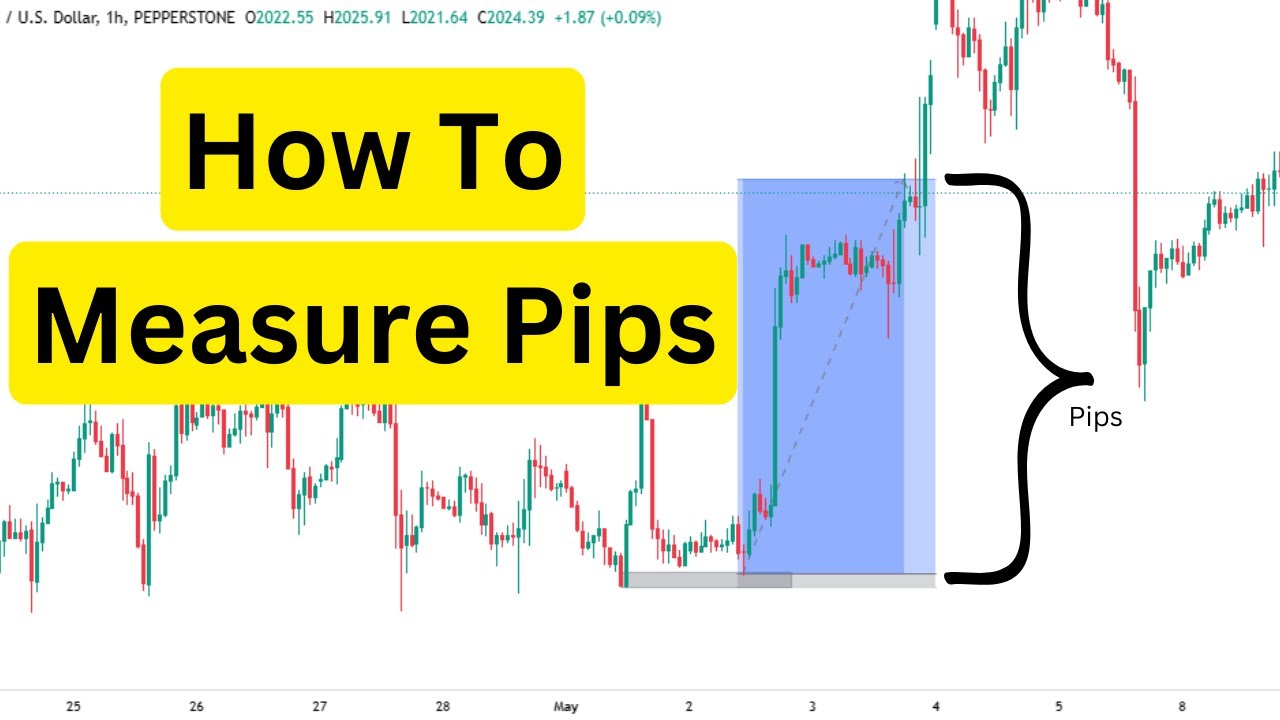
In this comprehensive guide, I’m going to walk you through exactly what forex pips are, how to calculate them accurately, and—most importantly, the seven critical mistakes that cost beginners thousands of dollars. Whether you’re placing your first trade tomorrow or you’ve been struggling to find consistency, this article will transform how you understand and use pips to protect your capital and build sustainable trading habits.
By the time you finish reading, you’ll know precisely how many pips constitute a good trade, how to calculate pip values across different currency pairs, and the emotional discipline techniques that separate profitable traders from those who blow their accounts. Let’s dive in.
What Is a Pip in Forex: The Foundation Every Beginner Must Understand
Before we tackle the mistakes that cost traders their hard-earned money, we need to establish a crystal-clear understanding of what is a pip in forex trading. This foundation is non-negotiable, skip it, and everything else becomes guesswork.
The Technical Definition of Forex Pips
A pip (percentage in point or price interest point) represents the smallest price movement that a currency pair can make based on market convention. For most currency pairs, a pip is the fourth decimal place (0.0001). For example, if EUR/USD moves from 1.1050 to 1.1051, that’s a one-pip movement.
However, Japanese yen pairs follow a different convention. Because the yen is valued much lower than most other major currencies, yen pairs are quoted to just two decimal places. For USD/JPY, GBP/JPY, and other yen crosses, a pip is the second decimal place (0.01). If USD/JPY moves from 149.50 to 149.51, that’s also a one-pip movement.
What Is a Pip and Pipette in Forex Trading With Examples
Modern trading platforms have introduced even more precision with pipettes (also called fractional pips or points). A pipette is one-tenth of a pip, represented by the fifth decimal place for most pairs (0.00001) or the third decimal place for yen pairs (0.001).
Let me break this down with concrete examples:
Standard Currency Pair Examples:
- EUR/USD at 1.10503 → The bold digits represent pips, the final digit is the pipette
- GBP/USD moves from 1.2550 to 1.2565 = 15 pips of movement
- AUD/USD drops from 0.6720 to 0.6705 = 15 pips downward movement
Japanese Yen Pair Examples:
- USD/JPY at 149.506 → The bold digits represent pips, the final digit is the pipette
- EUR/JPY rises from 161.20 to 161.55 = 35 pips of upward movement
- GBP/JPY falls from 188.75 to 188.30 = 45 pips downward movement
Understanding this distinction is crucial because forex pip calculation differs fundamentally between standard pairs and yen pairs. Miss this detail, and you’ll miscalculate your risk on every single trade involving Japanese yen.
Why Forex Pips Matter More Than You Think
Here’s what most beginners don’t realize: pips are the universal language of forex trading. When professional traders discuss a strategy’s performance, they don’t say “I made $500 today.” They say “I captured 80 pips on EUR/USD.” Why? Because pip movements are consistent regardless of your account size or position sizing.
A 50-pip movement is a 50-pip movement whether you’re trading with $100 or $100,000. The monetary value changes based on your lot size, but the pip measurement remains constant. This standardization allows traders worldwide to compare strategies, set consistent risk parameters, and communicate effectively about market movements.
Consider this: if someone tells you they average 100 pips per week, that’s meaningless without context about their win rate and average loss. But if they say they average 100 pips per week with a 60% win rate and a 1:2 risk-reward ratio, you can immediately assess whether their strategy is profitable. Pips provide the framework for this analysis.
How to Calculate Pips in Forex Trading Step by Step
Now that we understand what pips are conceptually, let’s tackle the practical skill that trips up countless beginners: how to calculate pips in forex trading step by step. This is where theory meets reality, and where miscalculations can cost you serious money.
The Universal Pip Calculation Formula
The monetary value of a pip depends on three critical factors:
- The currency pair you’re trading
- Your position size (lot size)
- The exchange rate of the currency pair
Here’s the fundamental formula for pip value calculation:
Pip Value = (One Pip / Exchange Rate) × Position Size
Let’s break this down with a real-world example that you can replicate on your own trades.
Step-by-Step Forex Pip Calculation Example 1: EUR/USD
Imagine you’re trading EUR/USD at 1.1050 with a position size of 10,000 units (0.1 standard lot or 1 mini lot):
Step 1: Identify the pip size
- For EUR/USD, one pip = 0.0001
Step 2: Apply the formula
- Pip Value = (0.0001 / 1.1050) × 10,000
- Pip Value = 0.0000905 × 10,000
- Pip Value = 0.905 EUR
Step 3: Convert to your account currency (if needed)
- If your account is in USD: 0.905 EUR × 1.1050 = $1.00 per pip
- This means each pip of movement equals $1.00 profit or loss
The shortcut: For most major currency pairs where USD is the quote currency (the second currency), calculating pip values is straightforward:
- 1 standard lot (100,000 units) = $10 per pip
- 1 mini lot (10,000 units) = $1 per pip
- 1 micro lot (1,000 units) = $0.10 per pip
Step-by-Step Forex Pip Calculation Example 2: GBP/JPY
This is where it gets trickier. Cross pairs (pairs that don’t include USD) require an additional conversion step. Let’s calculate pip value for GBP/JPY at 188.50 with 10,000 units:
Step 1: Identify the pip size
- For yen pairs, one pip = 0.01
Step 2: Calculate the base pip value in JPY
- Pip Value = (0.01 / 188.50) × 10,000
- Pip Value = 0.0000531 × 10,000
- Pip Value = 0.531 GBP
Step 3: Convert GBP to your account currency
- If your account is in USD and GBP/USD is currently at 1.2550
- 0.531 GBP × 1.2550 = $0.67 per pip (approximately)
Notice how the pip value for cross pairs fluctuates based on exchange rates? This is why professional traders constantly monitor pip values, especially on volatile pairs.
The Pip Value Table Every Trader Should Bookmark
To make your life easier, here’s a reference table showing pip values for common position sizes across major currency pairs (assuming a USD account):
| Currency Pair | 1 Standard Lot (100,000) | 1 Mini Lot (10,000) | 1 Micro Lot (1,000) | Pip Size |
|---|---|---|---|---|
| EUR/USD | $10.00 | $1.00 | $0.10 | 0.0001 |
| GBP/USD | $10.00 | $1.00 | $0.10 | 0.0001 |
| USD/JPY | $9.12* | $0.91* | $0.09* | 0.01 |
| USD/CHF | $10.95* | $1.10* | $0.11* | 0.0001 |
| AUD/USD | $10.00 | $1.00 | $0.10 | 0.0001 |
| EUR/GBP | $12.55* | $1.26* | $0.13* | 0.0001 |
| EUR/JPY | $9.12* | $0.91* | $0.09* | 0.01 |
| GBP/JPY | $9.12* | $0.91* | $0.09* | 0.01 |
Values marked with asterisk are approximate and fluctuate based on current exchange rates
Pro tip: Most modern trading platforms automatically calculate pip values for you, but you should always verify these calculations manually when setting up new trades. I’ve seen platform glitches cost traders thousands because they blindly trusted the automated calculations.
The Hidden Complexity: Why Some Platforms Show Different Pip Values
Here’s something that confuses many beginners: different brokers may display slightly different pip values for the same trade. This isn’t necessarily an error, it reflects the real-time fluctuation in exchange rates used for conversion.
When you’re trading a cross pair like EUR/GBP with a USD account, your broker must convert the pip value through current exchange rates. If one broker’s price feed shows GBP/USD at 1.2550 while another shows 1.2552, you’ll see marginally different pip values. These differences are typically minimal (a few cents per pip), but they matter when you’re trading large positions.
The lesson? Always understand the underlying mathematics of forex pip calculation rather than blindly relying on platform displays. This knowledge becomes your safety net when things don’t add up.
The 7 Critical Mistakes Beginners Make With Pips in Forex Trading
Now we’re getting to the heart of why most traders fail. These aren’t minor errors—these are account-destroying mistakes that stem directly from misunderstanding pips in forex trading. I’ve personally made most of these mistakes, and I’ve mentored dozens of traders who’ve repeated them. Let’s break down each one so you can avoid these expensive lessons.
Mistake 1: Confusing Pips With Profit (The $500 Misunderstanding)
This is the most fundamental and devastating mistake beginners make. They see a 50-pip movement and think they’ve made substantial profit, without considering their position size or the actual monetary value of those pips.
The Real-World Disaster:
I once worked with a trader named Marcus who was ecstatic about capturing 150 pips on EUR/USD in a single week. He posted about his “massive win” in a trading forum and calculated that at this rate, he’d be making $3,000 monthly. The reality? Marcus was trading 0.01 lots (micro lots), meaning his 150 pips translated to just $15 in actual profit.
Meanwhile, his friend Sarah made 30 pips that same week but earned $300 because she was trading 1 standard lot. The pip count told only part of the story—the position size determined the actual profit.
The Solution:
Always calculate your profit in both pips AND monetary terms. Use this formula:
Actual Profit = Number of Pips × Pip Value × Number of Lots
Before entering any trade, write down:
- Target profit in pips: ___
- Pip value for my position size: ___
- Expected monetary profit: ___
- Maximum acceptable loss in pips: ___
- Maximum acceptable monetary loss: ___
This simple checklist prevents the dangerous disconnect between pip movements and real money. Remember: pips measure distance, not value. They’re like miles on a road trip, 50 miles traveled tells you nothing about whether you’re in a Ferrari or walking on foot.

Mistake 2: Ignoring Position Sizing Relative to Pip Value
Here’s where beginners really get themselves into trouble. They hear advice like “never risk more than 2% of your account per trade” but fail to translate that percentage into proper position sizing based on pip values.
The Mathematics of Disaster:
Let’s say you have a $5,000 trading account and correctly want to risk 2% per trade (that’s $100 maximum risk). You identify a EUR/USD setup where your stop loss is 50 pips away from your entry. How many lots should you trade?
Wrong approach: “I’ll trade 1 mini lot because that seems reasonable.”
- 1 mini lot = $1 per pip
- 50-pip stop loss × $1 per pip = $50 risk
- This seems fine, right?
Actually wrong approach: “I want to make more money, so I’ll trade 1 standard lot.”
- 1 standard lot = $10 per pip
- 50-pip stop loss × $10 per pip = $500 risk
- You just risked 10% of your account on one trade!
Correct approach: Calculate backwards from your dollar risk
- Maximum risk: $100
- Stop loss distance: 50 pips
- Required pip value: $100 ÷ 50 pips = $2 per pip
- Position size: 2 mini lots (0.2 standard lots)
The position sizing strategy that professional traders use always starts with the dollar amount they’re willing to lose, then works backwards to determine lot size. Never the reverse.
The Position Sizing Formula That Saves Accounts:
Lot Size = (Account Risk in Dollars) / (Stop Loss in Pips × Pip Value per Lot)
Let’s apply this to different scenarios:
| Account Size | Risk % | Risk $ | Stop Loss (Pips) | Pip Value Needed | Lot Size |
|---|---|---|---|---|---|
| $1,000 | 2% | $20 | 30 pips | $0.67 | 0.06 lots |
| $5,000 | 2% | $100 | 50 pips | $2.00 | 0.20 lots |
| $10,000 | 1% | $100 | 25 pips | $4.00 | 0.40 lots |
| $10,000 | 2% | $200 | 40 pips | $5.00 | 0.50 lots |
This table should be your constant companion. Print it out. Tattoo it on your arm if necessary. Proper position sizing based on pip values is the single most important risk management tool you possess.
Mistake 3: Not Adjusting for Different Pip Values Across Currency Pairs
Remember how we discussed that USD/JPY has different pip values than EUR/USD? Beginners often trade these pairs with identical position sizes, completely unaware that they’re taking on vastly different risk.
The Cross-Pair Catastrophe:
Jennifer had been successfully trading EUR/USD with 0.5 lots, maintaining consistent 2% risk per trade. Feeling confident, she decided to diversify into GBP/JPY, using the same 0.5-lot position size she’d grown comfortable with.
What Jennifer didn’t realize: at current exchange rates, GBP/JPY had a different pip value than EUR/USD. Her “standard” 30-pip stop loss on GBP/JPY was actually risking $13.65 instead of the $15 she experienced on EUR/USD. Not a huge difference, but multiply this across dozens of trades and different market conditions, and the inconsistency compounds.
Worse, when she later traded exotic pairs like USD/TRY (Turkish Lira) or USD/ZAR (South African Rand), the pip values were wildly different, causing her to dramatically overexpose herself without realizing it.
The Solution:
Create a pip value reference sheet for every currency pair you trade. Update it weekly or whenever you notice significant exchange rate movements. Here’s a template:
My Pip Value Reference Sheet (Updated: [Date])
| Pair | Current Rate | Standard Lot Pip Value | My Typical Position Size | My Pip Value | Max Risk (Pips) for 2% |
|---|---|---|---|---|---|
| EUR/USD | 1.1050 | $10.00 | 0.3 lots | $3.00 | 67 pips |
| GBP/USD | 1.2550 | $10.00 | 0.3 lots | $3.00 | 67 pips |
| USD/JPY | 149.50 | $9.12 | 0.3 lots | $2.74 | 73 pips |
| GBP/JPY | 188.50 | $9.12 | 0.3 lots | $2.74 | 73 pips |
This simple reference prevents the dangerous assumption that all pairs behave identically. Professional traders on platforms like MetaTrader use position size calculators that automatically adjust for these variations—you should too.
Mistake 4: Setting Unrealistic Pip Targets Without Understanding Market Context
I constantly see beginners asking questions like “How many pips should I make per day?” or “Is 100 pips per week good?” These questions reveal a fundamental misunderstanding of how many pips is a good trade in forex trading.
The Arbitrary Target Trap:
David decided he needed to make 50 pips daily to reach his income goals. Some days, EUR/USD only moved 40 pips total. Other days it moved 150 pips. But David’s arbitrary 50-pip target forced him into poor trading decisions:
- On low-volatility days, he overtraded trying to squeeze out his 50 pips
- On high-volatility days, he exited winning trades prematurely after hitting his target, missing additional 100+ pip moves
- He took low-probability setups just to meet his daily quota
- His emotional state became tied to an arbitrary number rather than quality setups
After six months of this approach, David’s account was down 35% despite having some successful trades. The self-imposed pip target had destroyed his emotional discipline techniques for consistent trading.
What Actually Constitutes a Good Trade:
The quality of a trade isn’t measured by pip count, it’s measured by the risk-reward ratio relative to the setup’s probability. A 20-pip winner with 10 pips of risk (2:1 reward-risk) can be far superior to a 100-pip winner that risked 200 pips (1:2 reward-risk).
Here’s the framework professional traders use:
High-Quality Trade Criteria:
- Minimum 1:2 risk-reward ratio (targeting at least twice what you’re risking)
- Setup with at least 50% historical probability of success
- Aligns with higher timeframe trend
- Entered at a logical support/resistance level
- Position sized for maximum 1-2% account risk
Understanding Average Daily Range (ADR):
Instead of arbitrary pip targets, understand each pair’s typical movement patterns:
| Currency Pair | Average Daily Range (Pips) | Realistic Daily Target | Stop Loss Range |
|---|---|---|---|
| EUR/USD | 60-80 | 20-30 pips | 15-25 pips |
| GBP/USD | 80-120 | 30-50 pips | 25-40 pips |
| USD/JPY | 50-70 | 20-30 pips | 15-25 pips |
| GBP/JPY | 120-180 | 40-70 pips | 30-50 pips |
| EUR/GBP | 40-60 | 15-25 pips | 10-20 pips |
These ranges vary based on market conditions, economic events, and volatility levels, but they provide context for realistic expectations. Targeting 50 pips on EUR/GBP when the pair typically moves 50 pips total means you’re essentially trying to capture the entire daily range, an unrealistic goal that leads to holding positions too long and giving back profits.
Mistake 5: Failing to Account for Spread in Pip Calculations
Here’s a subtle mistake that quietly drains accounts: beginners calculate their pip profits and losses without factoring in the spread (the difference between bid and ask prices). Every single trade starts in the red due to spread, and ignoring this cost leads to inflated performance expectations.
The Hidden Cost Nobody Talks About:
The spread is essentially your broker’s commission, built into the pricing. When you enter a trade, you buy at the ask price but your position is immediately valued at the bid price. This instant loss is measured in pips.
Example spread costs:
- EUR/USD: typically 0.5-2 pips
- GBP/USD: typically 1-3 pips
- USD/JPY: typically 0.5-2 pips
- GBP/JPY: typically 3-5 pips
- Exotic pairs: can be 10-50+ pips
The Compounding Impact:
Michael was a scalper targeting 10-pip gains on EUR/USD. His broker had a 2-pip spread. Here’s the math:
- Target: 10 pips
- Spread cost: 2 pips
- Actual movement needed: 12 pips just to break even
- Real profit per trade: only 8 pips (after spread)
Over 100 trades, Michael’s spread costs totaled 200 pips. At $1 per pip, that’s $200 in hidden costs that never appeared in his profit calculations. He thought he’d made $1,000 (100 trades × 10 pips × $1) but actually made only $800 after spreads—a 20% reduction in profits.
For day traders making 10-20 trades daily, spread costs can consume 30-50% of gross profits. This is why scalping strategies that target tiny pip movements often fail—the spread eats up most of the edge.
The Solution:
Always include spread in your pip calculations:
Net Pips = (Exit Price – Entry Price) – Spread
Choose brokers with competitive spreads, especially for pairs you trade frequently. Compare these costs:
| Broker Type | EUR/USD Spread | GBP/USD Spread | 100 Trades Cost (0.1 lots) |
|---|---|---|---|
| ECN Broker | 0.1-0.5 pips | 0.5-1.0 pips | $5-$10 |
| Market Maker | 1-2 pips | 2-3 pips | $20-30 |
| Poor Broker | 3+ pips | 4+ pips | $50+ |
Over a year of active trading, these spread differences can mean thousands of dollars. Choosing a broker based solely on flashy bonuses while ignoring spreads is like buying a car based on the free air freshener.
Mistake 6: Chasing Pips Instead of Following a Systematic Strategy
This mistake stems from the gambler’s mentality that destroys more forex accounts than any other factor. It’s the causes and solutions for chronic overtrading in trading—the compulsive need to always be in a trade, always be “making pips.”
The Overtrading Death Spiral:
Rachel started trading with a solid strategy that generated about 200 pips monthly with a 55% win rate. But after a few winning days where she captured 80 pips, she started feeling like she was “missing out” on days when she had no trades.
The spiral began:
- She lowered her entry criteria to find more setups
- She started trading more pairs to find “opportunities”
- She reduced timeframes to get more signals
- She began revenge trading after losses to “make back pips”
- She took opposing trades when her initial idea didn’t work immediately
Within three months, Rachel was taking 5-10 trades daily instead of her strategy’s 1-2 weekly signals. Her win rate dropped to 35%. Her average winner was 15 pips but her average loser was 30 pips. Despite capturing over 500 pips in winners, her 900+ pips in losses destroyed her account.
Rachel had fallen into the classic trap: chasing pips instead of following her systematic strategy. The psychological pull of “making money every day” overrode her rational trading plan.
Understanding Overtrading Statistics:
Research shows that overtrading accounts for approximately 40% of retail trader losses. The statistics are sobering:
- Traders who take 100+ trades monthly have a 12% success rate
- Traders who take 20-40 trades monthly have a 31% success rate
- Traders who take 5-15 trades monthly have a 47% success rate
- The most successful retail traders average just 2-3 trades weekly
The Solution—Building Emotional Discipline:
Here are the emotional discipline techniques that separate consistent traders from gamblers:
1. Pre-Define Your Trading Sessions
- Specific times when you analyze markets (e.g., 7-8 AM, 7-8 PM)
- Maximum number of trades per day/week (be ruthless about this limit)
- Mandatory break after 2 consecutive losses
2. Create a Setup Checklist Every trade must satisfy ALL criteria before you enter:
- Aligns with higher timeframe trend
- Clear support/resistance level
- Risk-reward minimum 1:2
- Confirmation signal present
- Position sized for max 2% risk
- No conflicting economic news in next 4 hours
- Emotional state is calm and rational
3. Track “No-Trade” Days as Wins Keep a trading journal that rewards discipline:
- Days with no setup = “Disciplined Day” (mark with green)
- Days that followed strategy = “Process Win” (regardless of profit/loss)
- Days that deviated from rules = “Process Loss” (even if profitable)
This reframes success around process rather than outcomes. I’ve seen traders completely transform their results by celebrating the days they didn’t trade poor setups more than the days they captured pips.
4. Implement Cool-Down Protocols After a loss, require yourself to:
- Step away from charts for minimum 1 hour
- Write down what happened (journal entry)
- Review whether you followed your strategy
- Only re-enter after confirming emotional neutrality
The best traders I know have strict rules like “after two losses in one day, I’m done trading for 24 hours.” This prevents the revenge trading that turns manageable losses into account-destroying disasters.
Mistake 7: Neglecting the Relationship Between Timeframes and Pip Movements
The final critical mistake involves misunderstanding how chart analysis for beginners should account for timeframe differences. A 50-pip movement on a 1-minute chart has completely different significance than a 50-pip movement on a daily chart.
The Timeframe Confusion:
Tom was a successful daily chart trader, typically holding positions for 3-5 days and targeting 100-150 pips per trade. Wanting to “make money faster,” he switched to 15-minute charts, keeping his 100-150 pip targets.
The problem? On a 15-minute EUR/USD chart, a 100-pip move might take 2-3 days—exactly the same holding period as his daily chart strategy! But now he was:
- Watching charts constantly instead of checking daily
- Experiencing 10-20 pips of normal noise as “massive movements”
- Stopping out on normal retracements that looked dramatic on small timeframes
- Suffering extreme stress from constant price fluctuation
Tom’s win rate plummeted from 58% to 31% simply because he applied daily chart pip targets to intraday timeframes. He was trying to capture major moves from minor chart patterns—a fundamental mismatch.
Understanding Timeframe-Appropriate Pip Targets:
Different timeframes generate different typical pip movements. Here’s what realistic targets look like:
| Timeframe | Typical Hold Period | Average Pip Target | Stop Loss Range | Best For |
|---|---|---|---|---|
| 1-5 minute | Minutes to hours | 5-15 pips | 5-10 pips | Scalpers with tight spreads |
| 15-30 minute | Hours to 1 day | 15-30 pips | 10-20 pips | Day traders |
| 1-4 hour | 1-3 days | 30-80 pips | 25-50 pips | Swing traders |
| Daily | 3-7 days | 80-200 pips | 50-100 pips | Position traders |
| Weekly | Weeks to months | 200-500+ pips | 100-200 pips | Long-term traders |
The Solution—Aligning Strategy With Timeframe:
Choose ONE primary timeframe and build your entire strategy around its characteristics:
If you’re a daily chart trader:
- Set alerts instead of watching charts constantly
- Target 100+ pips with 50-70 pip stops
- Accept that normal retracements can be 30-50 pips
- Check charts 1-2 times daily maximum
If you’re a 15-minute chart trader:
- Accept smaller pip targets (20-30 pips)
- Use tighter stops (15-20 pips)
- Understand you’ll need higher win rates
- Must be available to manage trades actively
If you’re a 1-hour chart trader (the sweet spot for many):
- Target 40-60 pips per trade
- Use 25-35 pip stops
- Can check charts 3-4 times daily
- Balances opportunity with lifestyle
The key insight: don’t chase the pip counts you see on social media without understanding the timeframe context. Someone posting about their “500-pip week” might be a daily chart trader who made 3 trades, while you’re a scalper making 50 trades. Their strategy may be completely inappropriate for your timeframe.
Advanced Pip Concepts: Taking Your Understanding to the Next Level
Now that we’ve covered the critical mistakes, let’s explore some advanced concepts that separate beginner pip understanding from professional-level expertise.
The Relationship Between Volatility and Pip Value
Market volatility directly impacts how you should think about pips. During high-volatility periods (major news events, market openings, crisis situations), pips move much faster and your stop losses need adjustment.
Volatility Adjustment Framework:
During normal market conditions:
- EUR/USD might move 60-80 pips daily
- Appropriate stop loss: 20-30 pips
- Position size: based on 2% account risk
During high volatility (NFP, FOMC, geopolitical crisis):
- EUR/USD might move 150-200 pips daily
- Appropriate stop loss: 40-60 pips (wider to avoid noise)
- Position size: reduced to maintain 2% account risk
Here’s the critical calculation most traders miss:
If your stop loss doubles from 30 pips to 60 pips during high volatility, you must halve your position size to maintain the same dollar risk.
Example:
- Normal conditions: 30-pip stop, 0.3 lots, $9 risk per pip = $270 total risk (2% of $13,500 account)
- High volatility: 60-pip stop, 0.15 lots, $4.50 risk per pip = $270 total risk (still 2% of account)
Most beginners keep the same position size but widen stops, unknowingly doubling or tripling their risk during the most dangerous trading periods.
Using Pip Averages to Identify Trading Opportunities
Professional traders use average pip movements to identify when a currency pair is overextended or has potential for continuation. This concept, called “average true range” (ATR), measures typical volatility in pips.
How to Use ATR for Trade Planning:
If EUR/USD has an ATR of 70 pips (14-period ATR on the daily chart), you know:
- The pair typically moves 70 pips from high to low each day
- If it’s already moved 65 pips by midday, there’s limited room for new positions
- If it’s only moved 20 pips by late day, there might be a breakout coming
- Your targets should align with this range (targeting 100 pips when ATR is 70 requires multi-day holds)
ATR-Based Position Sizing:
Some advanced traders adjust their position sizes based on ATR:
Position Size = (Account Risk) / (ATR × Multiplier)
Where the multiplier is typically 1
.5-2.0, meaning you set stops at 1.5-2× the current ATR to avoid getting stopped out by normal volatility.
The Pip-Based Money Management System
Here’s a professional-level money management approach that uses pip tracking:
The 100-Pip Risk Unit System:
- Divide your risk capital into 100-pip risk units
- Each unit represents the dollar amount you’d lose if you lost 100 pips at your base position size
- Track all trades in terms of pip units won or lost
Example with $10,000 account:
- 2% risk per trade = $200
- Base position size: 0.2 lots ($2 per pip)
- 100-pip risk unit = $200
- You have 50 units total (100% of your account)
Tracking Performance:
- Trade 1: +50 pips = +0.5 units ($100)
- Trade 2: -30 pips = -0.3 units ($60)
- Trade 3: +80 pips = +0.8 units ($160)
- Net: +100 pips = +1.0 unit ($200)
This system standardizes performance tracking regardless of changing pip values across different pairs or market conditions. You always know your performance in terms of risk units, making it easier to spot when you’re deviating from your strategy.
Building Your Pip-Based Trading Plan: A Step-by-Step Framework
Let’s consolidate everything we’ve learned into a practical, actionable trading plan built around proper pip understanding.
Step 1: Define Your Pip Parameters by Trading Style
First, honestly assess which trading style fits your lifestyle and personality:
Scalper (Not Recommended for Beginners):
- Primary timeframe: 1-5 minutes
- Average pip target: 5-15 pips
- Average stop loss: 5-10 pips
- Minimum win rate needed: 60%+
- Trades per week: 50-100+
- Time commitment: 4-8 hours daily watching charts
- Best pairs: Major pairs with tightest spreads (EUR/USD, USD/JPY)
Day Trader:
- Primary timeframe: 15-minute to 1-hour
- Average pip target: 20-40 pips
- Average stop loss: 15-30 pips
- Minimum win rate needed: 50%+
- Trades per week: 10-30
- Time commitment: 2-4 hours daily watching charts
- Best pairs: Major and minor pairs (EUR/USD, GBP/USD, AUD/USD)
Swing Trader (Best for Most Beginners):
- Primary timeframe: 4-hour to daily
- Average pip target: 60-150 pips
- Average stop loss: 40-80 pips
- Minimum win rate needed: 40%+
- Trades per week: 3-10
- Time commitment: 1-2 hours daily maximum
- Best pairs: Any liquid pair with consistent trends
Position Trader:
- Primary timeframe: Daily to weekly
- Average pip target: 200-500+ pips
- Average stop loss: 100-200 pips
- Minimum win rate needed: 35%+
- Trades per month: 2-8
- Time commitment: 30 minutes daily
- Best pairs: Major pairs with strong fundamental drivers
Choose ONE. Trading multiple styles simultaneously leads to conflicting signals and analysis paralysis.
Step 2: Calculate Your Maximum Position Size
Use this conservative formula based on your trading style and account size:
Maximum Lot Size = (Account Size × Risk %) / (Average Stop Loss in Pips × Pip Value)
Examples across different account sizes:
| Account Size | Risk % | Risk $ | Avg Stop (Pips) | Max Lot Size | Pip Value |
|---|---|---|---|---|---|
| $1,000 | 1% | $10 | 30 pips | 0.03 lots | $0.33 |
| $5,000 | 2% | $100 | 50 pips | 0.20 lots | $2.00 |
| $10,000 | 2% | $200 | 40 pips | 0.50 lots | $5.00 |
| $25,000 | 1.5% | $375 | 60 pips | 0.62 lots | $6.25 |
Critical rule: Never exceed this maximum position size, even when you’re “sure” about a trade. The trades you’re most confident about are often the ones that fail most spectacularly.
Step 3: Create Your Pre-Trade Checklist
Before clicking “buy” or “sell,” run through this checklist that incorporates proper pip understanding:
Technical Criteria:
- Price is at a clear support/resistance level
- Entry point identified with precision (within 5 pips)
- Stop loss placed at logical level (beyond recent swing)
- Target is minimum 1.5× the stop loss distance
- Path to target is clear (no major resistance levels blocking)
Risk Management Criteria:
- Stop loss distance calculated in pips: _____
- Pip value for my position size: $_____
- Total dollar risk: $_____ (should be ≤2% of account)
- Potential reward: $_____ (should be ≥1.5× risk)
- Position size: _____ lots
Execution Criteria:
- Spread is reasonable for this pair (not widened by news)
- No major economic news in next 4 hours
- Account has sufficient margin for this position
- I’m emotionally calm and following my strategy
If ANY box is unchecked, do not take the trade. This checklist has saved me from countless losing trades where I “felt” something would work but the objective criteria weren’t met.
Step 4: Journal Every Trade With Pip Metrics
Create a trading journal that tracks these pip-related metrics for every trade:
Essential Journal Entries:
- Date and time
- Currency pair
- Timeframe analyzed
- Entry price
- Stop loss (in pips from entry)
- Target (in pips from entry)
- Position size (lots)
- Pip value
- Total risk ($)
- Exit price
- Actual pips gained/lost
- Actual dollars gained/lost
- Notes on execution quality
Weekly Review Questions:
- What was my average winning trade in pips? _____
- What was my average losing trade in pips? _____
- Is my reward-risk ratio maintaining 1.5:1 or better? _____
- Am I adjusting position sizes appropriately for different stop distances? _____
- Which pairs gave me the best pip-to-dollar returns? _____
This data reveals patterns you can’t see by just looking at your account balance. You might discover that you’re consistently profitable on EUR/USD but lose money on GBP/JPY, or that your 4-hour chart trades perform better than your 1-hour trades.
Real-World Trading Scenarios: Pip Calculations in Action
Let’s work through some real trading scenarios to cement these concepts with practical application.
Scenario 1: The Classic EUR/USD Swing Trade
Setup:
- Account size: $8,000
- Risk per trade: 2% ($160)
- Currency pair: EUR/USD currently at 1.1050
- Strategy: Daily chart swing trade
- Entry signal: Bullish pin bar at support
Analysis:
- Entry: 1.1050
- Stop loss: 1.1005 (45 pips below entry, just below pin bar low)
- Target: 1.1180 (130 pips above entry, previous resistance level)
- Reward-risk ratio: 130 pips / 45 pips = 2.89:1 ✓
Position Sizing Calculation:
- Risk allowed: $160
- Stop distance: 45 pips
- Required pip value: $160 ÷ 45 pips = $3.56 per pip
- Position size needed: $3.56 ÷ $10 (standard lot pip value) = 0.356 lots
- Trade 0.35 lots to stay within risk parameters
Outcome Tracking: If the trade hits target:
- Pips gained: 130
- Dollar profit: 130 pips × $3.50 per pip = $455 profit
- Return: $455 / $8,000 = 5.69% account growth
If the trade hits stop:
- Pips lost: 45
- Dollar loss: 45 pips × $3.50 per pip = $157.50 loss
- Return: -$157.50 / $8,000 = -1.97% account decline (within our 2% limit)
Key Lessons:
- The position size calculation ensures we risk exactly 2%, no more
- The 2.89:1 reward-risk means we can be wrong 65% of the time and still be profitable
- We’re targeting 130 pips but the dollar value matters more for our account growth
Scenario 2: The Dangerous GBP/JPY Cross Trade
Setup:
- Account size: $5,000
- Risk per trade: 2% ($100)
- Currency pair: GBP/JPY currently at 188.50
- Strategy: 4-hour chart breakout
- Entry signal: Breakout above resistance
Common Beginner Mistake: Using the same position size as EUR/USD trades without adjusting for different pip values.
Wrong approach:
- “I usually trade 0.2 lots on EUR/USD, so I’ll trade 0.2 lots here too”
- GBP/JPY pip value for 0.2 lots: approximately $1.82 per pip (varies with exchange rates)
- Stop loss: 60 pips
- Actual risk: 60 pips × $1.82 = $109.20 (exceeds 2% rule!)
Correct Approach:
- Risk allowed: $100
- Stop distance: 60 pips
- Required pip value: $100 ÷ 60 pips = $1.67 per pip
- GBP/JPY standard lot pip value: ~$9.12
- Position size needed: $1.67 ÷ $9.12 = 0.183 lots
- Trade 0.18 lots maximum
Advanced Consideration: Because GBP/JPY is more volatile, consider using 1.5% risk instead of 2%:
- Risk allowed: $75
- Required pip value: $75 ÷ 60 pips = $1.25 per pip
- Position size: 0.14 lots
- Trade 0.14 lots for more conservative approach
Scenario 3: The Small Account Challenge
Setup:
- Account size: $500
- Risk per trade: 2% ($10)
- Currency pair: EUR/USD at 1.1050
- Strategy: Daily chart trend following
- Entry signal: Pullback to moving average in uptrend
The Small Account Reality:
- Entry: 1.1050
- Stop loss: 1.1010 (40 pips)
- Target: 1.1170 (120 pips)
- Risk allowed: $10
Position Sizing:
- Required pip value: $10 ÷ 40 pips = $0.25 per pip
- EUR/USD standard lot pip value: $10
- Position size needed: $0.25 ÷ $10 = 0.025 lots
The Problem: Many brokers have a minimum trade size of 0.01 lots (micro lot). At 0.01 lots:
- Pip value: $0.10
- Actual risk: 40 pips × $0.10 = $4 (less than your 2% allowance)
The Solution for Small Accounts: You have two choices:
Option 1: Trade smaller position sizes with wider diversification
- Trade 0.01 lots (risking only $4 instead of $10)
- This gives you room for 2-3 simultaneous positions
- Lower risk per trade but more trading opportunities
Option 2: Save and build your account before trading
- Harsh truth: $500 accounts face severe limitations
- Spread costs consume larger percentage of profits
- Minimum position sizes prevent proper risk management
- Consider building to $1,000-2,000 before active trading
Most honest advice: If you’re starting with under $1,000, use that capital for education and practice on a demo account. Add to it monthly until you reach $2,000-3,000, then begin live trading with proper position sizing capabilities.
The Psychology of Pips: Why Understanding Matters for Mental Performance
We’ve covered the mathematics and mechanics of pips, but there’s a crucial psychological component that determines whether you’ll actually apply this knowledge successfully.
The Emotional Trap of Pip Counting
One of the most destructive mental habits in forex trading is obsessing over pip counts rather than process quality. I’ve seen traders become euphoric over a 100-pip winner that violated their strategy, then become depressed over a 20-pip loss that perfectly followed their plan.
The Reframe That Changes Everything:
Your job isn’t to “make pips.” Your job is to execute your strategy with precision and let the pips take care of themselves.
Consider two traders:
Trader A (Pip Obsessed):
- Focuses entirely on how many pips they made
- Bends rules to chase more pips
- Feels like a failure on days with no trades
- Monthly result: 500 pips captured, account down 12%
Trader B (Process Focused):
- Focuses on executing strategy precisely
- Celebrates disciplined no-trade days
- Tracks process adherence as primary metric
- Monthly result: 200 pips captured, account up 8%
The difference? Trader A made more pips but lost money because they overtrade, revenge traded, and took low-quality setups. Trader B made fewer pips but earned money because every pip was captured with proper risk management and strategic alignment.
Mental Reframe Exercise:
Replace “How many pips did I make?” with “How well did I execute my strategy?”
Your trading journal should have two separate sections:
- Process Metrics (Did I follow my rules?)
- Outcome Metrics (How many pips/dollars resulted?)
Reward yourself based on process metrics, not outcomes. This single shift eliminates the emotional roller coaster that destroys accounts.
Using Pip Goals to Build Confidence (The Right Way)
While arbitrary pip targets are dangerous, properly structured pip goals can build trading confidence and skills. Here’s how to do it right:
The 100-Pip Challenge (For Practice):
Instead of “I need to make 100 pips this week,” try: “I will execute my strategy perfectly for 100 total pips of trade exposure this week”
This means:
- If you take a trade with a 50-pip stop, that’s 50 pips of exposure (regardless of outcome)
- Your goal is to execute 2 perfect trades (2 × 50 pips = 100 pips of exposure)
- Win or lose, if both trades followed your strategy, you succeeded
This reframe transforms pip goals from outcome-based (which you can’t control) to process-based (which you can control). You’re measuring your willingness to take calculated risks, not your ability to predict the future.
The Patience Pip Tracker
One of the most valuable metrics I track is “pips waited” versus “pips traded.” This measures patience:
Pips Waited: The number of pips that moved while you were correctly waiting for your setup Pips Traded: The number of pips you actually captured when your setup appeared
Example:
- Monday-Thursday: EUR/USD moves 200 pips, but no valid setup appears
- Pips waited: 200
- Friday: Valid setup appears, you trade and capture 40 pips
- Pips traded: 40
- Patience ratio: 200:40 or 5:1
A high patience ratio (waiting through lots of movement for the right setup) correlates strongly with long-term profitability. If your ratio is below 2:1, you’re probably overtrading.
This metric gamifies patience—one of the hardest skills for new traders to develop. You can literally see your discipline building as your patience ratio improves over time.
Advanced Pip Strategies: Scaling and Partial Positions
Once you’ve mastered basic pip management, these advanced techniques can enhance your trading results.
Scaling Into Positions Using Pip Zones
Professional traders rarely enter their full position at once. Instead, they scale into trades across pip zones:
Example Scaling Strategy:
Full position target: 0.30 lots on EUR/USD Entry plan at three levels:
- Zone 1 (1.1050): Enter 0.10 lots
- If price moves 20 pips against you to 1.1030, stop loss triggered
- Loss: 20 pips × $1 = $20
- Zone 2 (1.1035): Price pulls back, add 0.10 lots
- Average entry now: 1.1042
- Combined position: 0.20 lots
- Zone 3 (1.1020): Price pulls back further, add final 0.10 lots
- Average entry now: 1.1035
- Full position: 0.30 lots
- Original target: 1.1170 (135 pips from original entry)
- New effective target gain: 1.1170 from averaged 1.1035 entry = 135 pips
Benefits of Scaling:
- Allows you to build larger positions with controlled risk
- Averaging improves your entry price
- Reduces emotional pressure of “perfect” entry timing
- Provides multiple opportunities to get positioned
Critical Rule: Each scale-in must have its own stop loss that maintains your overall 2% risk limit. Don’t keep adding to losing positions hoping they’ll turn around—that’s averaging down, not strategic scaling.
Scaling Out of Positions Using Pip Targets
Similarly, taking profits at multiple levels often produces better results than all-or-nothing targets:
Example Scaling Out Strategy:
Entry: EUR/USD at 1.1050 with 0.30 lots Stop loss: 1.1010 (40 pips) Total risk: 40 pips × $3 = $120
Profit targets:
- Target 1 (1.1090): Take 0.10 lots profit at 40 pips = $40 profit
- Move stop to breakeven (1.1050) on remaining 0.20 lots
- Risk now eliminated, trading with “house money”
- Target 2 (1.1130): Take 0.10 lots profit at 80 pips = $80 profit
- Trail stop to 1.1090 on final 0.10 lots
- Guaranteed total profit now $120 (original risk amount)
- Target 3 (1.1170): Close final 0.10 lots at 120 pips = $120 profit
- Total profit: $40 + $80 + $120 = $240
- Total pips: Varied by position size, but averaged 80 pips
Comparison to Single Exit:
If you held the full 0.30 lots to your 120-pip target:
- Potential profit: 120 pips × $3 = $360 (better)
- But realistically, price often retraces before hitting final target
- You might get stopped out at breakeven, making $0
- Scaling out secures profits along the way
The Statistics: Research shows that scaling out strategies produce more consistent returns even though they cap maximum profit potential. For most traders, consistency matters more than occasional home runs.
Common Questions About Pips in Forex Trading (FAQ)
Let’s address the most frequently asked questions about pips that continue to confuse traders:
Q1: How many pips should I target per day/week/month?
Answer: This is the wrong question. The right question is “How many high-quality setups that meet my criteria appear per day/week/month?”
Pip targets should emerge from your strategy’s historical performance, not from income goals or arbitrary numbers. If your strategy historically produces 150 pips monthly with a 55% win rate, that’s your baseline expectation. Trying to force 300 pips monthly will lead to overtrading and rule-breaking.
Instead of pip targets, focus on these metrics:
- Process adherence rate (% of trades that followed your strategy)
- Risk-reward ratio achieved (average win size / average loss size)
- Win rate percentage
- Maximum drawdown (largest losing streak)
The pips will follow naturally from executing your edge consistently.
Q2: Is it better to target many small-pip trades or fewer large-pip trades?
Answer: Neither approach is inherently superior—it depends on your strategy’s edge and your personality.
Small-pip approach (scalping):
- Pros: Frequent feedback, can compound gains quickly, less overnight risk
- Cons: Spread costs consume larger % of profits, requires constant attention, high stress
- Requires: 60%+ win rate, very tight spreads, excellent execution
Large-pip approach (swing trading):
- Pros: Less stressful, fewer trades to manage, spread costs are smaller % of gains
- Cons: Requires patience, exposure to overnight gaps, slower feedback on strategy effectiveness
- Requires: Only 40%+ win rate due to better risk-reward, patience, larger account to weather drawdowns
Most beginners should start with swing trading (larger pip targets, fewer trades) because:
- More forgiving of execution errors
- Spread costs are less impactful
- Fits with full-time job schedules
- Builds patience and discipline
Q3: Should I use a fixed pip stop loss for all trades?
Answer: No—this is a common mistake that ignores market structure.
Your stop loss should be placed at a logical level that invalidates your trade thesis:
- Below recent swing low for long trades
- Above recent swing high for short trades
- Beyond a key support/resistance level
- Outside a consolidation range
This means your stop loss distance will vary. The solution is to adjust your position size so that different stop distances still risk the same dollar amount:
- 30-pip stop = 0.33 lots (risking $100)
- 50-pip stop = 0.20 lots (risking $100)
- 80-pip stop = 0.125 lots (risking $100)
Fixed pip stops lead to either:
- Stops too tight (getting knocked out by normal volatility)
- Stops too wide (risking more than necessary)
Let the market structure dictate your stop placement, then adjust position size to maintain consistent dollar risk.
Q4: How do I know if my pip-to-dollar conversion is correct?
Answer: Always verify with this simple test before taking a trade:
- Calculate what you think the pip value is
- Note your entry price
- Calculate what your P/L should be if price moves 10 pips in your favor
- Place a small test trade (0.01 lots)
- Compare platform’s displayed P/L after a 10-pip movement
- If they match, your calculation is correct
Most trading platforms show live P/L, so after price moves 10 pips, you can verify:
- Expected: 10 pips × $0.10 (for 0.01 lots on EUR/USD) = $1.00
- Platform shows: $1.00 ✓ (correct)
- Platform shows: $0.91 ✗ (you forgot to account for JPY pair difference)
This simple verification prevents costly mistakes on larger positions.
Q5: What’s the difference between pips, points, and ticks?
Answer: These terms are often confused:
Pips: The standard measure in forex (0.0001 for most pairs, 0.01 for JPY pairs)
Pipettes/Points: One-tenth of a pip (0.00001 for most pairs, 0.001 for JPY pairs)
Ticks: The minimum price movement a market can make
- In forex, usually the same as a pipette
- In futures, defined by the contract (e.g., S&P 500 futures: 1 tick = 0.25 points = $12.50)
For forex trading, focus on pips and pipettes. “Points” in forex contexts usually means pipettes, but this varies by platform—another reason to verify your calculations.
Q6: How do I track pips across multiple currency pairs with different pip values?
Answer: Use a normalized performance tracking system:
The R-Multiple System:
Instead of tracking pips, track “R” (risk units):
- 1R = your initial risk amount
- If you risk 40 pips and gain 80 pips, that’s +2R
- If you risk 30 pips and lose 15 pips, that’s -0.5R
This normalizes performance across all pairs:
| Trade | Pair | Risk (Pips) | Result (Pips) | R-Multiple | Dollar Value |
|---|---|---|---|---|---|
| 1 | EUR/USD | 40 | +80 | +2R | +$160 |
| 2 | GBP/JPY | 60 | -60 | -1R | -$80 |
| 3 | AUD/USD | 35 | +105 | +3R | +$240 |
| Total | +4R | +$320 |
Now you can meaningfully compare: “My EUR/USD trades average +1.2R while my GBP/JPY trades average -0.3R, so I should focus on EUR/USD.”
Pips alone can’t tell you this because 80 pips on EUR/USD might equal different dollar values than 80 pips on GBP/JPY.
Q7: Why do different brokers show different pip values for the same trade?
Answer: Several legitimate reasons:
- Price feed differences: Brokers aggregate prices from different liquidity providers, causing small variations (usually 1-3 pipettes)
- Conversion rate timing: For cross pairs, the conversion to your account currency uses real-time rates that differ slightly between brokers
- Swap/rollover costs: If you hold positions overnight, different brokers charge different swap rates
- Spread differences: One broker’s 2-pip spread vs. another’s 1-pip spread changes your effective entry/exit prices
What to do:
- Choose regulated brokers with transparent pricing
- Verify pip values manually for your typical position sizes
- Compare all-in costs (spreads + commissions + swaps) across brokers
- Don’t assume the platform’s automated calculation is always accurate
Q8: Can I trade profitably with a 50% win rate?
Answer: Absolutely, in fact, many professional traders maintain 40-50% win rates while being highly profitable.
The key is risk-reward ratio. With a 2:1 reward-risk:
50% Win Rate Example:
- 10 trades: 5 winners, 5 losers
- Winners: 5 × 60 pips = 300 pips
- Losers: 5 × 30 pips = -150 pips
- Net: +150 pips (profitable)
Even with a 40% win rate:
- 10 trades: 4 winners, 6 losers
- Winners: 4 × 90 pips = 360 pips (3:1 reward-risk)
- Losers: 6 × 30 pips = -180 pips
- Net: +180 pips (profitable)
The formula: Break-even Win Rate = 1 / (1 + Reward:Risk Ratio)
- 1:1 reward-risk needs 50% win rate to break even
- 2:1 reward-risk needs 33% win rate to break even
- 3:1 reward-risk needs 25% win rate to break even
This is why professional traders obsess over risk-reward ratios. A consistent 2:1 ratio lets you be wrong more than half the time and still make money.
Conclusion:
We’ve covered enormous ground in this guide, from the fundamental definition of what is a pip in forex to advanced scaling strategies and psychological reframes. But all of this information is worthless unless you commit to implementing it consistently.
Here’s the truth that most trading educators won’t tell you: Understanding pips won’t make you profitable by itself. What makes you profitable is using this understanding to:
- Size positions that protect your capital (never risking more than 2% per trade)
- Set realistic targets based on market structure, not wishful thinking
- Track performance meaningfully with standardized metrics
- Build emotional discipline by focusing on process over outcomes
- Avoid the seven critical mistakes that destroy beginner accounts
The seven mistakes we covered aren’t theoretical, they’re the actual account-killers I’ve witnessed destroy talented traders:
- Confusing pips with profit
- Ignoring position sizing relative to pip values
- Not adjusting for different pip values across pairs
- Setting unrealistic pip targets
- Failing to account for spread
- Chasing pips instead of following strategy
- Neglecting timeframe-pip relationships
If you avoid just these seven mistakes while properly calculating forex pip calculation for every trade, you’ll outperform 70% of retail traders. That’s not hyperbole, it’s the reality of how many traders fail due to basic pip misunderstanding.
Your Action Plan Starting Today
Don’t let this become another article you read and forget. Take these specific actions:
Today:
- Create your pip value reference sheet for the 3-5 pairs you trade most
- Calculate your maximum position size for your account and typical stop distances
- Print the pre-trade checklist and place it next to your trading station
This Week:
- Audit your last 10 trades—did any violate the seven critical mistakes?
- Calculate your actual win rate and reward-risk ratio
- Determine if your pip targets align with your chosen timeframes
This Month:
- Track every trade using the R-multiple system
- Journal your “pips waited” versus “pips traded” ratio
- Review if your strategy’s pip performance matches your expectations
This Quarter:
- Analyze which pairs give you the best risk-adjusted returns
- Adjust your trading plan based on actual performance data
- Celebrate process wins more than outcome wins
The Uncomfortable Truth About Forex Success
Most traders who read this comprehensive guide won’t implement even 20% of what they’ve learned. They’ll nod along, think “that makes sense,” and then continue making the same mistakes because changing behavior is hard.
The traders who succeed are those who recognize that trading isn’t about finding the “secret strategy”, it’s about mastering the fundamentals like pips in forex trading so thoroughly that proper risk management becomes automatic.
You now know more about pip calculation and management than 80% of active forex traders. You understand what are pips in forex trading explained for beginners better than many traders with years of experience. You have the tools to avoid catastrophic mistakes.
The only question remaining is: Will you actually use this knowledge?
Will you calculate pip values before every trade? Will you adjust position sizes appropriately? Will you set realistic targets based on market structure instead of arbitrary goals? Will you track your performance in standardized metrics?
Your answer to these questions will determine whether you join the 20-30% of traders who achieve consistent profitability or
the 70-80% who eventually give up after blowing multiple accounts.
The choice is yours. The knowledge is in your hands. Now execute.
Remember: Education without implementation is just entertainment. Study these resources, but more importantly, apply what you learn to every single trade you take
Disclaimer: Forex trading involves substantial risk of loss and is not suitable for all investors. Past performance is not indicative of future results. The information in this article is for educational purposes only and should not be considered financial advice. Always conduct your own research and consider consulting with a licensed financial advisor before trading.